From mutantfarmer’s first Freakshow × Lowryder cross to commercial F6 seed production at Doctor’s Choice. These five logs look back at the selection, release and completed test of the regular F6 seeds.
Cross
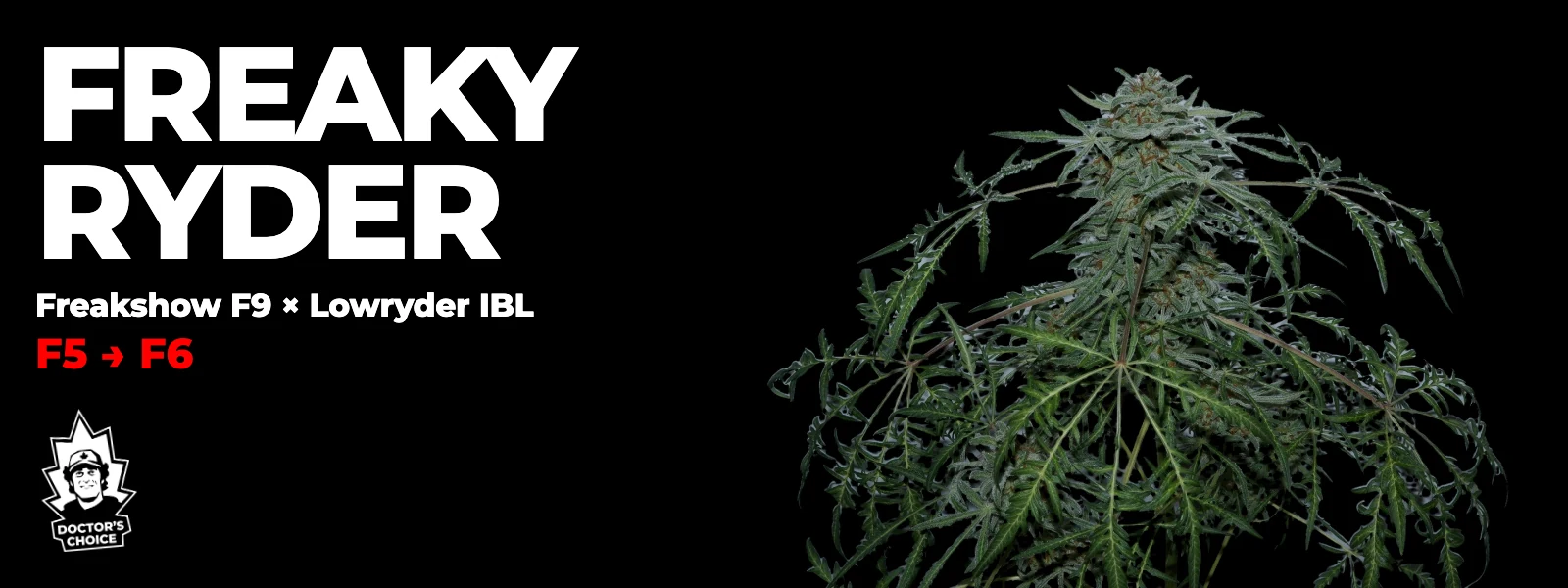
Freakshow F9 × Lowryder IBL
Latest update
Regular F6 seed test completed, September 2026
Breeding history
The stages below were completed before this account was published.
Stage
Work completed
When
Status
P → F5
mutantfarmer crossed Freakshow F9 with Lowryder IBL, then selected for autoflowering and the Freakshow leaf through to F5 seed.
2022–January 2025
Completed
F5 → F6 First run
F5 plants were grown and pollinated at Doctor’s Choice, producing regular and feminized F6 seeds.
Mid-January–April 2026
Completed
F6 Regular seed test
Plants from the first run’s regular F6 seeds were grown to assess how the line’s traits carried through.
May–September 2026
Completed
Log 01 / The starting point · June 2022
A Fine-Feathered Freak
Freaky Ryder is mutantfarmer’s line, combining the fern-like Freakshow leaf with autoflowering from Lowryder.
Its mother was FS#8, a plant selected from Freakshow F9 by 7East Genetics. Freakshow’s leaflets are deeply divided into narrow segments, giving the foliage its feathery appearance. The mutation was discovered by breeder Shapeshifter, and the strain reached the market through Humboldt Seed Company. FS#8 was a short plant, with flower clusters developing at each growing point along the central stem. Its aroma was citrus-led, especially orange: mutantfarmer compared it to orange Skittles.
The father was Lowryder IBL, the Doctor’s Choice autoflowering line.
From FS#8 to F5 seeds
In spring 2022, mutantfarmer grew Freakshow and kept FS#8 for breeding. It was the only plant that passed his stress tests and selection. He pollinated it with Lowryder IBL pollen that summer. From nine F1 plants, he selected female FR#2 and male FR#6, collecting F2 seeds in spring 2023.
In autumn 2023, more than 350 F2 seeds yielded 35–40 plants with the Freakshow leaf. Six of those were also autoflowering: three females and three males. During 2024, the line advanced through F3 and F4, with selection for autoflowering, leaf shape, structure and trichomes. In January 2025, mutantfarmer obtained F5 seeds.
Regular Freaky Ryder made its debut at Mary Jane Berlin in June 2025. mutantfarmer produced the seeds for the first release. At the stand, Sasha, aka Joint Doctor and creator of the original Lowryder, presented the strain.
A meeting with Seedsman at the exhibition sparked the idea of a joint feminized release. That version launched in September 2026.
Subsequent Freaky Ryder seed batches were produced at Doctor’s Choice. The next logs follow the first production run and the test of its regular F6 seeds.
Log 03 / F5 → F6 · January–April 2026
Off to the Races
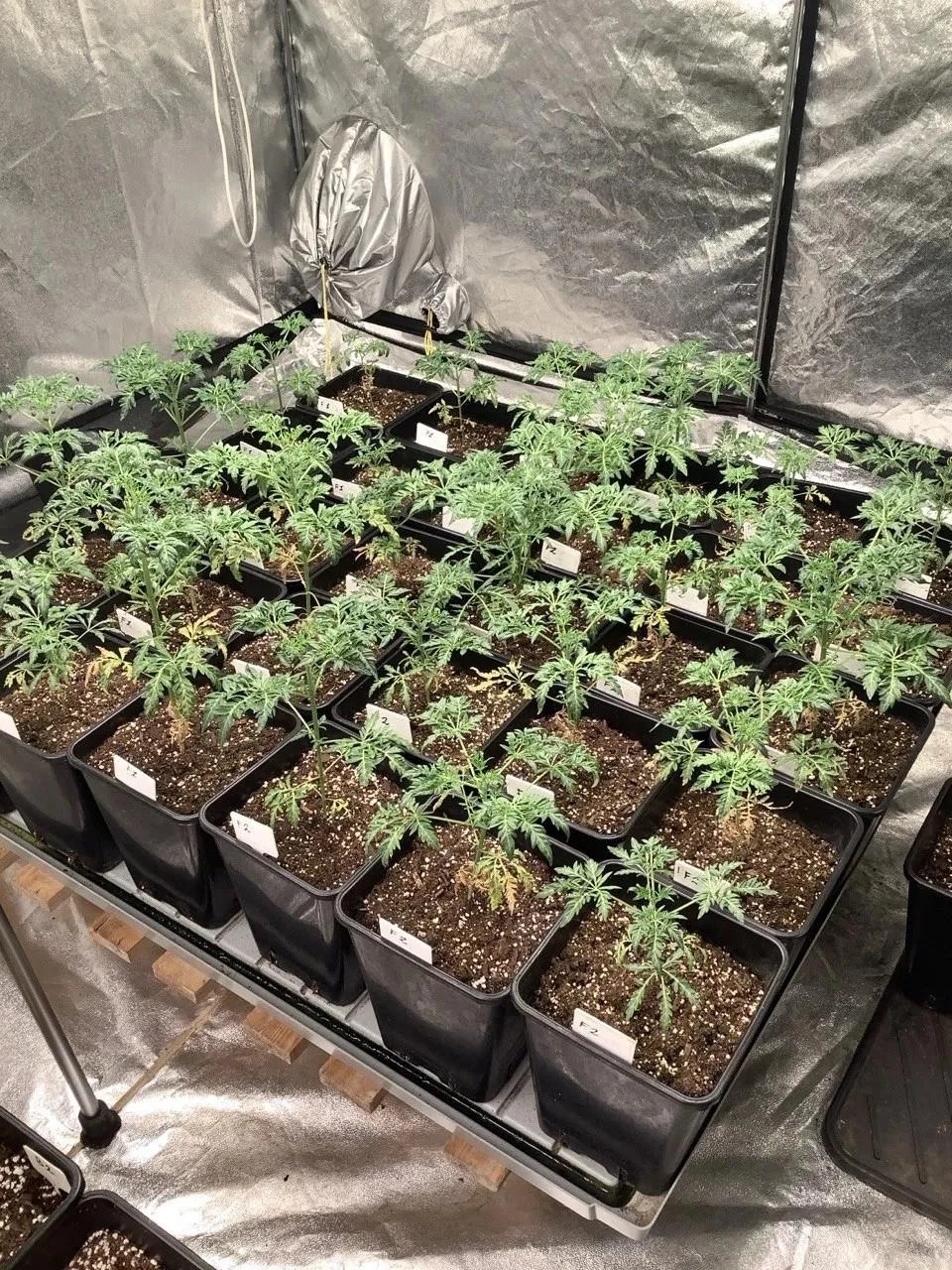
The first F5 production run began in mid-January 2026. The plants grew indoors under a 650 W LED with drip irrigation, in Terra Aquatica soil and grow bags, using Powder Feeding Hybrids and Terra Aquatica nutrients.
F5 plants in vegetative growth, January 2026. “F2” on the labels is an internal line number, not the breeding generation.
Pollination in late March
The F5 plants flowered in March and were pollinated at the end of the month. They came from two mutantfarmer lines, L1 and L2, which were crossed with each other to produce F6 seeds. This was an interline cross: a cross between two lines of the same strain.
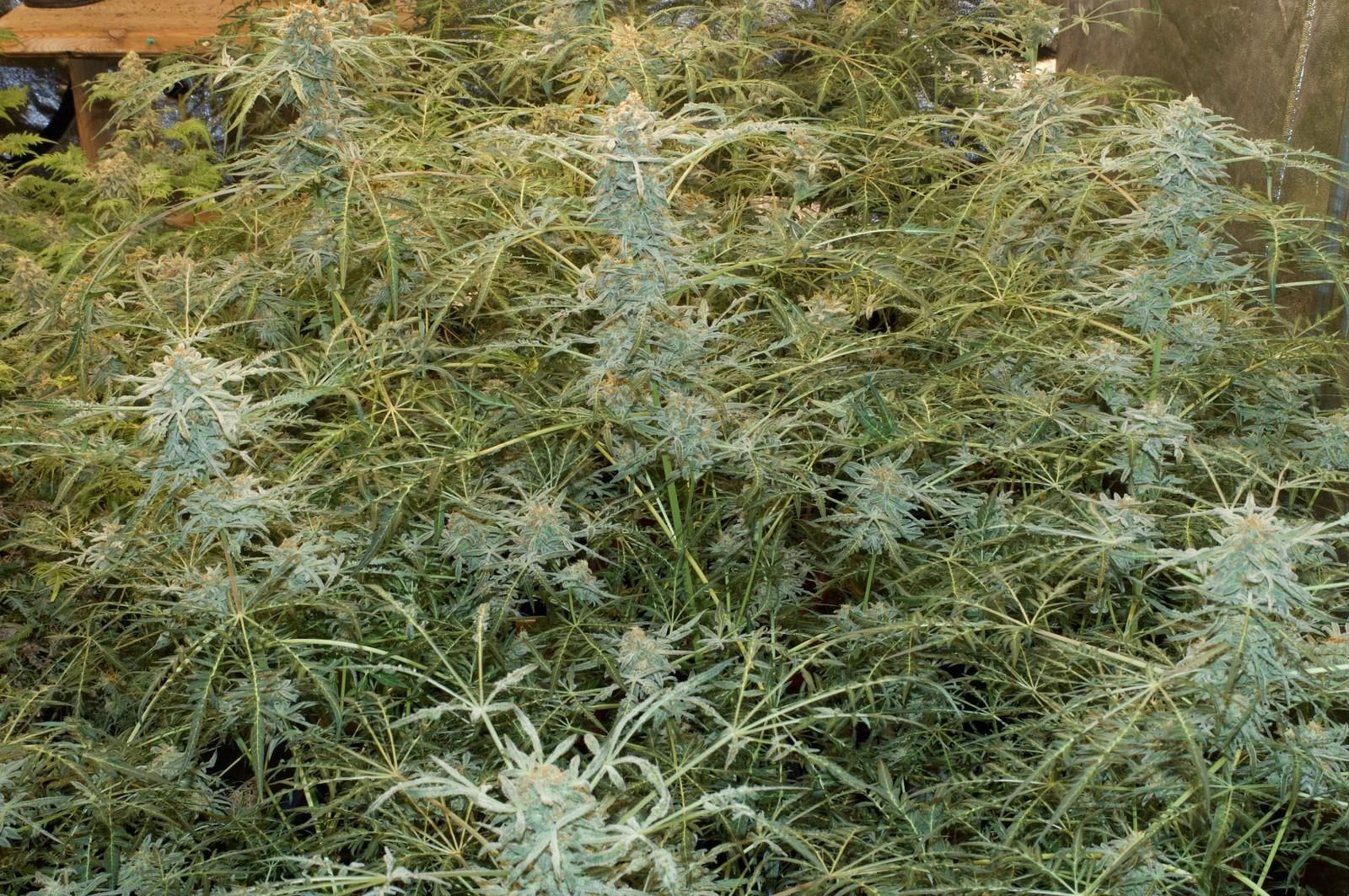
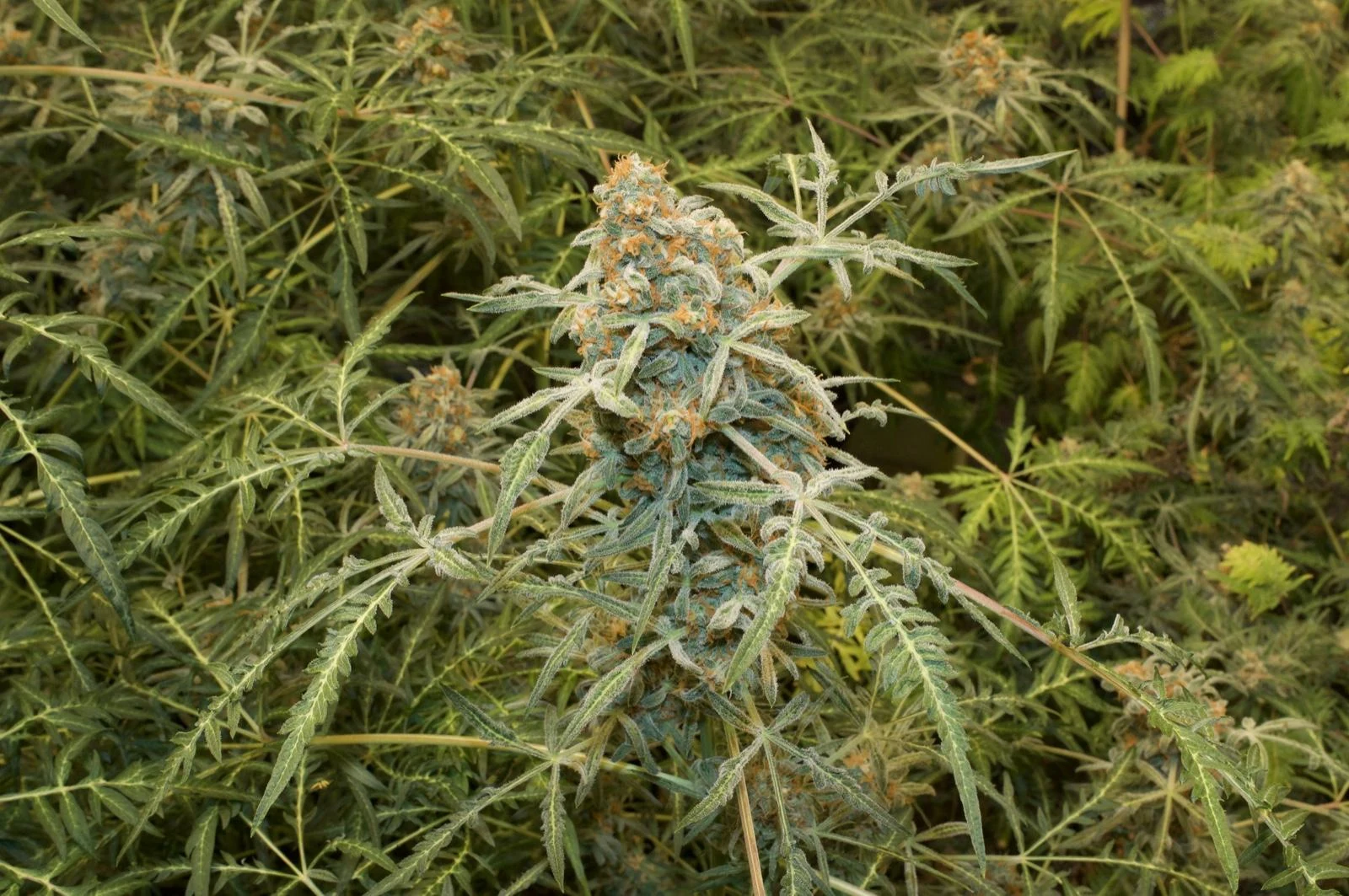
By then, the colas were covered in trichomes, some pistils had turned orange, and the fern-like foliage remained visible around the flowers. A reversed female plant supplied pollen for the feminized seeds. Its male flowers opened inside the tent, among the flowering plants.
F5 plants flowering in the first production run, late March 2026.An F5 plant in flower, late March 2026.An F5 flower cluster from the first production run, late March 2026.The pollen donor with open male flowers among flowering F5 plants, late March 2026.
Seeds peeking out
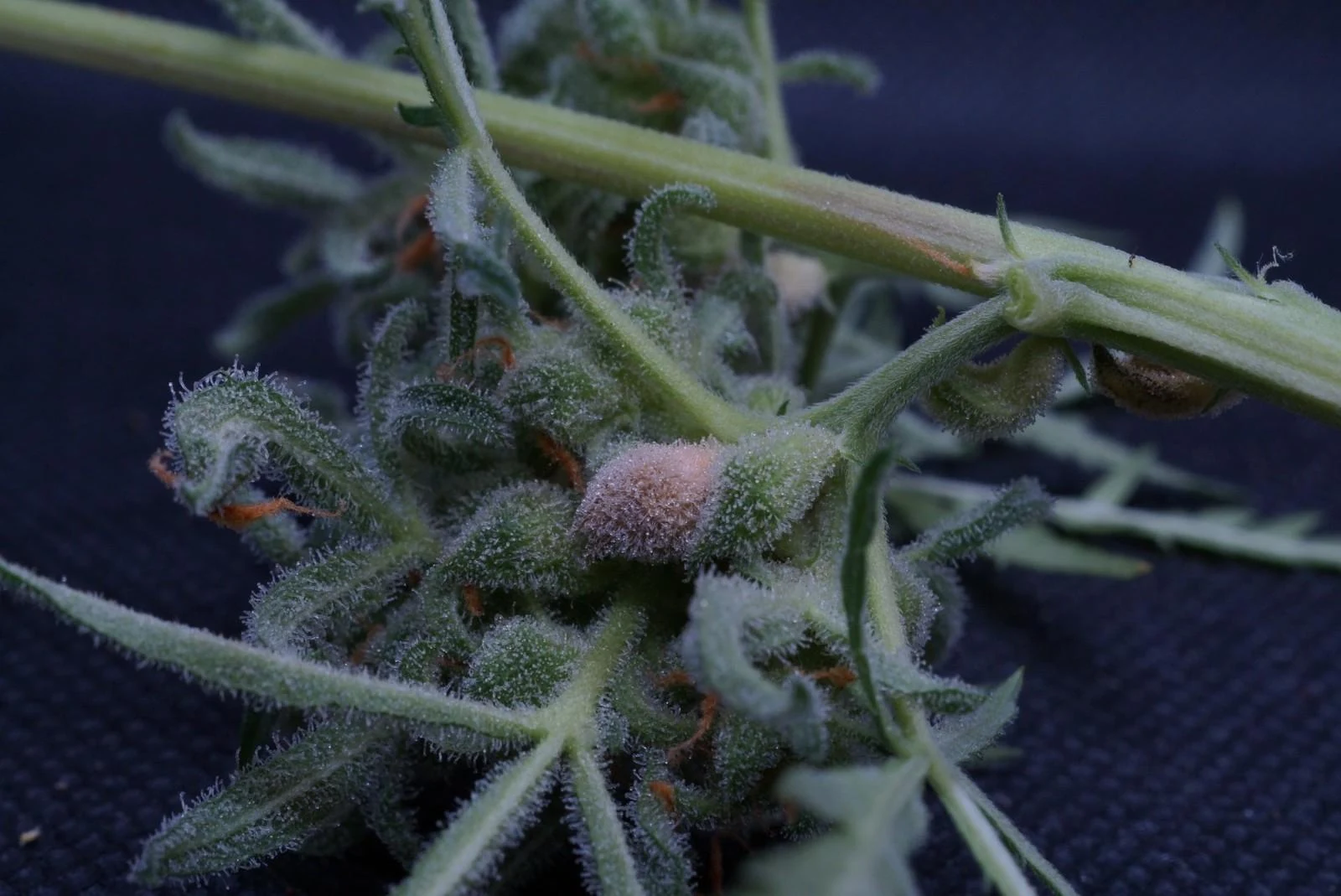
The colas continued to fill out in early April. By mid-April, F6 seeds were developing inside the flower clusters. The calyxes had swollen, and some seeds were already peeking out.
An F5 flower cluster during F6 seed development, mid-April 2026.An F5 plant during F6 seed development, mid-April 2026.Developing F6 seeds in a flower cluster, mid-April 2026.
The first run was completed and produced both regular and feminized F6 seeds. The feminized seed yield was lower. The production team observed lower pollen fertility in the reversed plants of this mutant line. The regular F6 seeds then went into testing, covered in the next two logs.
Log 04 / F6 test · May–August 2026
Taking It for a Spin
In May 2026, regular F6 seeds from the first run were put to the test. Fifty plants were grown under an 18/6 light schedule: 18 were female and 32 were male.
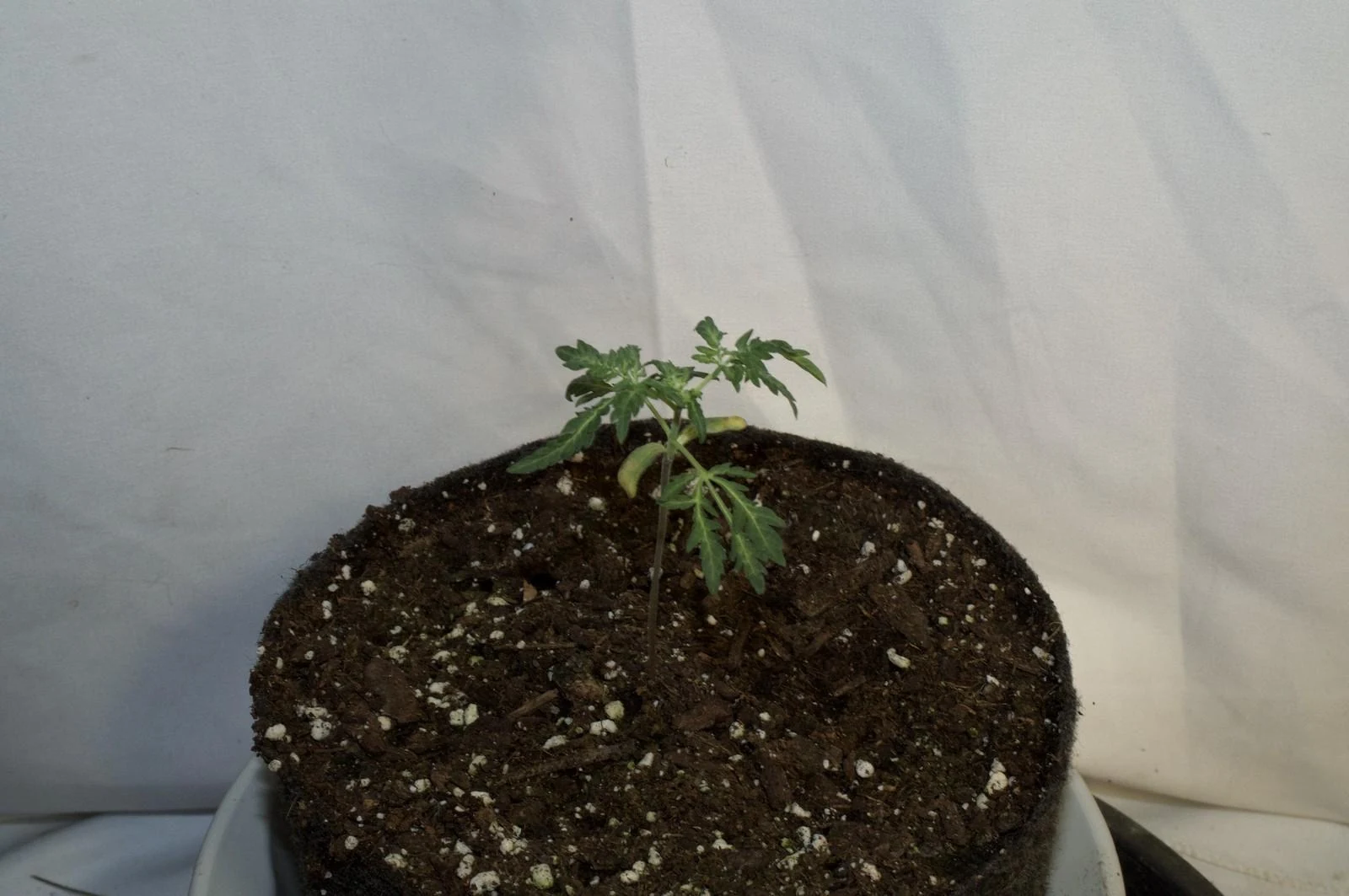
An F6 seedling in the test, early June 2026.
Fern leaf from the seedling stage
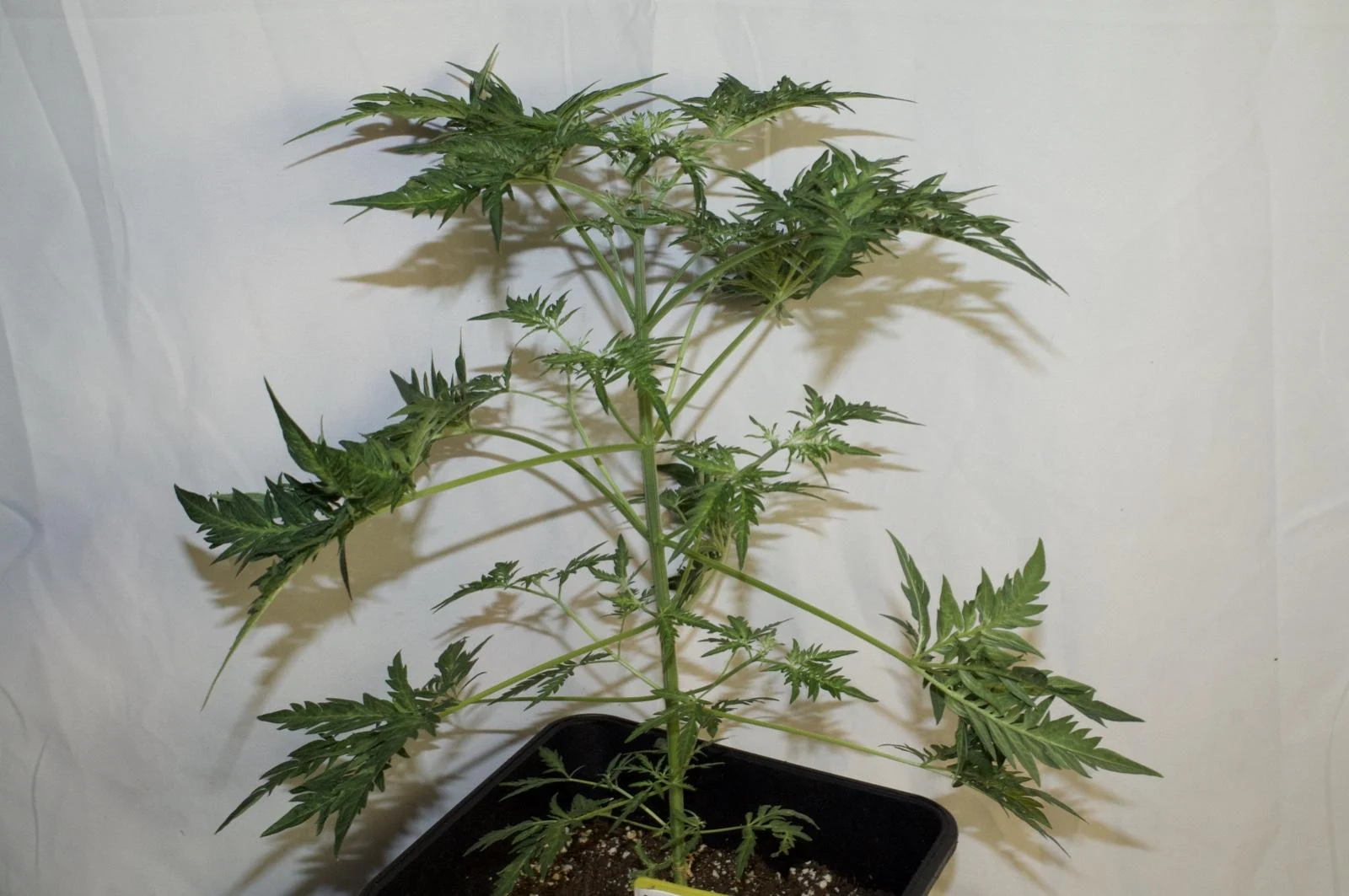
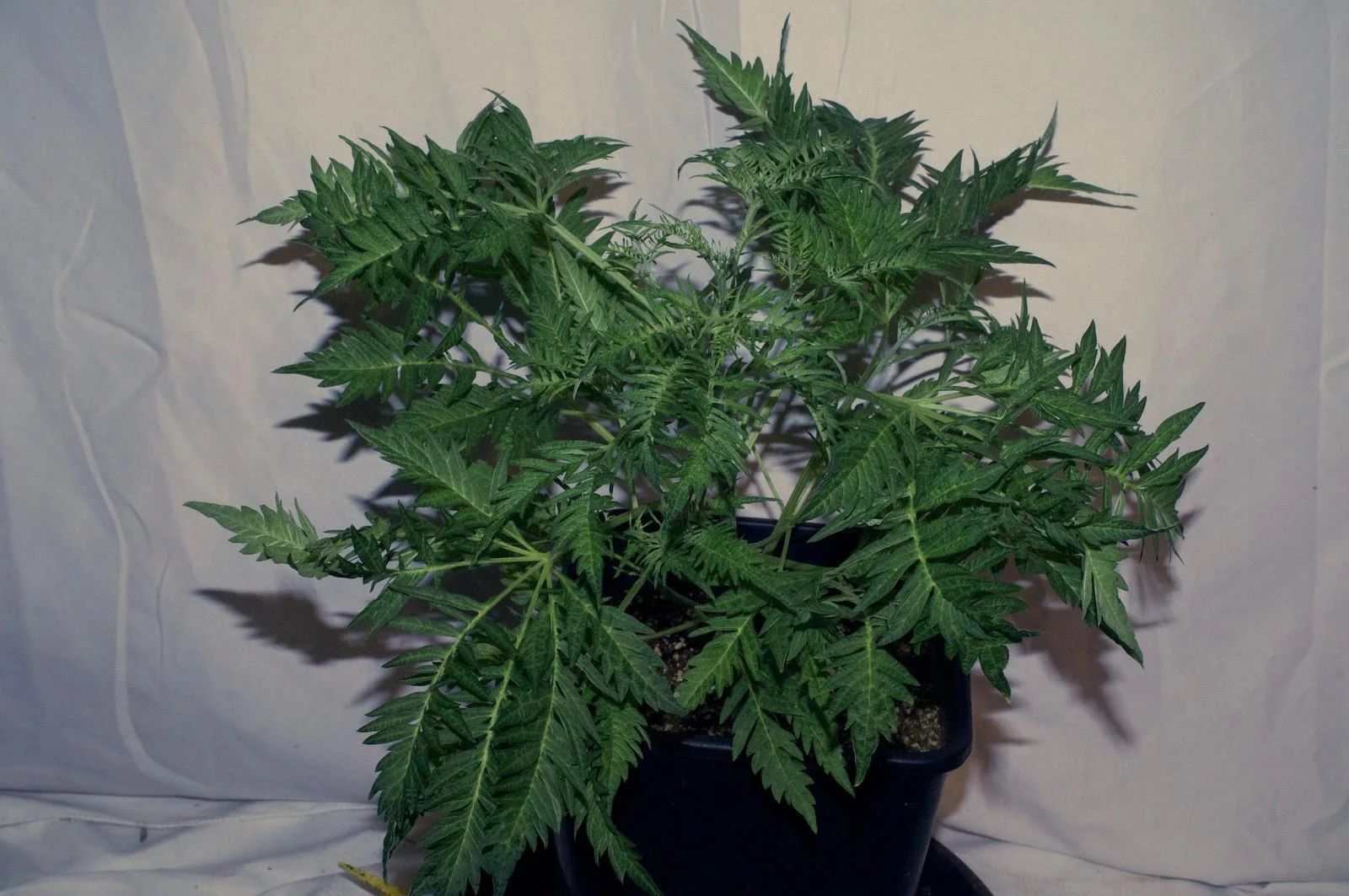
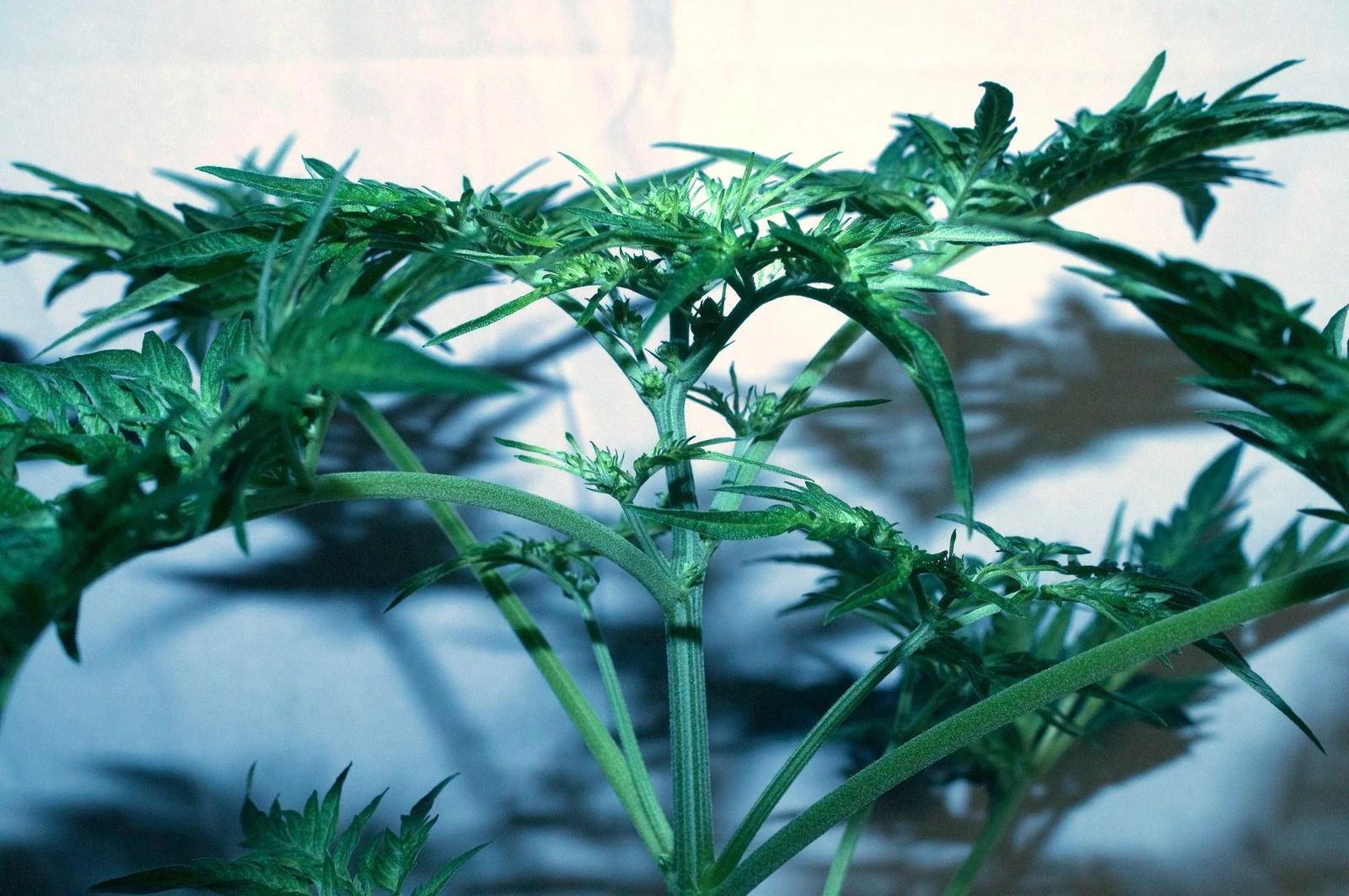
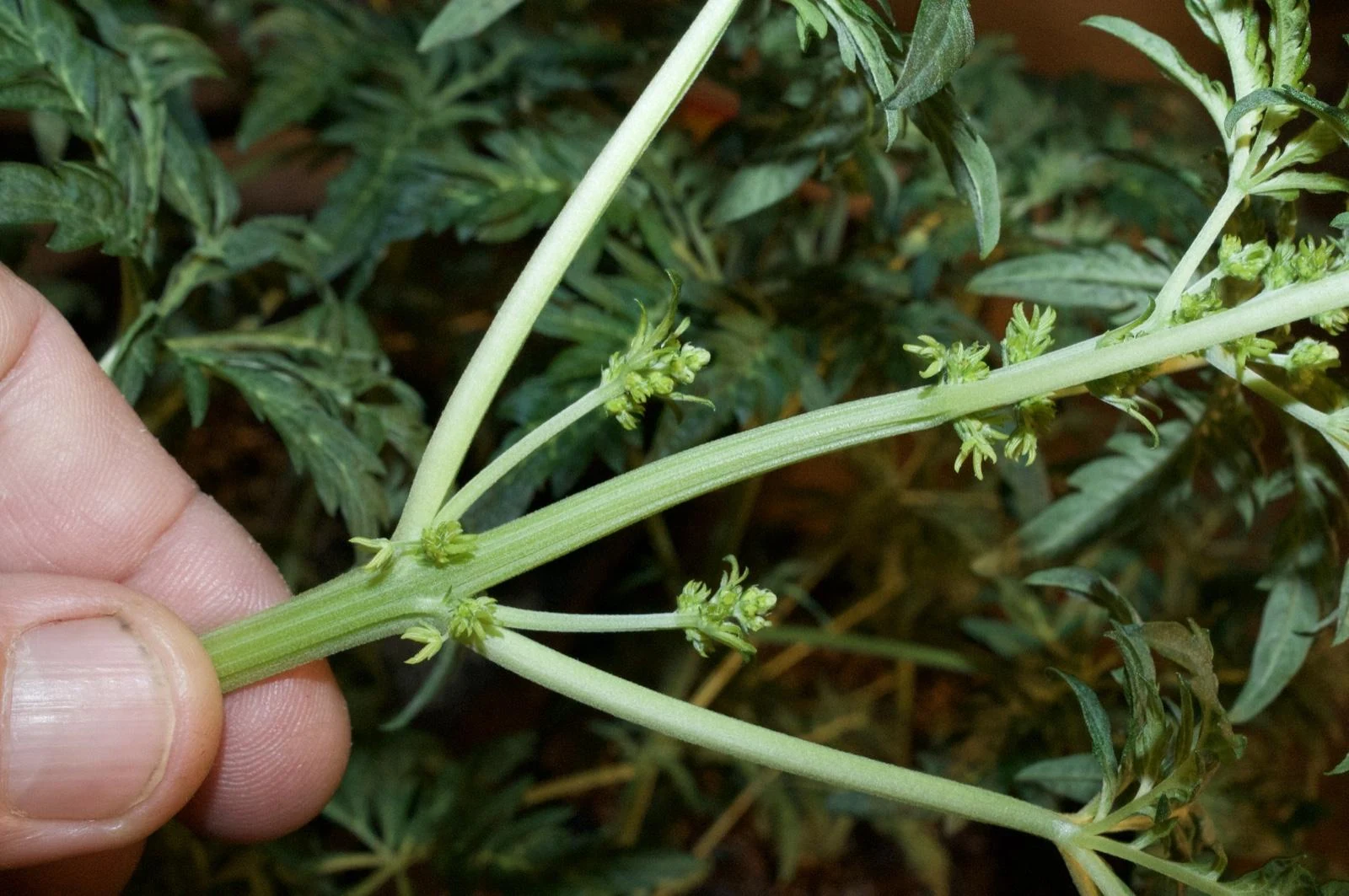
In early June, the F6 plants varied in size, from seedlings with their first true leaves to young plants with several nodes and taller specimens. Deeply divided leaflets were already visible on the seedlings. One male plant had flower buds at its nodes by this point.
An F6 plant in vegetative growth, early June 2026.The Freakshow leaf on an F6 plant, early June 2026.A male plant in the test, early June 2026.A male plant in the test, early July 2026.
Colas filling out
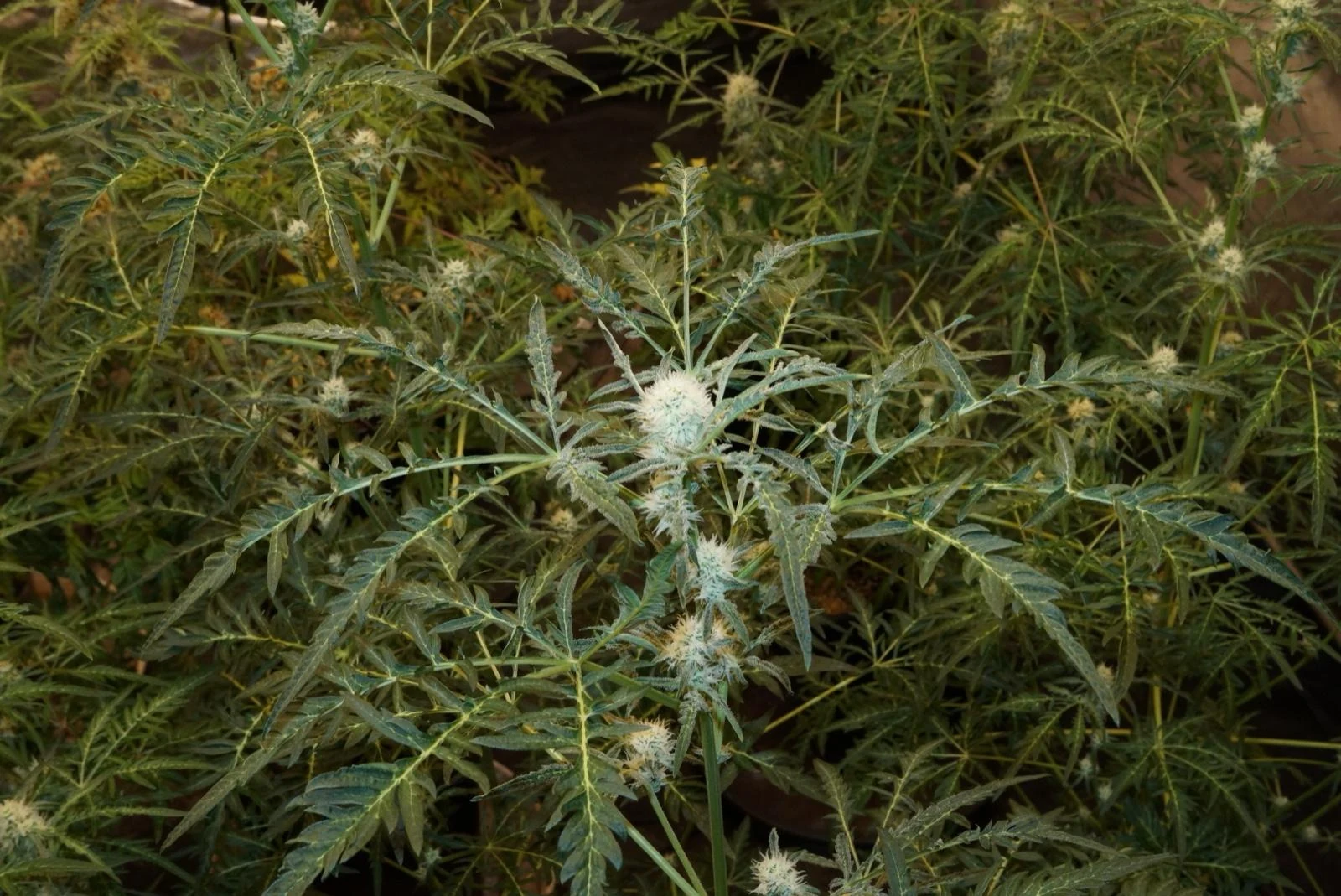
By early August, the female plants were in flower, with white pistils at the tops and narrow, feathery leaves around them.
Female F6 plants in flower, early August 2026.An F6 flower cluster, early August 2026.
Log 05 / Harvest · September 2026
Riding Low
The F6 female plants remained compact through harvest in September, with dense colas. Plants in the first production run had been taller, with looser colas. In that run, the autoflowers shared a tent with photoperiod plants under 12/12 and stretched more. The test ran under 18/6.
Autumn in the tent
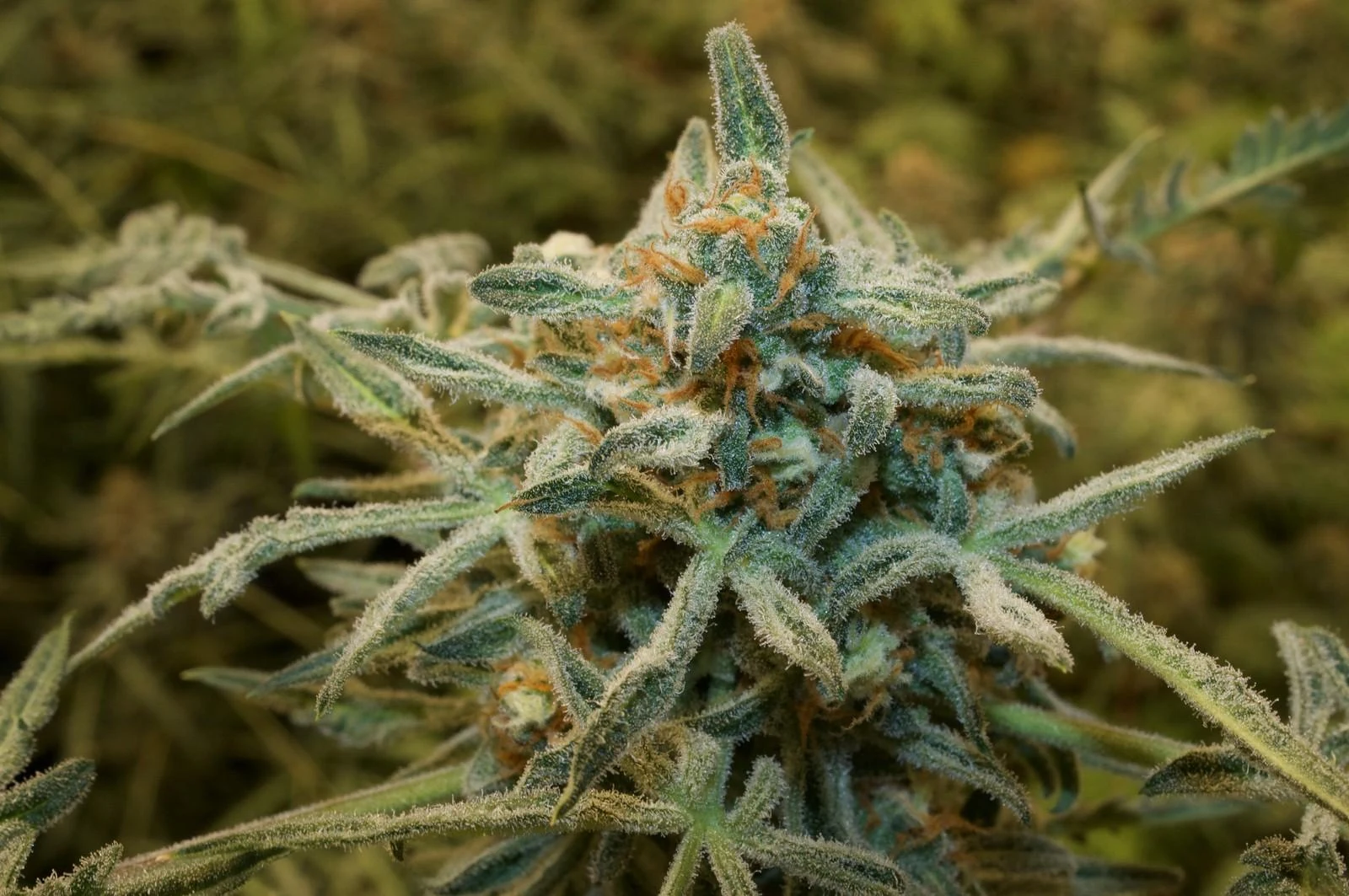
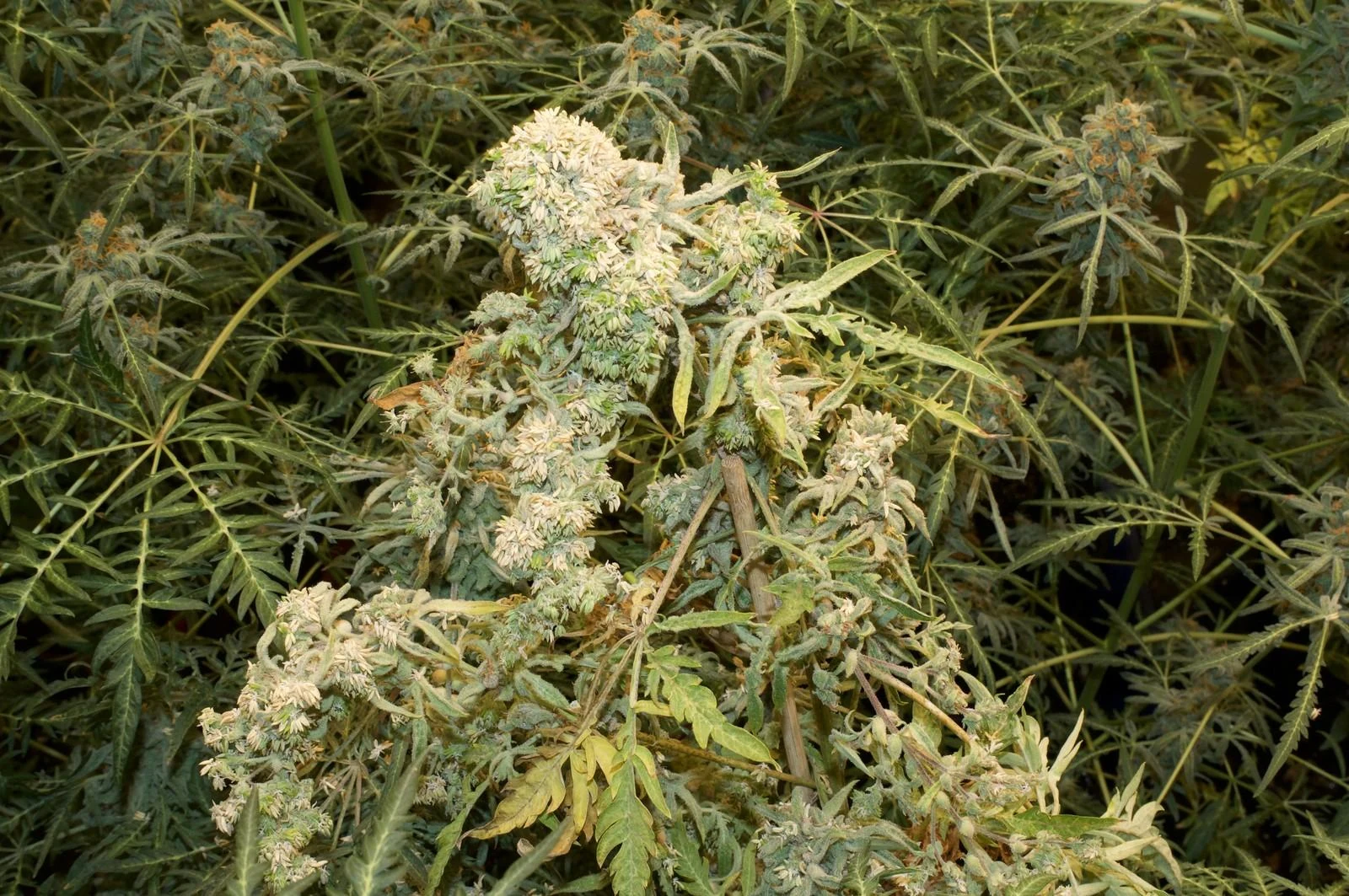
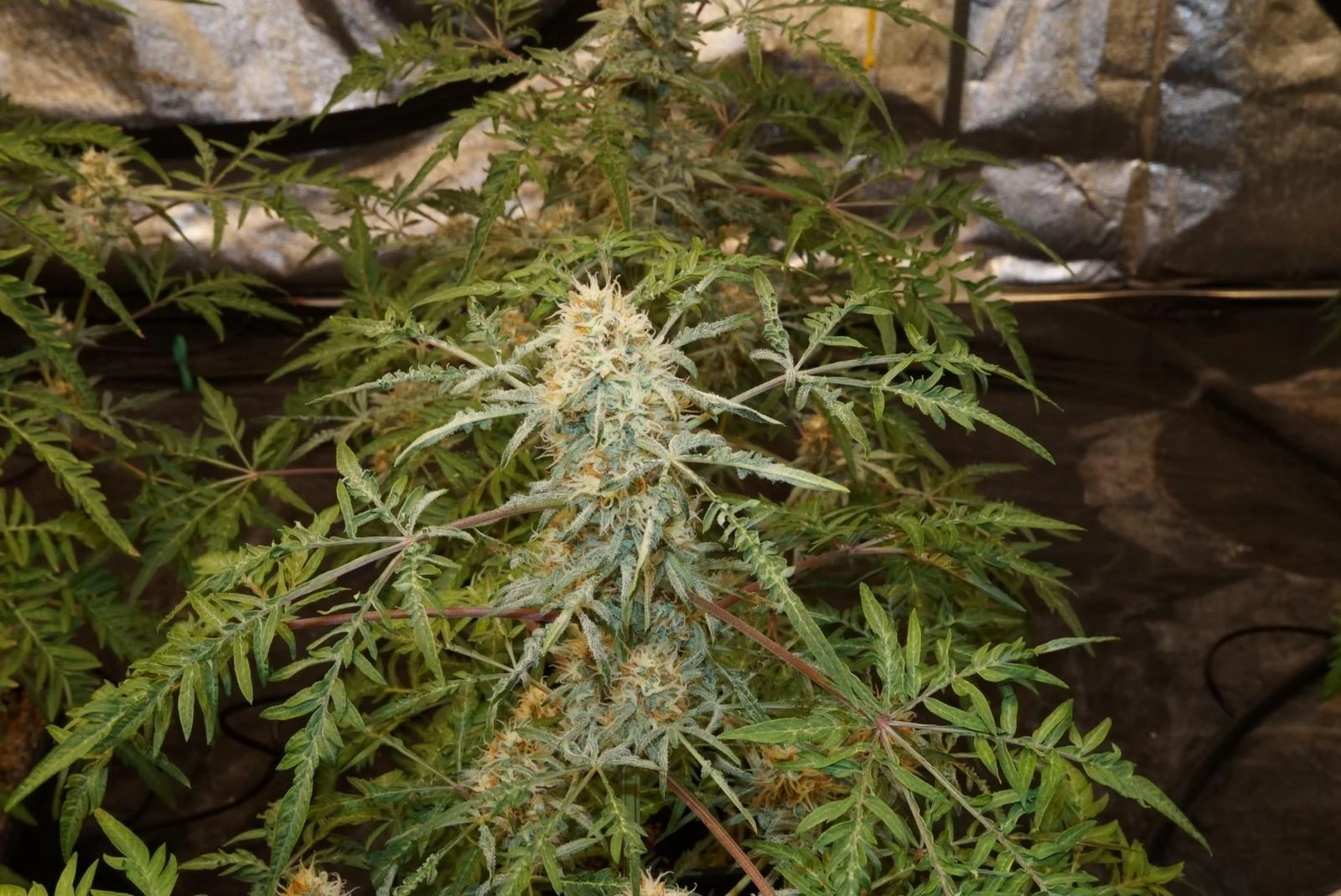
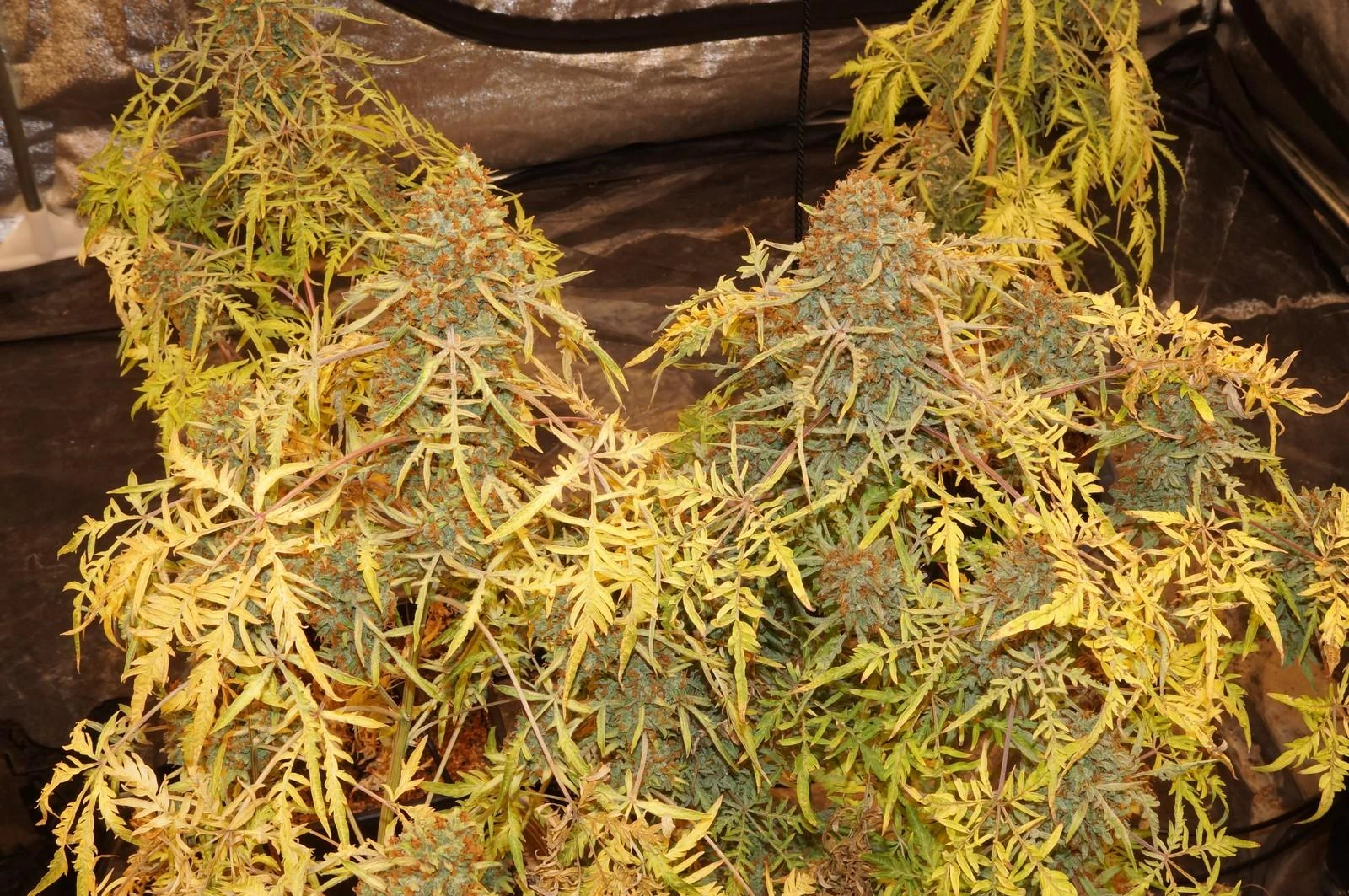
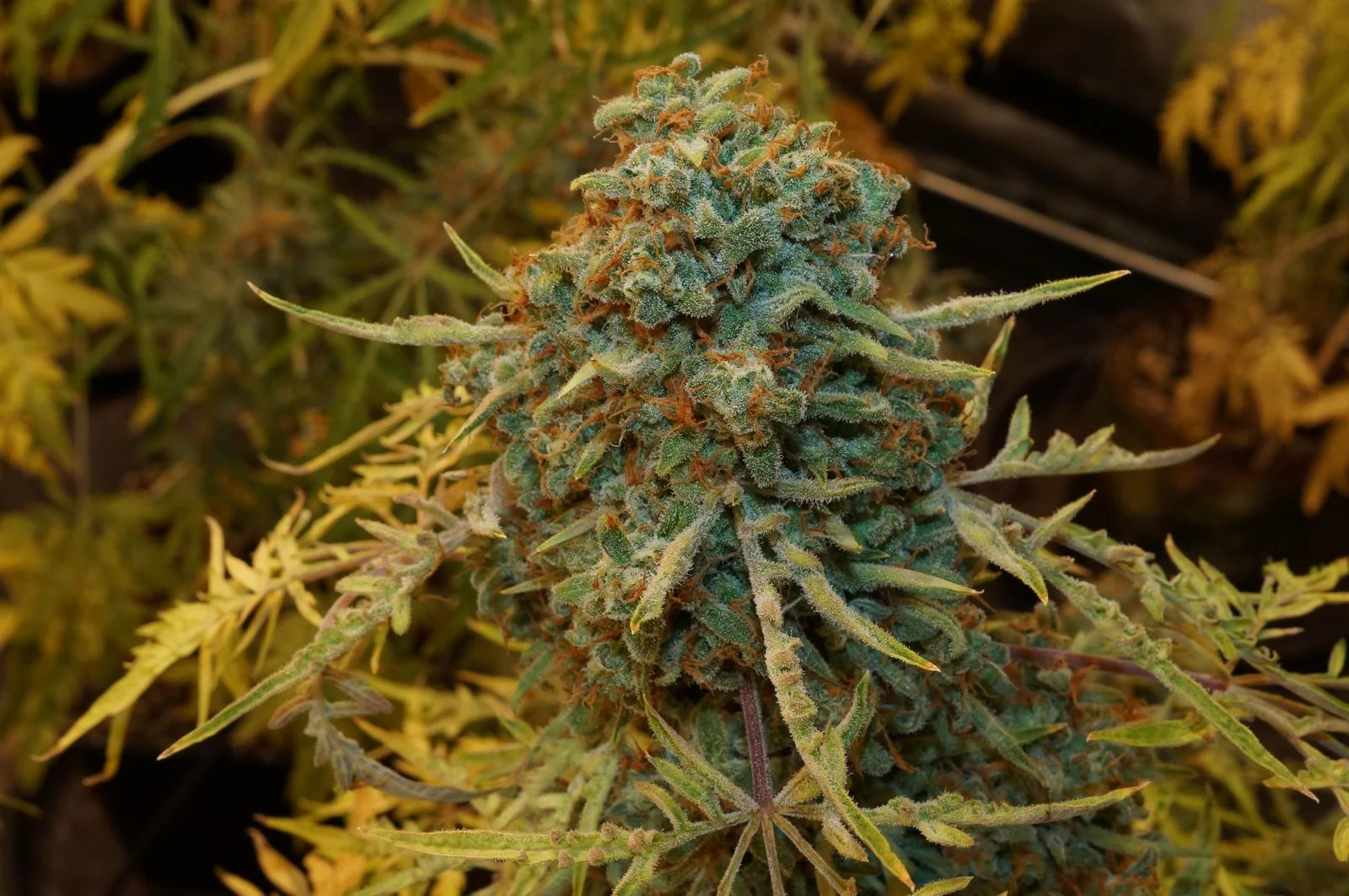
Before harvest in early September, the colas carried a thick layer of trichomes and the pistils had turned orange. Some plants had almost entirely yellow foliage, with patches of orange; others remained dark green.
F6 plants before harvest, early September 2026.An F6 cola before harvest, early September 2026.
Main cola and side branches
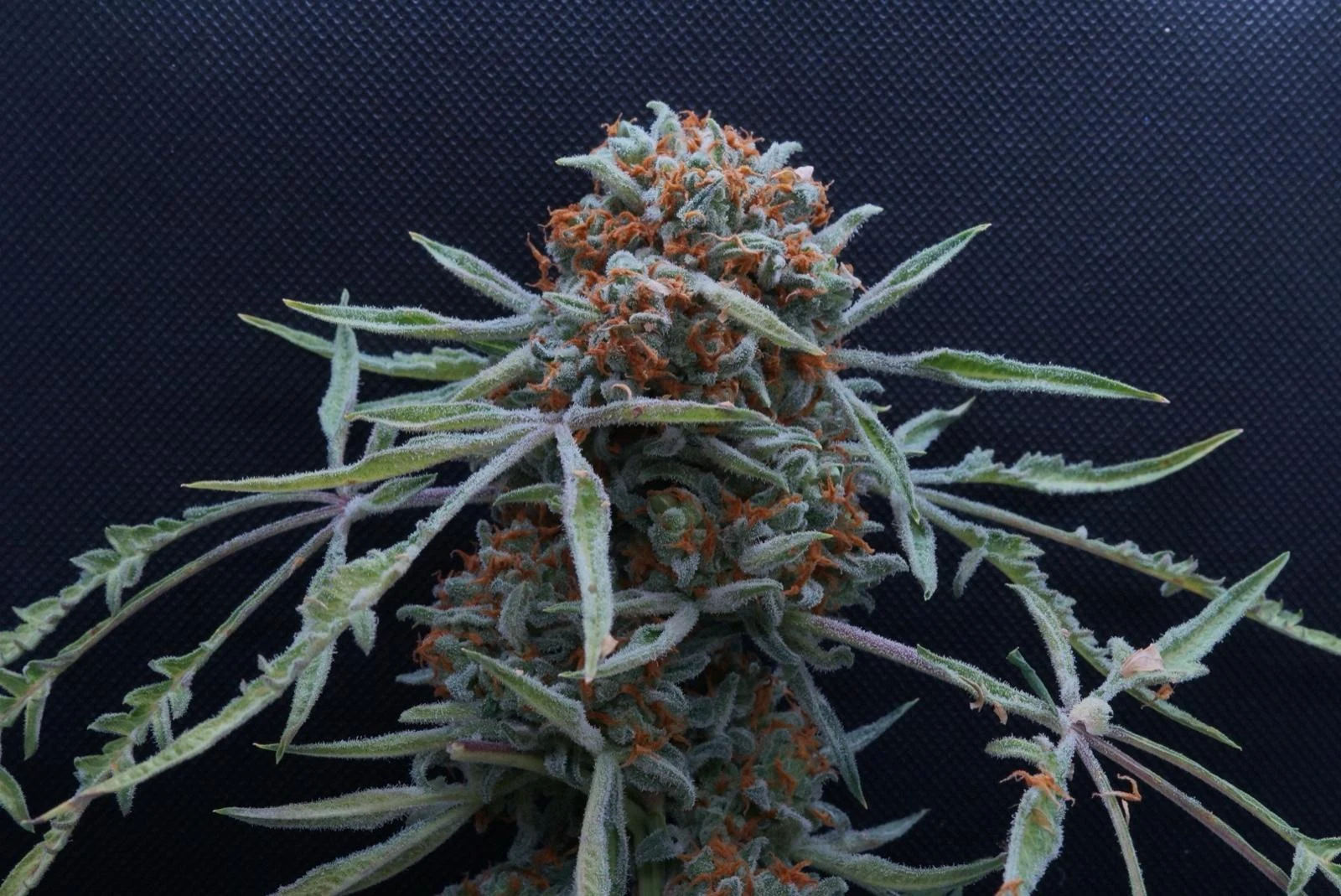
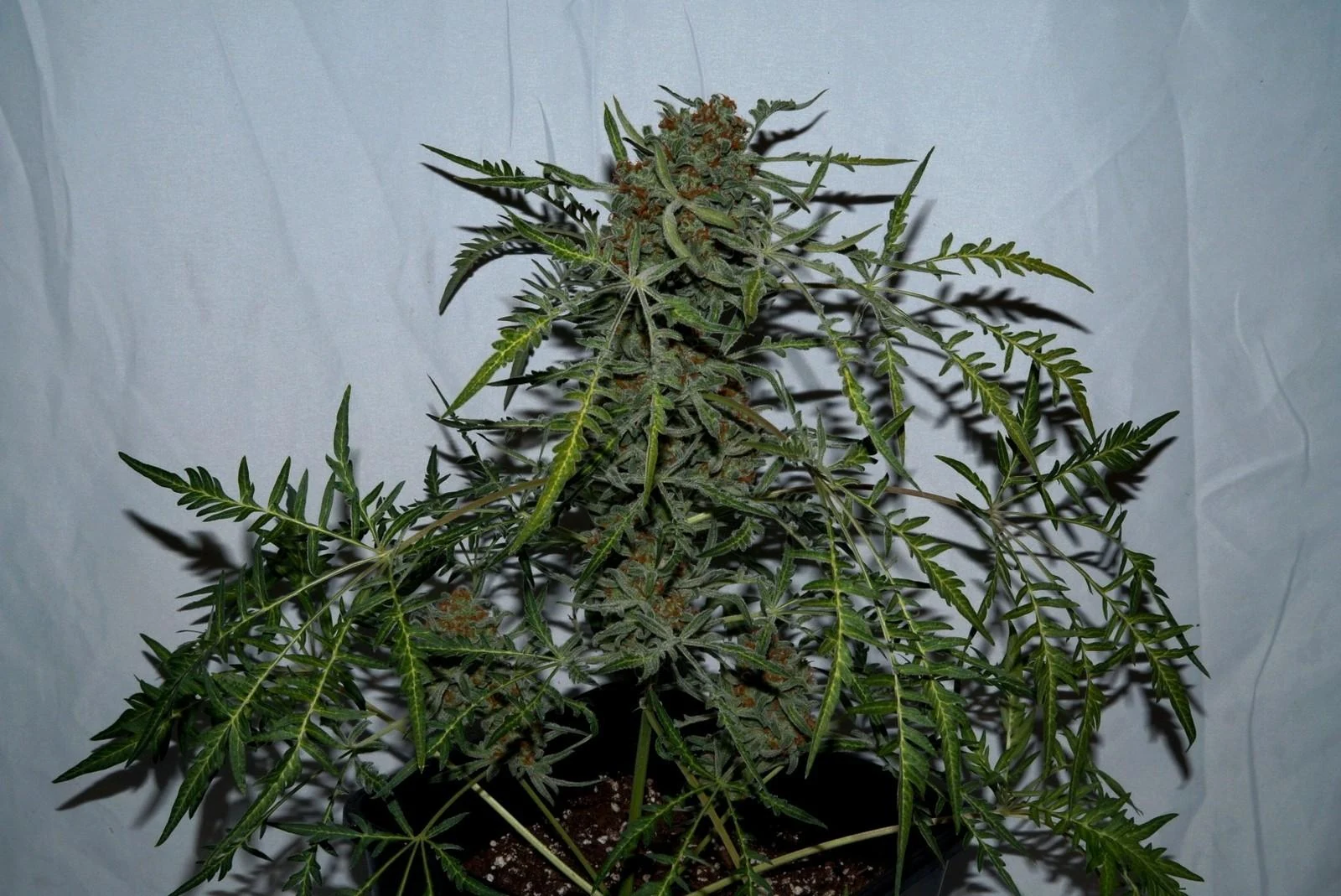
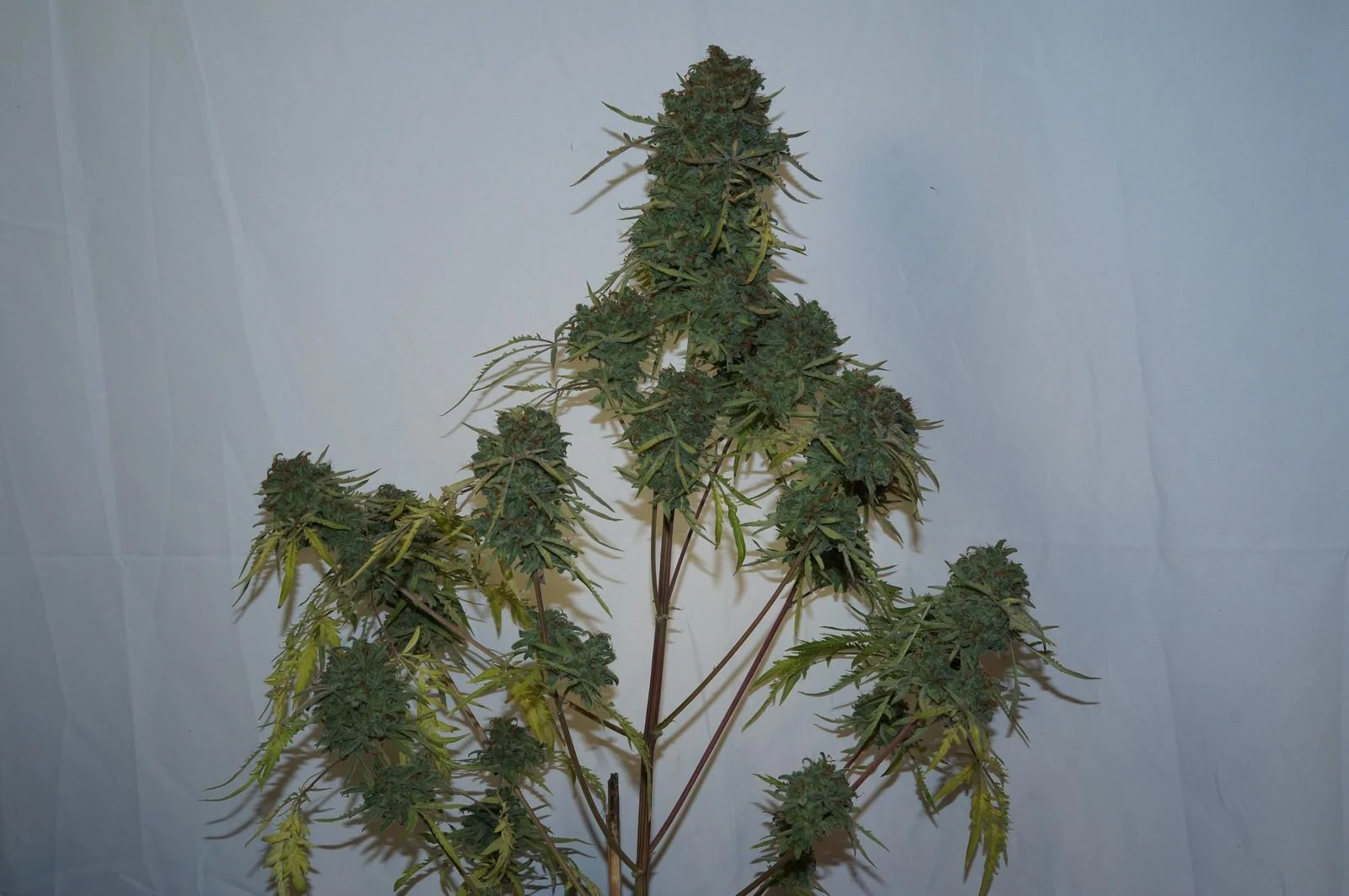
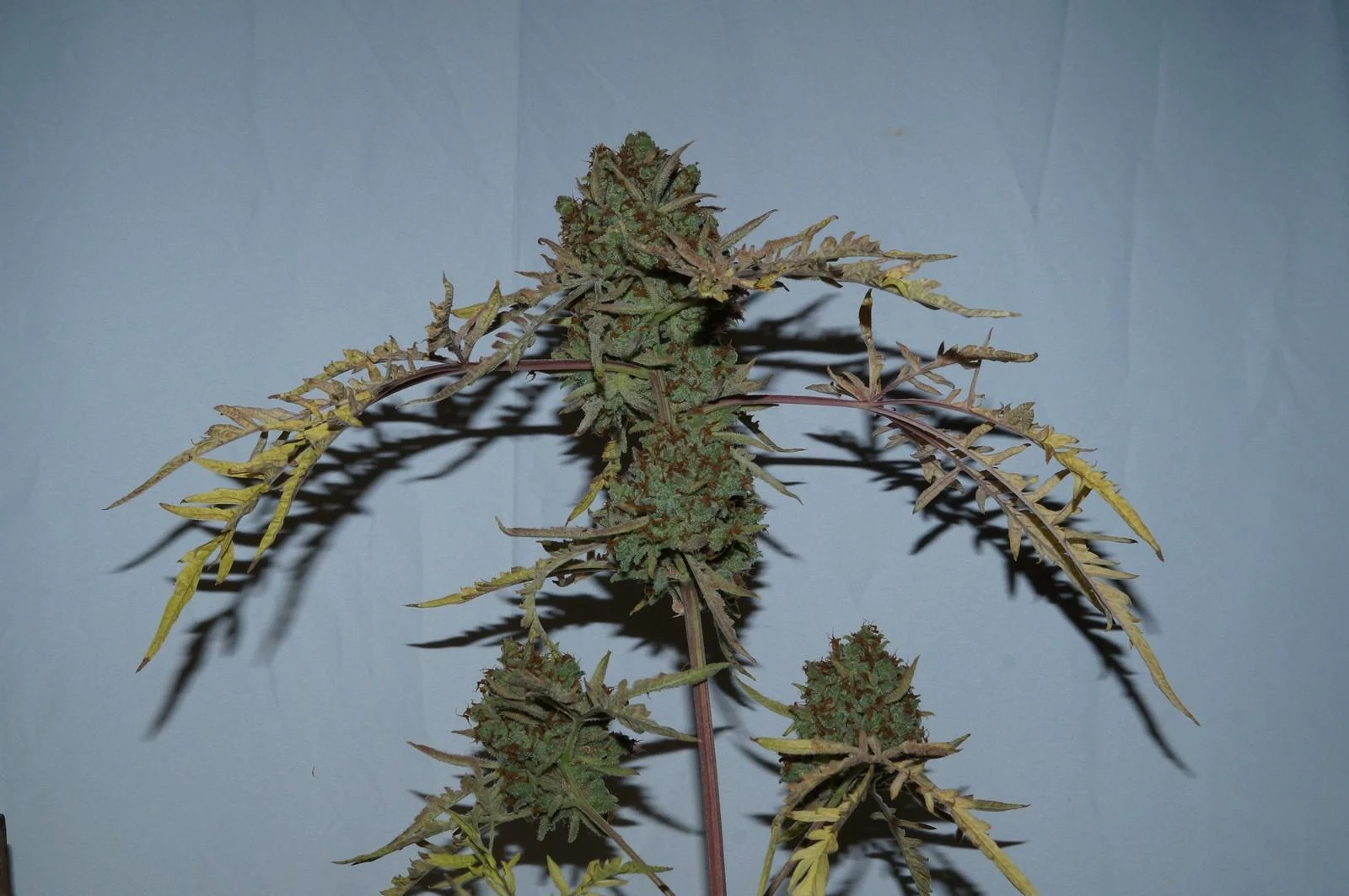
In mid-September, the cut tops were photographed individually against a light background. Every plant had colas on its side branches, but the main cola was much more dominant on some. Several plants had purple stems and petioles, with trichomes also covering the leaves around the flowers.
An F6 plant top with side-branch colas, mid-September 2026.An F6 plant with a dominant main cola and purple stem, mid-September 2026.
Explore regular seedsBrowse the regular seed collection.