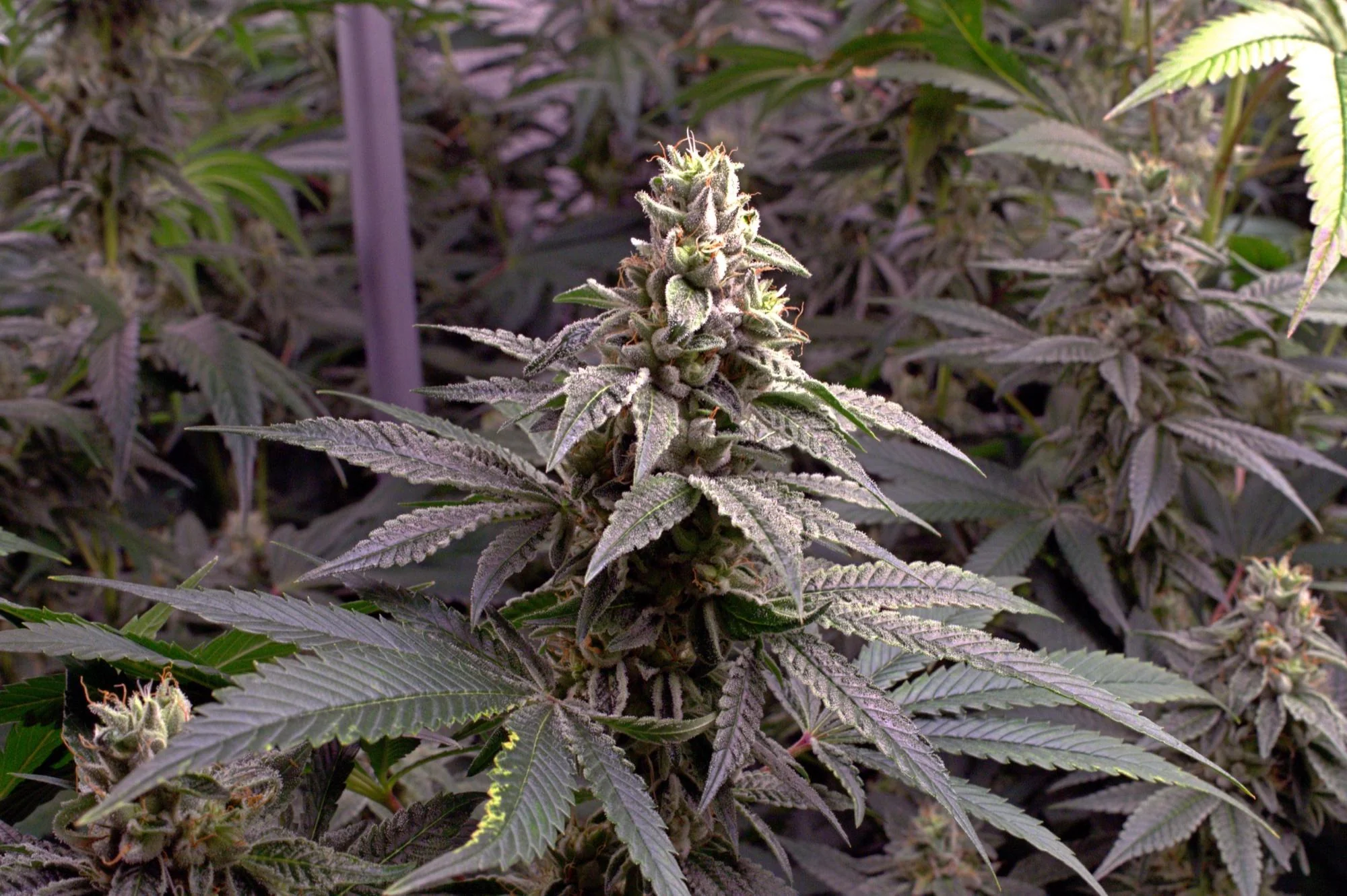
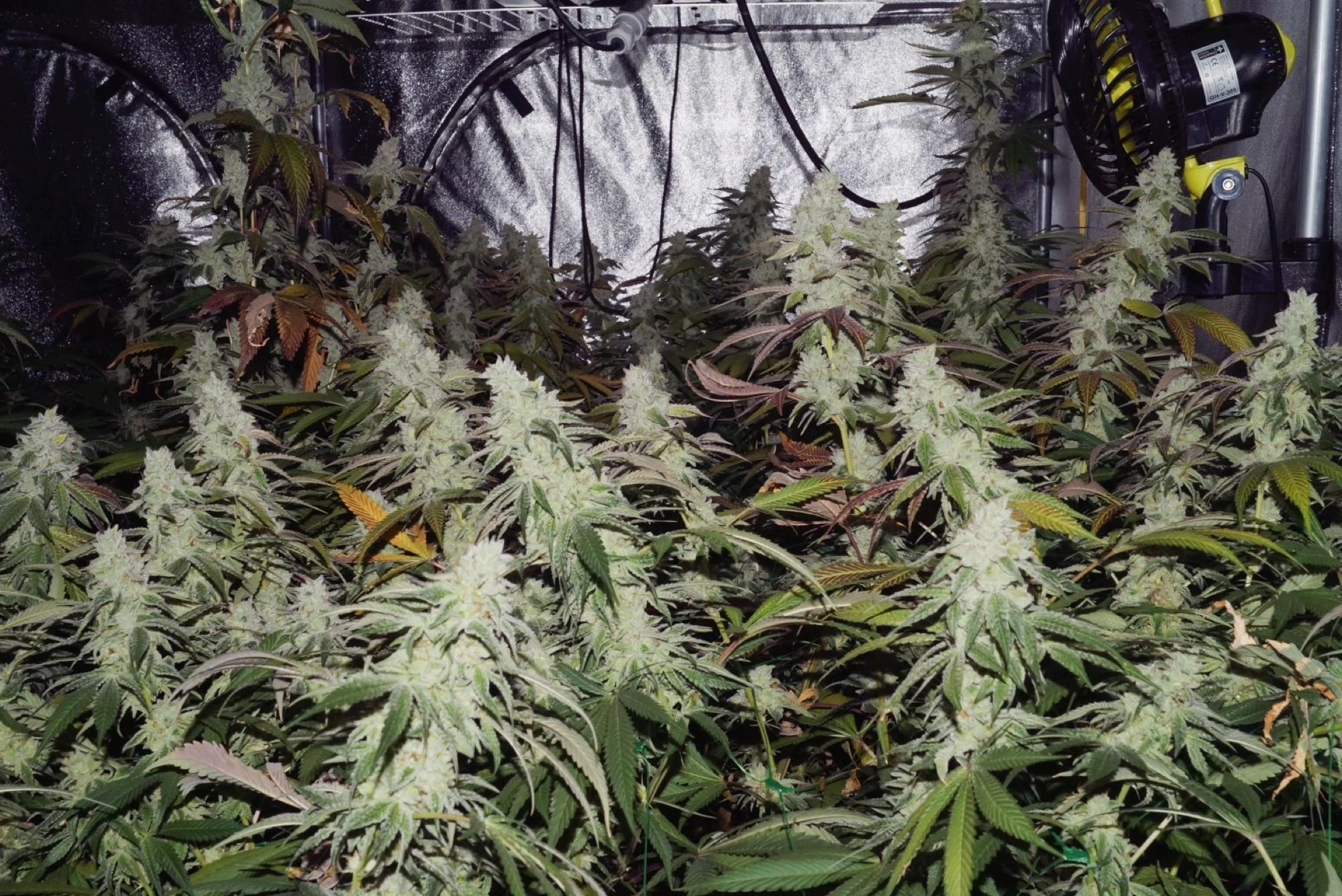
The goal is to cross the selected Vanilla Velvet mother with Lowryder and develop an autoflowering line that retains her resin coverage, velvety leaves and vanilla aroma.
Cross
Vanilla Velvet × Lowryder
Latest update
F1 seeds sown
Selection plan
Dates for future stages are estimates.
Stage
Planned work
When
Status
P → F1
Cross the selected Vanilla Velvet mother with Lowryder to produce regular and feminized Velluto Fast F1 seeds.
Spring–early autumn 2026
Completed
F1 → F2
Cross regular F1 plants with one another to produce F2 seeds.
Summer–autumn 2026
In progress
F2 → F3
About one in four F2 plants is expected to autoflower. Select the best of those plants and cross them.
Late 2026–spring 2027
Planned
F3 → F4
All F3 plants autoflower. Select for Velluto traits to make the line more uniform.
Spring–autumn 2027
Planned
F4 onward
Autoflowering Velluto in regular and feminized versions.
Late 2027–2028
Planned
Log 01 / The starting point
A Plain Vanilla Idea
The search for American genetics for the mother room led to Vanilla Velvet from Jungle Boys. A cross of Runtz and Grapes N Cream, it brings together Zkittlez and Gelato on one side, Grape Pie and Cookies and Cream on the other. Jungle Boys’ description of sweet-and-sour grapes followed by a thick whipped cream finish made it a promising candidate.
The breeding idea behind Velluto was simple to state and harder to prove: select a Vanilla Velvet mother, cross her with Lowryder, and work toward an autoflowering line without losing the mother’s character. The first cycle targets a faster-flowering photoperiod line carrying her resin coverage, broad structure, velvety leaves and vanilla aroma. The F1 grow will show which of those traits come through.
Why Velluto? In Italian, velluto means velvet. The Italian name pays tribute to the weavers of Renaissance Venice, Florence and Genoa, whose velvets were prized far beyond Italy.
The Vanilla Velvet mother flowers in about 8–9 weeks after the switch to 12/12. The first F1 cycle targets photoperiod plants that flower in 6–8 weeks after the switch.
The selection run took place indoors under a 650 W LED, with drip irrigation. The plants grew in Terra Aquatica soil and grow bags, with Powder Feeding Hybrids and Terra Aquatica nutrients.
A clone would preserve the selected mother for later breeding rounds. First came the search for the right plant.
Log 02 / Selection
Eleven Shades of Velvet
Eleven Vanilla Velvet plants grew during a six-month phenotype hunt. The available group was small, but all eleven plants were strong and remarkably similar, which made the choice harder. Selection focused on the best combination of traits rather than a single striking feature.
Resin mattered, including how far it reached beyond the flowers and across the fan leaves. The comparison covered the feel and shape of the leaves, the distance between nodes, the overall frame, the density and shape of the flowers, and the aroma. The target was a plant with heavy resin, a wide but controlled structure and a clear vanilla note.
Different plants showed different pieces of that picture. One plant out of eleven brought the strongest combination.
The chosen mother
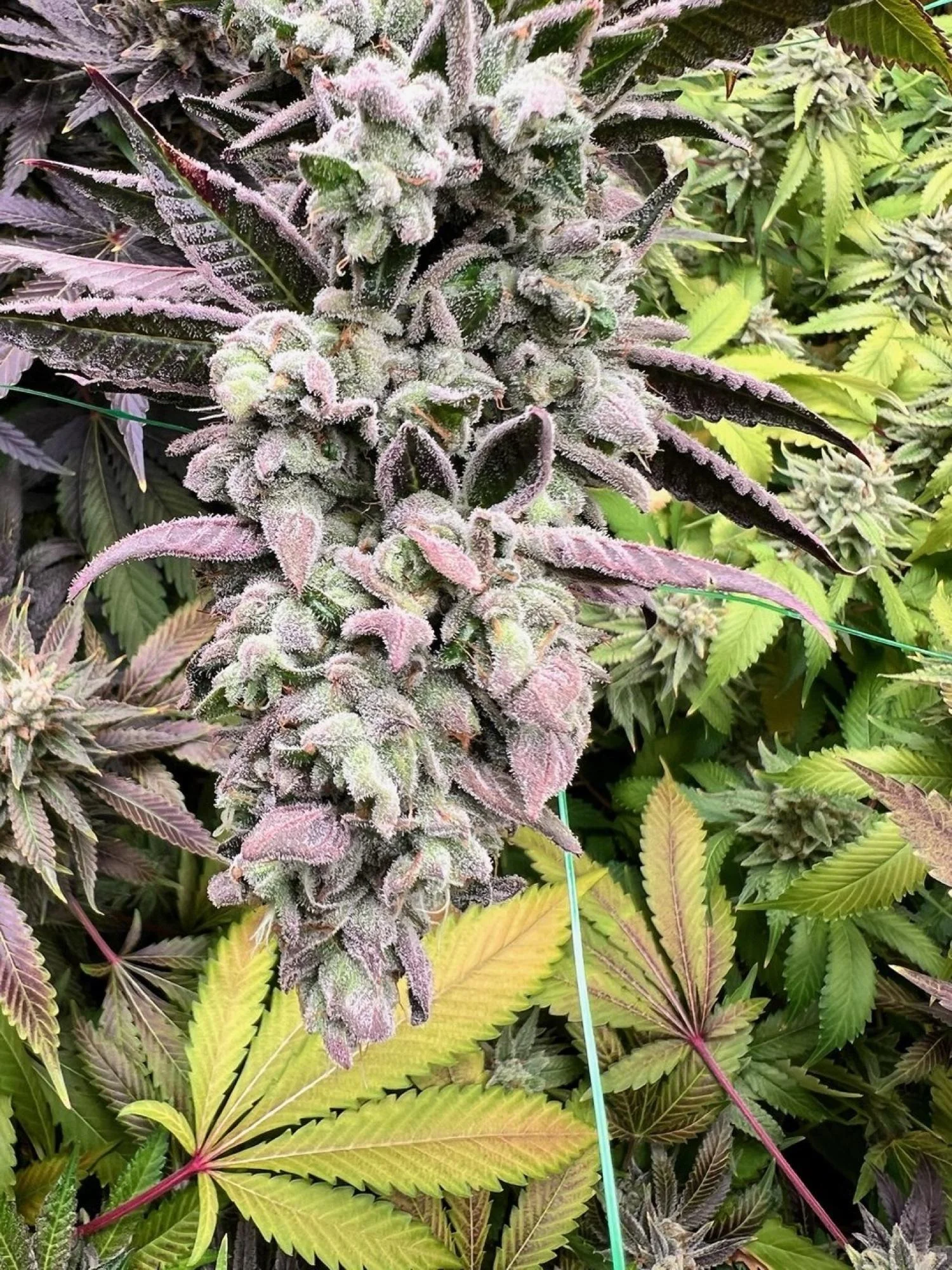
Resin covered her flowers and reached both sides of the fan leaves. Those leaves felt almost like velvet to the touch.
The selected Vanilla Velvet mother near the end of flowering.
She had large, dark-green leaves with broad blades and short internodes. She stayed medium in height, grew wide around a pronounced central cola and did not stretch much. Her flowers were dense and rounded. Purple tones came through toward the end of flowering, with vanilla in the aroma.
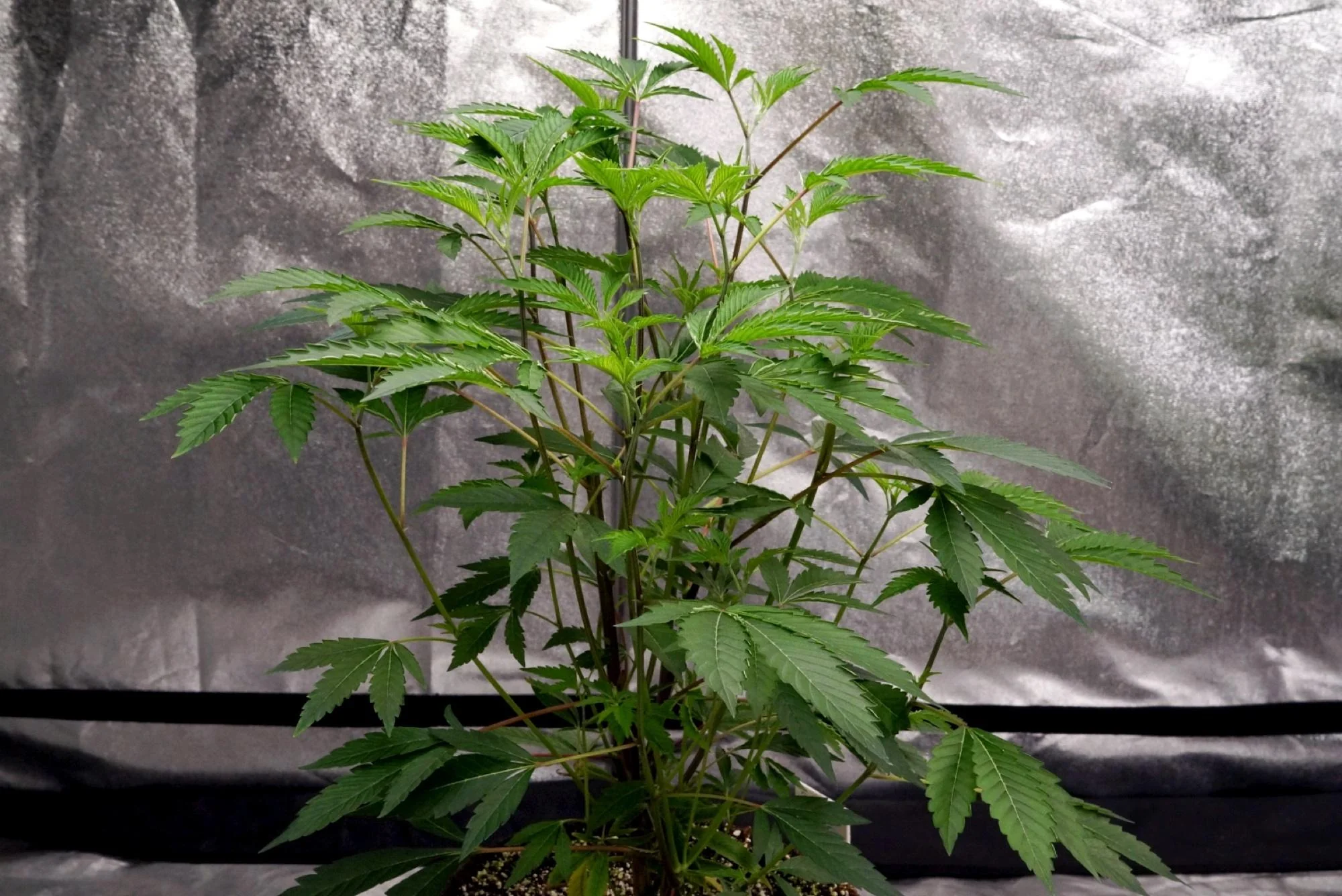
A clone of the chosen mother.
She continues as a mother clone. Her traits form the reference for assessing the F1 plants.
Log 03 / Parent → F1
Two Cuts of Velvet
Making the regular F1
In early April 2026, a clone of the mother entered vegetative growth. In early May, it moved to a 12/12 light cycle, with Lowryder pollination continuing through mid-June. The mid-July harvest yielded regular F1 seeds after the flowers dried. In late July, 42 of those seeds began the next round of selection.
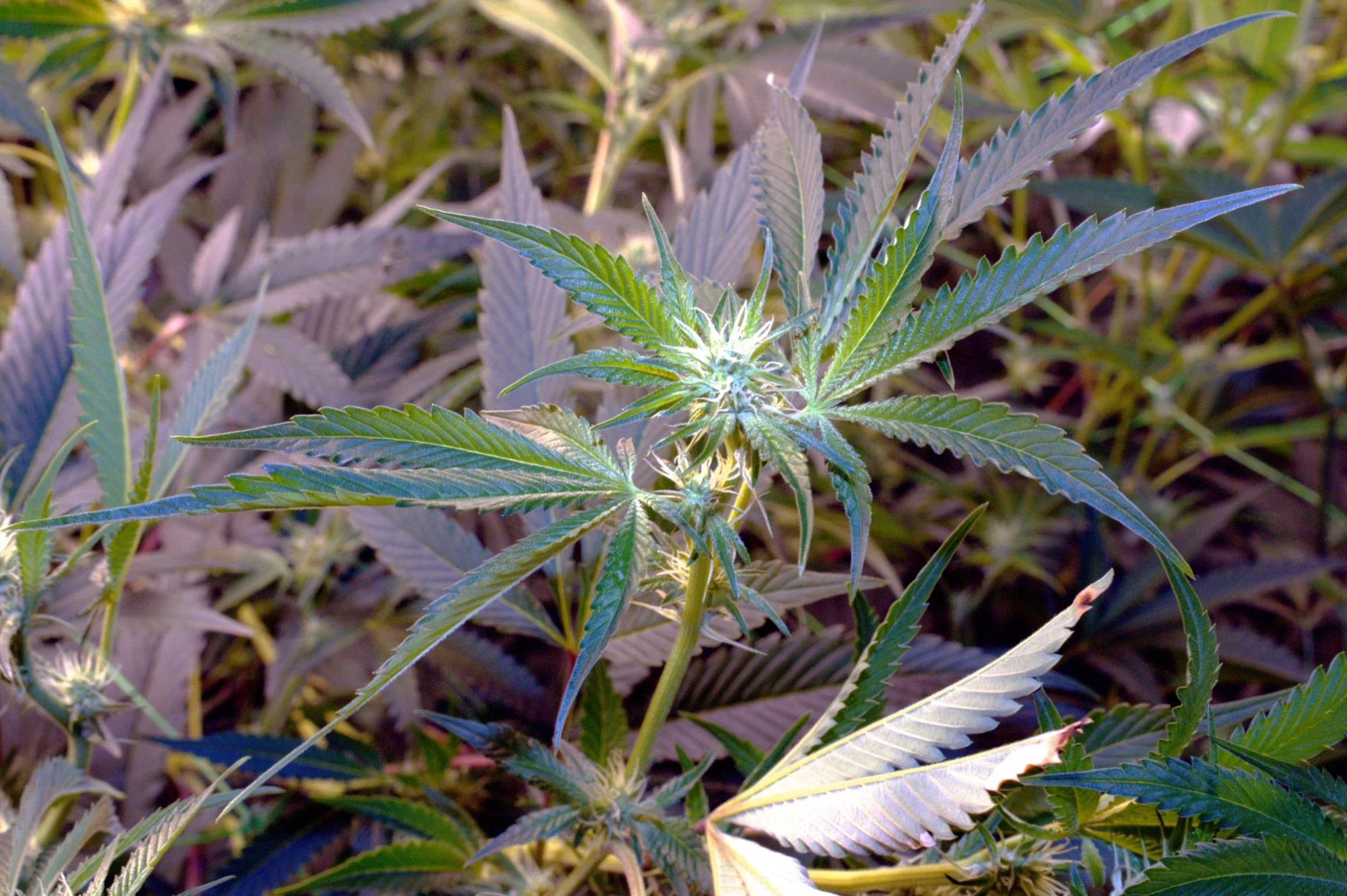
Vanilla Velvet at the start of flowering.Vanilla Velvet in flower, mid-July.
The feminized batch
A second run took place alongside the regular one for a feminized Fast F1 batch. A reversed female Lowryder plant supplied pollen for another clone of the mother. The early-September harvest yielded thousands of seeds. The first feminized seeds are going to DC Family members for test grows and their own grow reports.
Vanilla Velvet in flower in early August, from the run that produced the feminized Fast F1 batch.
What comes next
The parent-to-F1 stage has therefore produced two batches: regular and feminized. Selection continues with the regular F1 plants; their results belong in the next log.
Explore regular seedsBrowse the regular seed collection for growing and breeding projects.