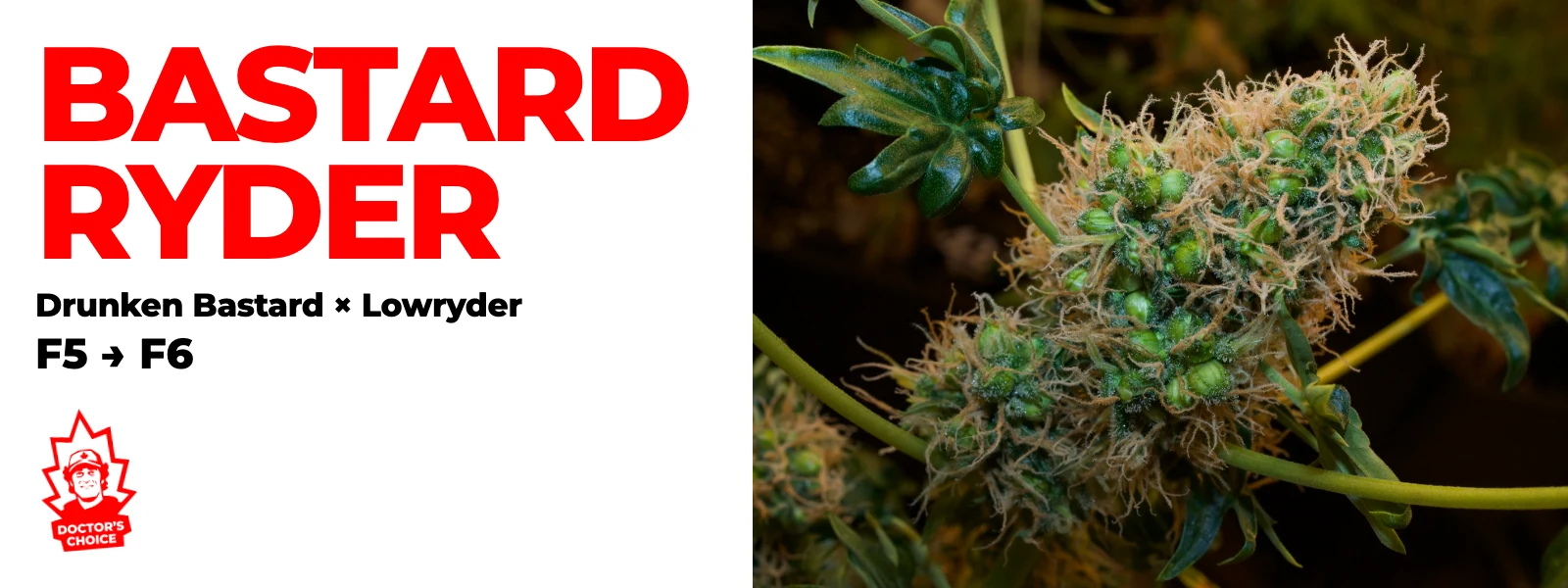
Bastard Ryder came through the Be a Breeder program. mutantfarmer combined Lowryder’s autoflowering with the Australian Bastard Cannabis (ABC) leaf from Drunken Bastard and advanced the line to F5 seeds. Doctor’s Choice then used those seeds to produce a commercial F6 batch. These four logs look back at that work.
Cross
Drunken Bastard × Lowryder
Latest update
Regular and feminized versions released
Breeding history
The stages below were completed before this account was published.
Stage
Work completed
When
Status
P → F5
mutantfarmer crossed Drunken Bastard with Lowryder, selecting for autoflowering and ABC leaves in two parallel lines.
2022–2025
Completed
F5 → F6
F5 plants from mutantfarmer’s seeds were grown and crossed at Doctor’s Choice to produce a commercial F6 seed batch.
Mid-January–April 2026
Completed
Log 01 / The starting point · 2022–2025
A Bastard with Papers
Between 2022 and 2025, mutantfarmer developed Bastard Ryder and documented each generation with plant numbers and dates. He began in spring 2022 with Drunken Bastard F3 seeds from 7East Genetics. Of 12 plants, only one was female: DB#16, which became the line’s mother.
mutantfarmer described DB#16 as a heavily branched plant that grew outwards, tolerated stress well and rooted readily from cuttings. Its aroma was fresh, sweet and citrus-led, with notes of lime.
How mutantfarmer reached F5
In summer 2022, mutantfarmer pollinated DB#16 with Lowryder pollen. From the F1 plants, he kept two females, BR#3 and BR#12, and one male, BR#6, for breeding. The mothers already differed in aroma: BR#3 was brightly fruity and sour, with blueberry notes; BR#12 was sharper, with blueberry and garlic. They became the founders of two lines, #3 and #12.
Neither autoflowering nor the ABC leaf appeared in F1. The two traits came together in F2, with the expected combination at roughly one plant in sixteen. In summer 2023, mutantfarmer sowed more than 350 F2 seeds and selected autoflowering plants with ABC leaves, then continued through F3 and F4.
By the end of 2024, the two lines had diverged in aroma. Harvest records for six of eight F3 plants from line #3 listed apple blossom and lemon. All three recorded F4 plants from line #12 had blueberry notes, like their mother.
The seed run at Doctor’s Choice began in mid-January 2026. mutantfarmer had collected the starting seeds from his F4 plants, so the plants in the tent were the fifth generation of the line.
The run took place indoors under a 650 W LED with drip irrigation. The plants grew in Terra Aquatica soil and grow bags, with Powder Feeding Hybrids and Terra Aquatica nutrients.
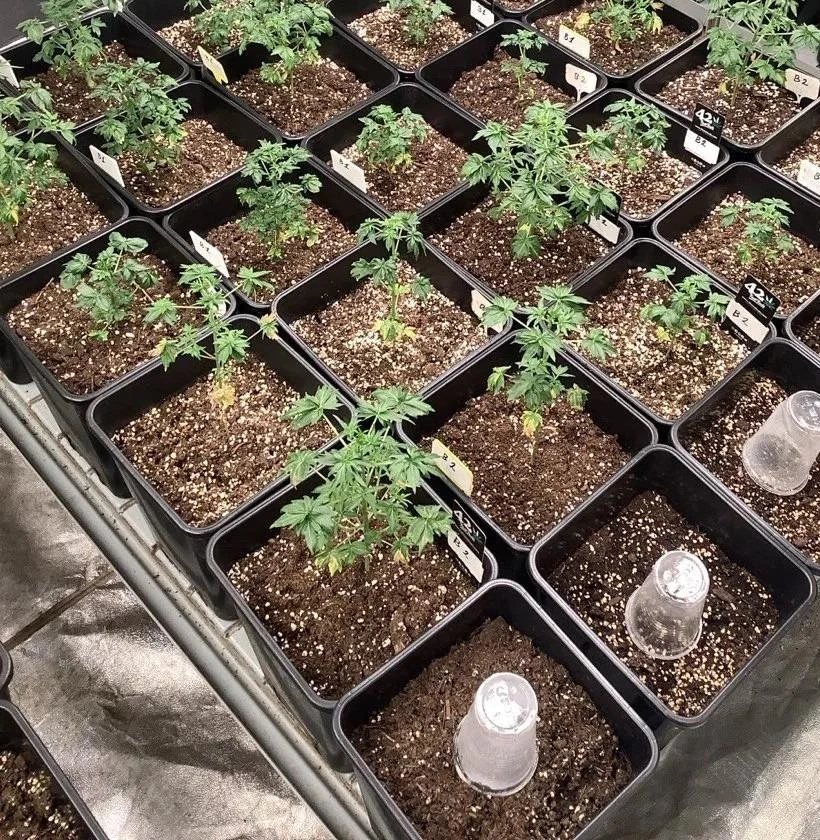
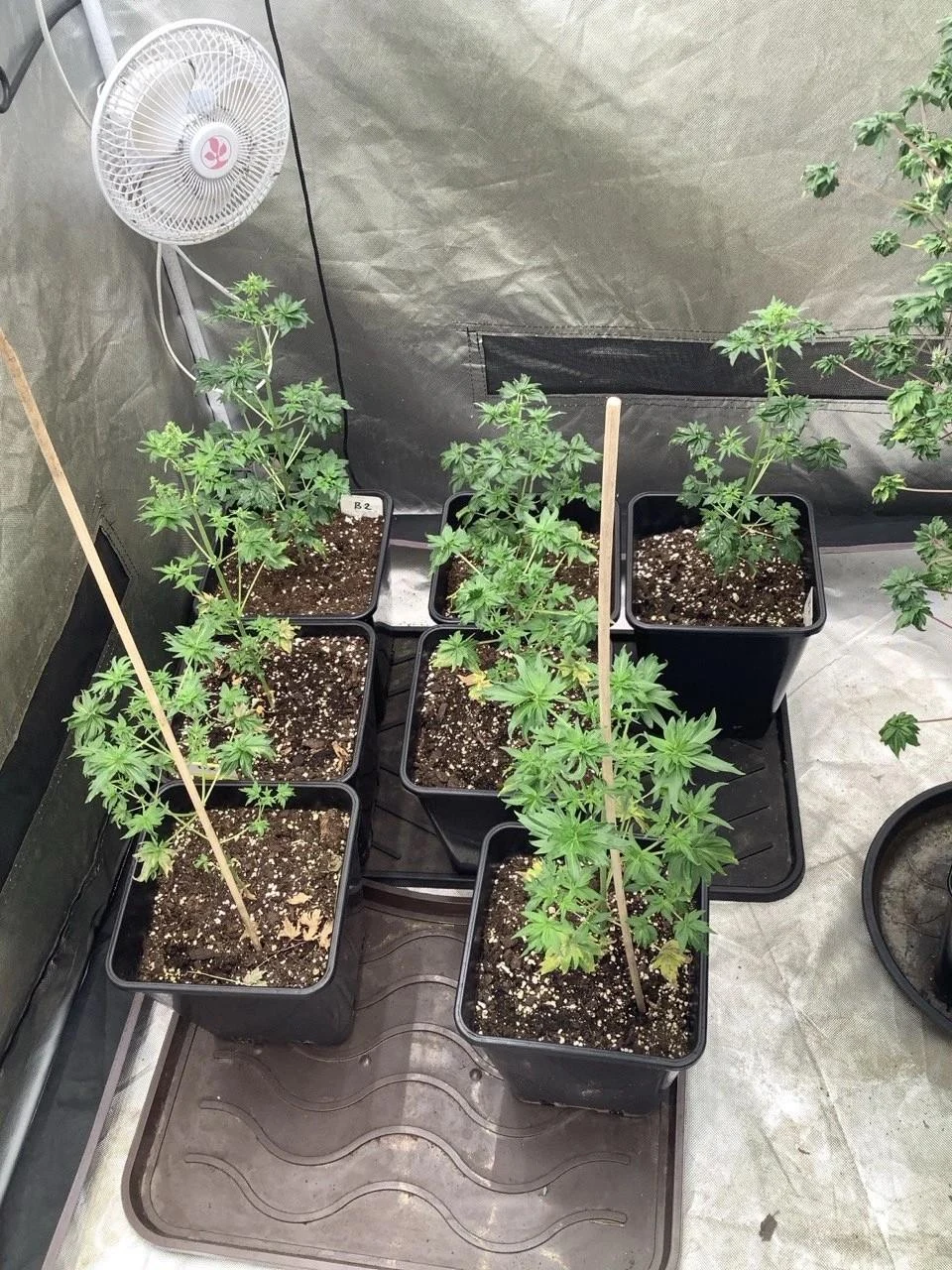
The F5 plants came from two lines, marked B1 and B2 on the pot labels.
Early vegetative growth, January 2026.Vegetative growth, January 2026.
Flowering and crosses between the F5 plants followed in the next stage of the run.
Log 03 / Flowering and pollination · Late March 2026
Girl with a Pollen Earring
By late March, the F5 plants were flowering and pollination took place in two separate areas. In the box, a female donor plant supplied pollen for feminized seed production. That pollen was used on F5 female plants and Fastberry Bastard mother plants. The regular Bastard Ryder plants stood in another area, where pollen collected from males was used on the females.
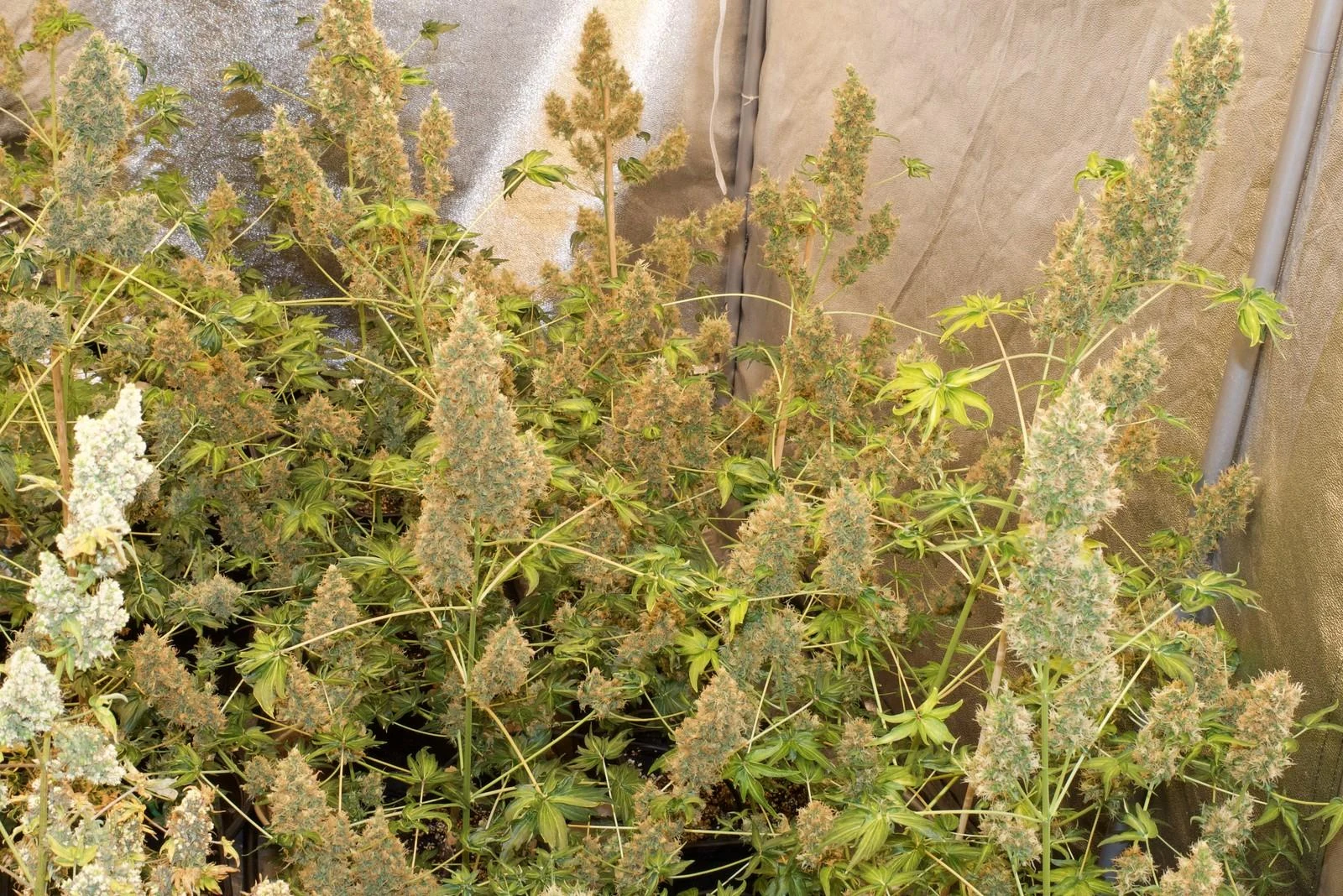
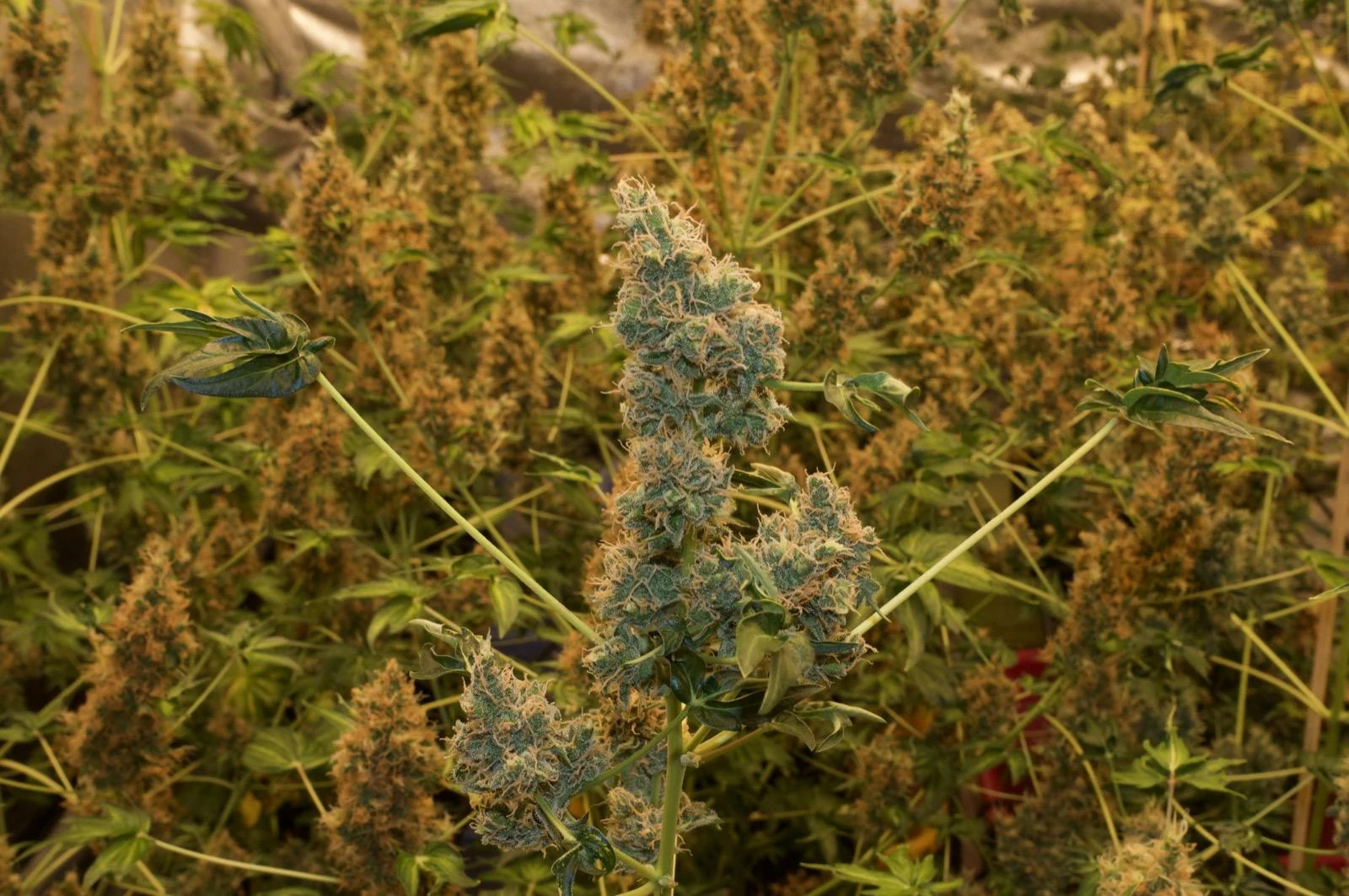
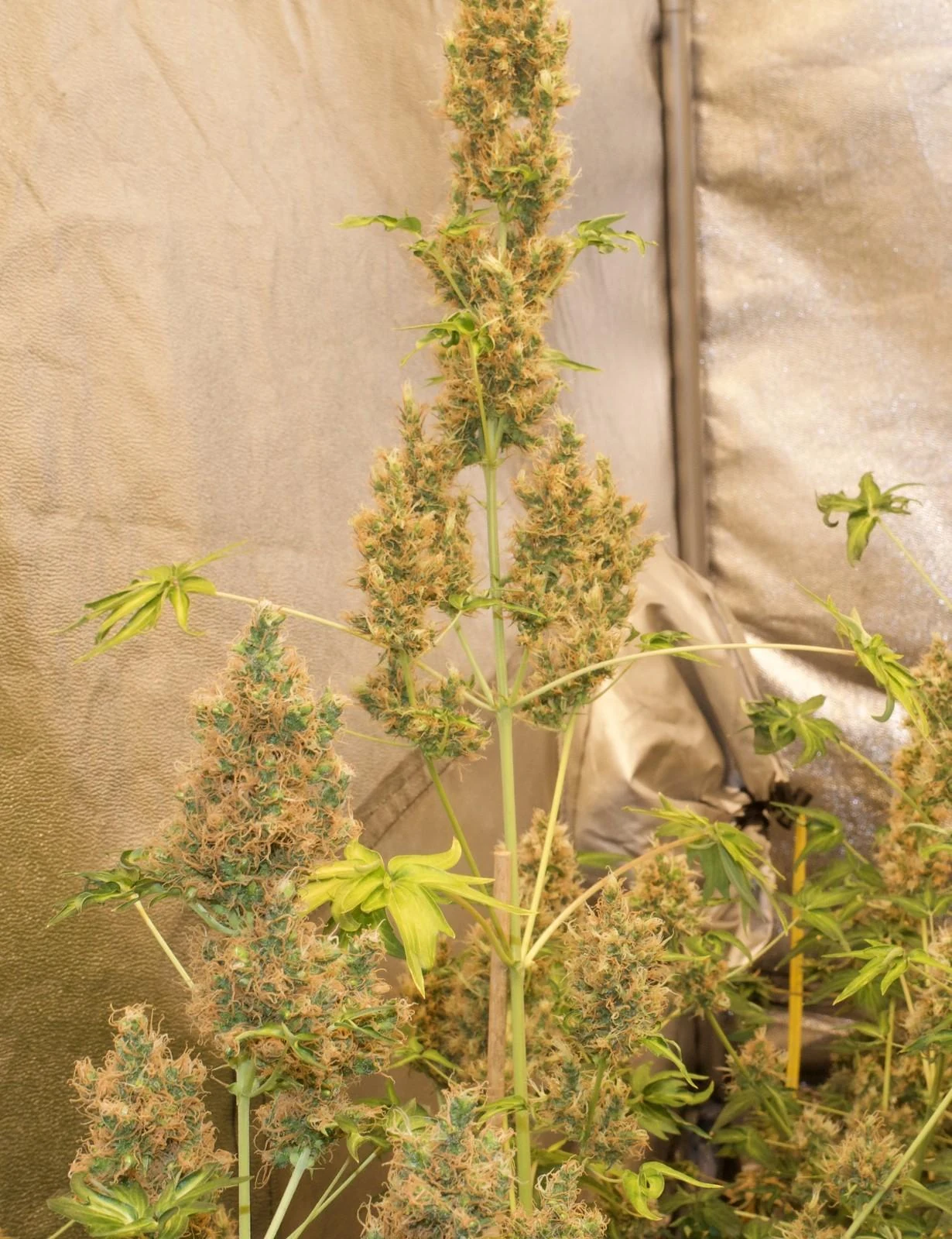
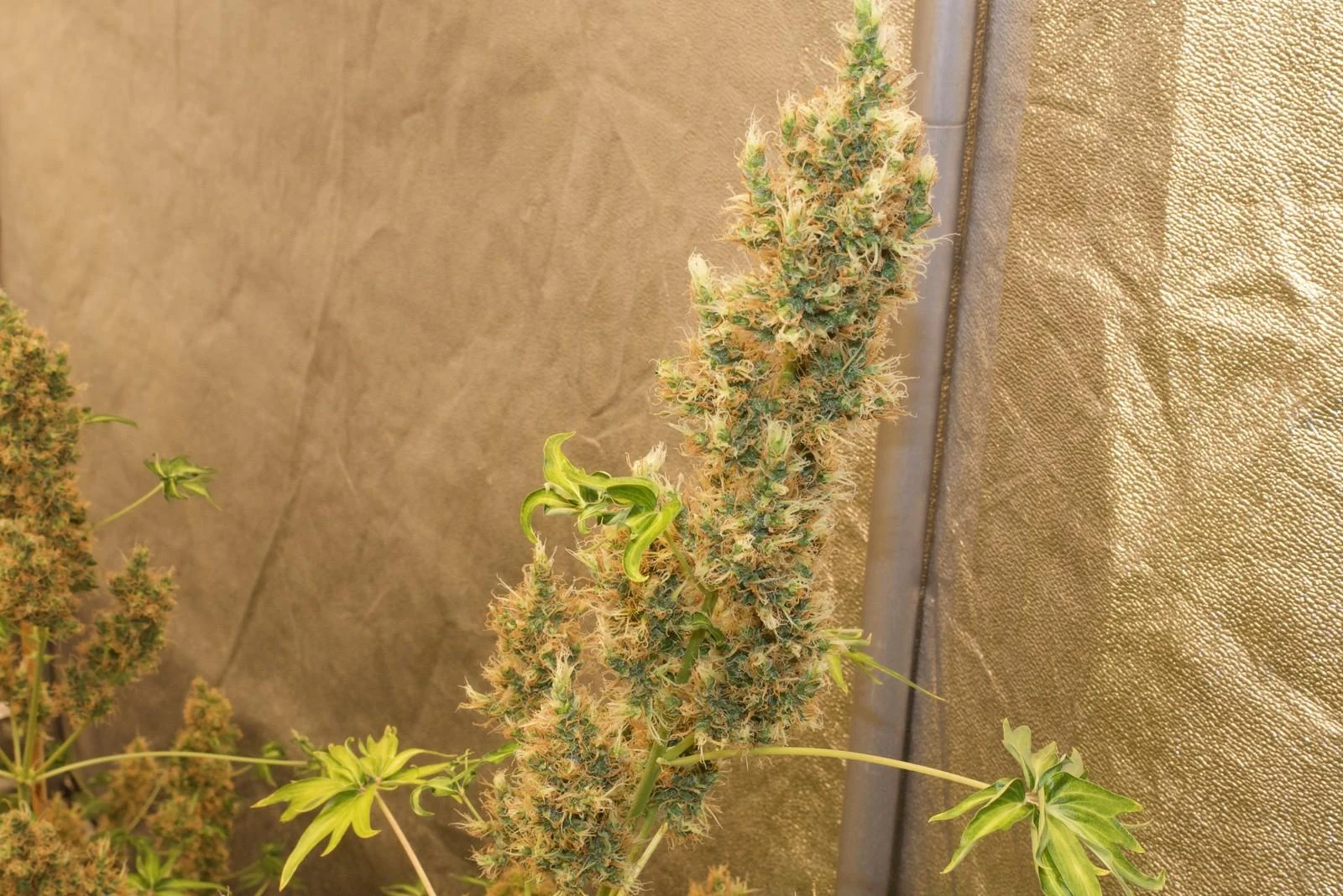
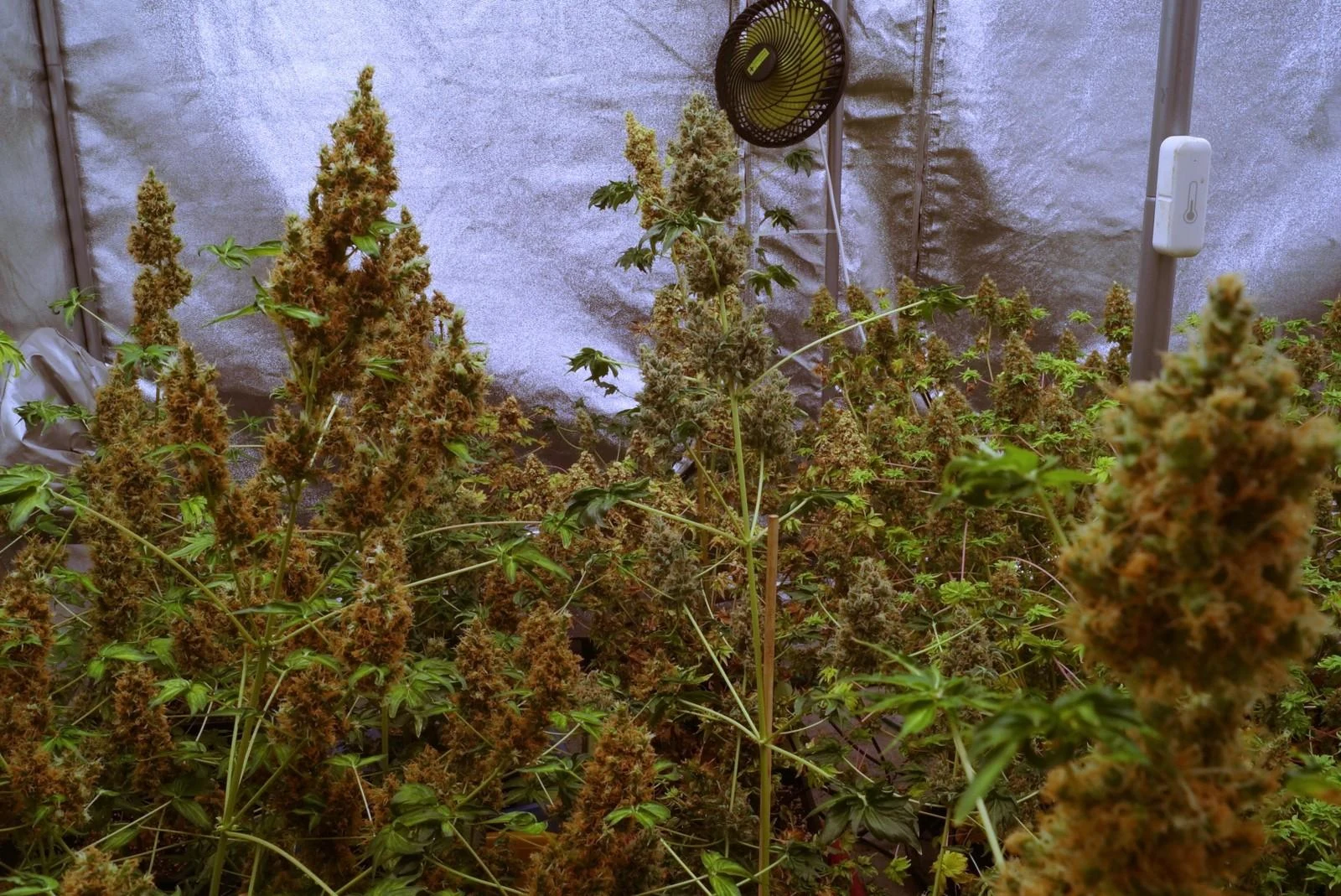
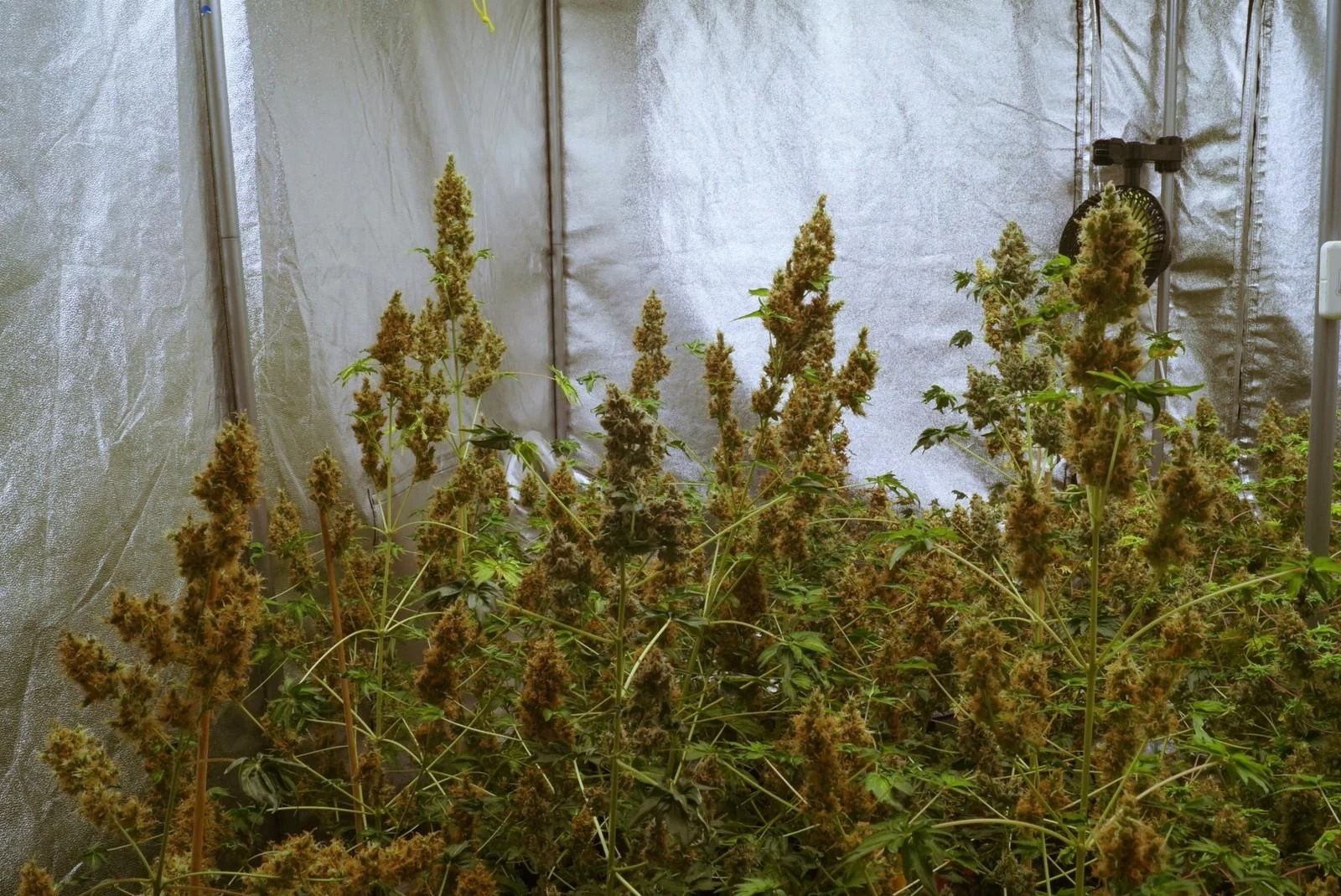
By then, the plants filled the tent and their canopies had closed together. They had stretched upwards, with a long central cola and flower clusters on the side branches. The ABC leaf remained visible in flower, including directly around the flower clusters.
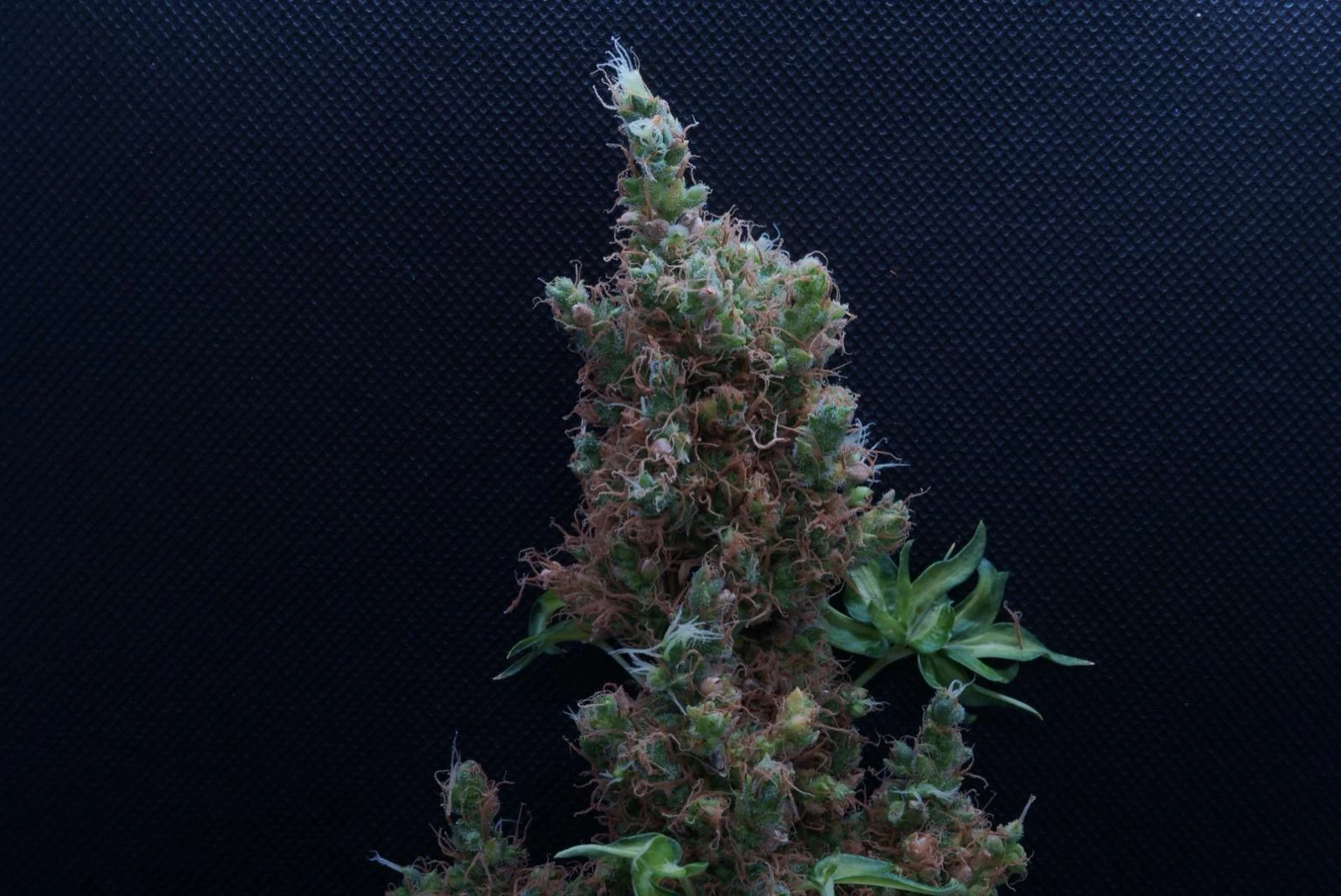
The seed run tent viewed from above, late March 2026.Flowering in the seed run, late March 2026.The top of an F5 plant, late March 2026.An upper flower cluster beside the tent wall, late March 2026.
The donor in the box
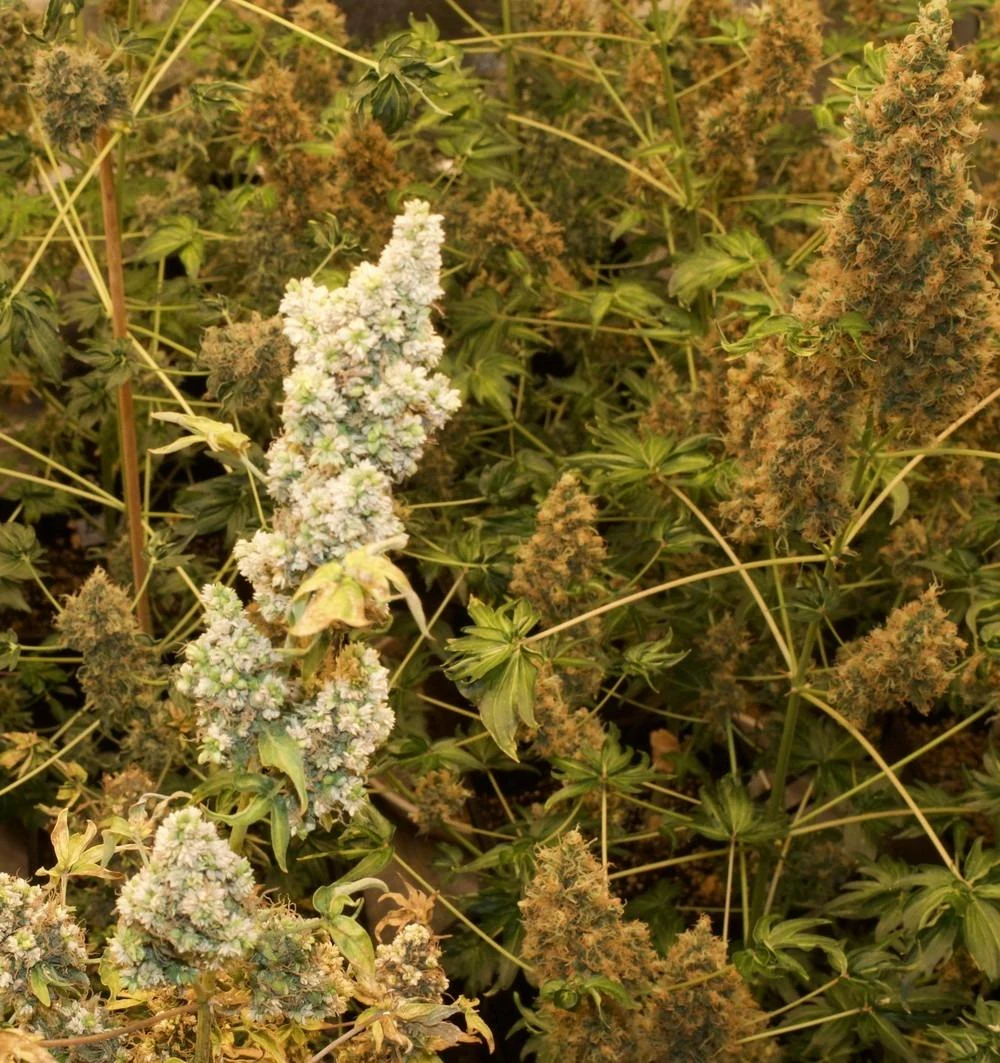
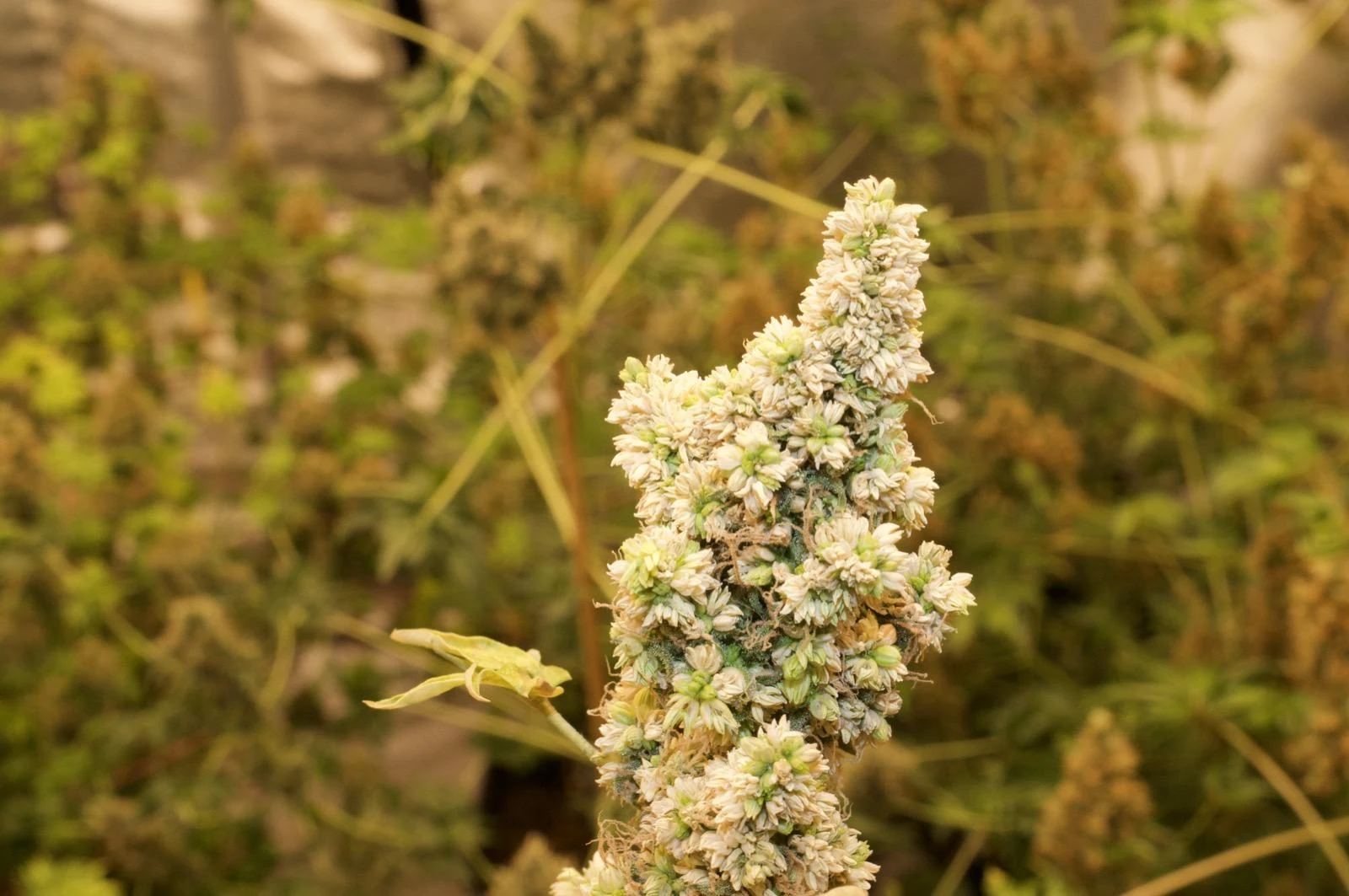
The donor stood among the female plants and was still shedding pollen in late March. Male flowers had opened in dense clusters across its top, while the surrounding leaves had already yellowed.
The donor among the female plants, late March 2026.A female donor with open male flowers, late March 2026.
Two stages on one cola
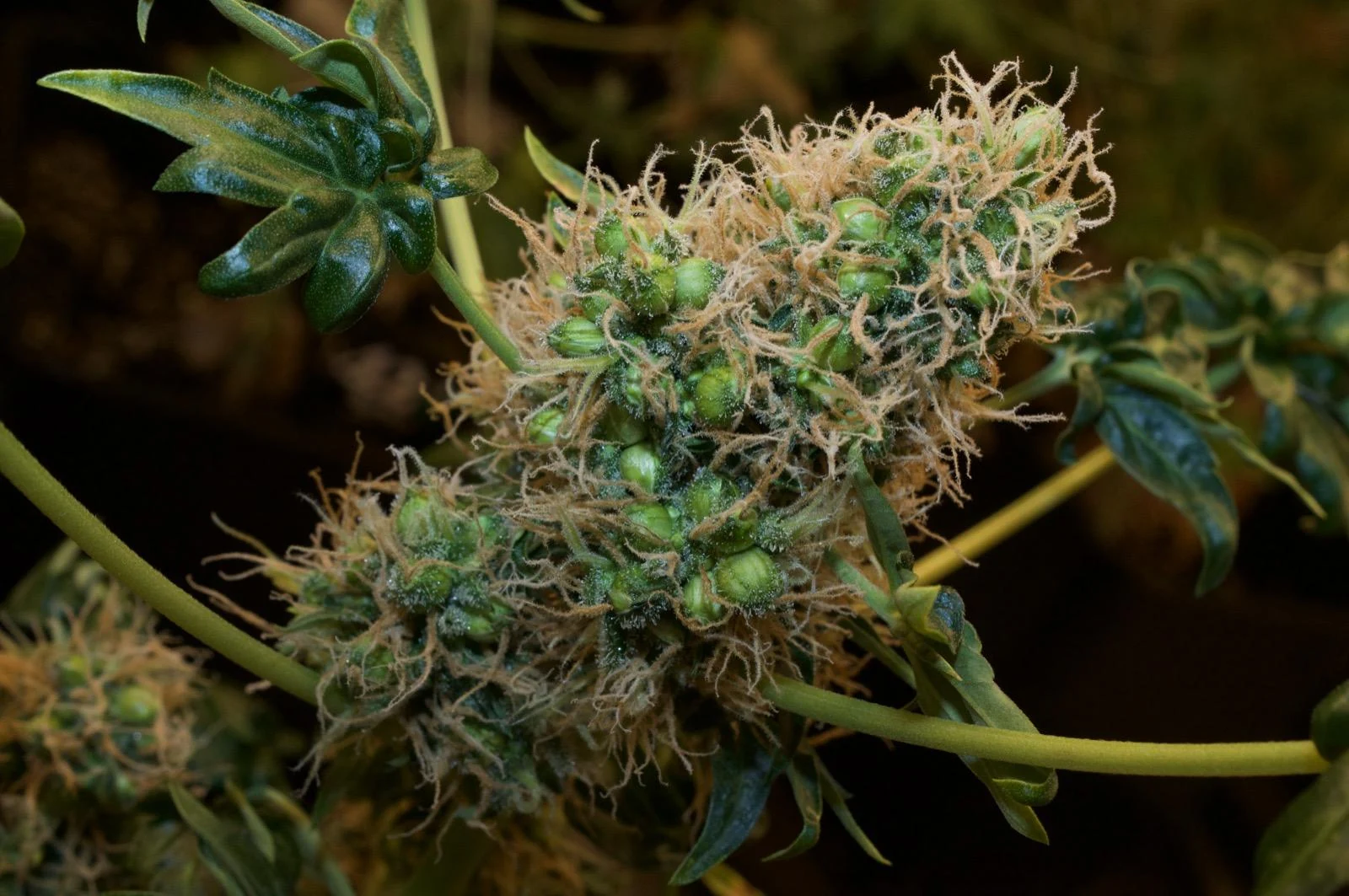
The female flower clusters were at different stages in late March, sometimes even on the same cola. White pistils were still receptive to pollen; orange, dried pistils marked flowers that had been pollinated or had finished flowering. Beneath the orange pistils, the calyxes had swollen and rounded as F6 seeds developed inside.
Swollen calyxes and ABC leaves, late March 2026.The ABC leaf beside a flower cluster, late March 2026.
Log 04 / F5 → F6 · April 2026
Heirs Apparent
This run produced the commercial F6 seed batch of Bastard Ryder.
The tent turns orange
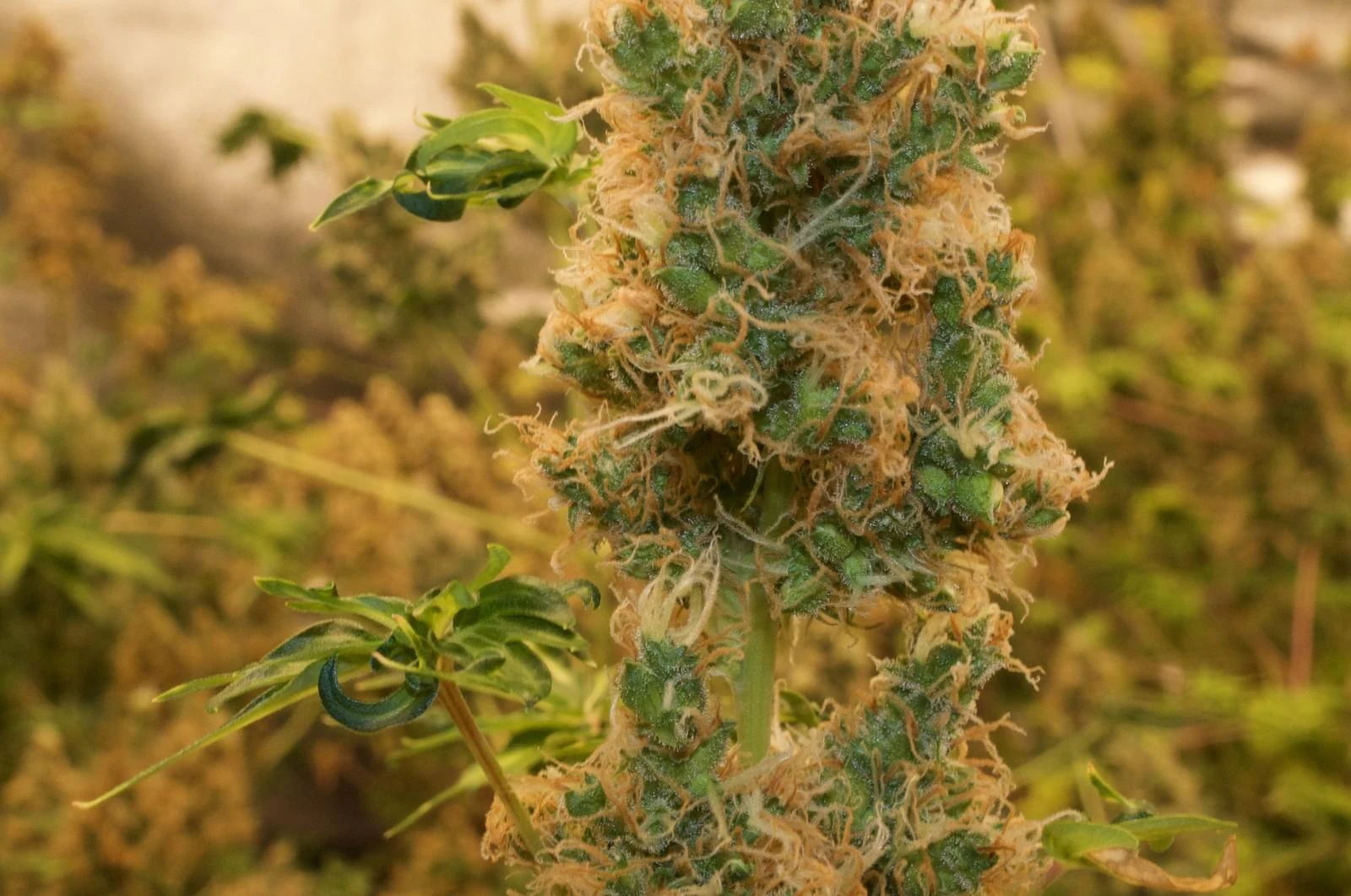
By early April, few white pistils remained. Most had turned orange and dried, with orange-topped colas visible throughout the tent.
Colas with orange pistils, early April 2026.The seed run tent viewed from the side, early April 2026.
Seeds in the cut tops
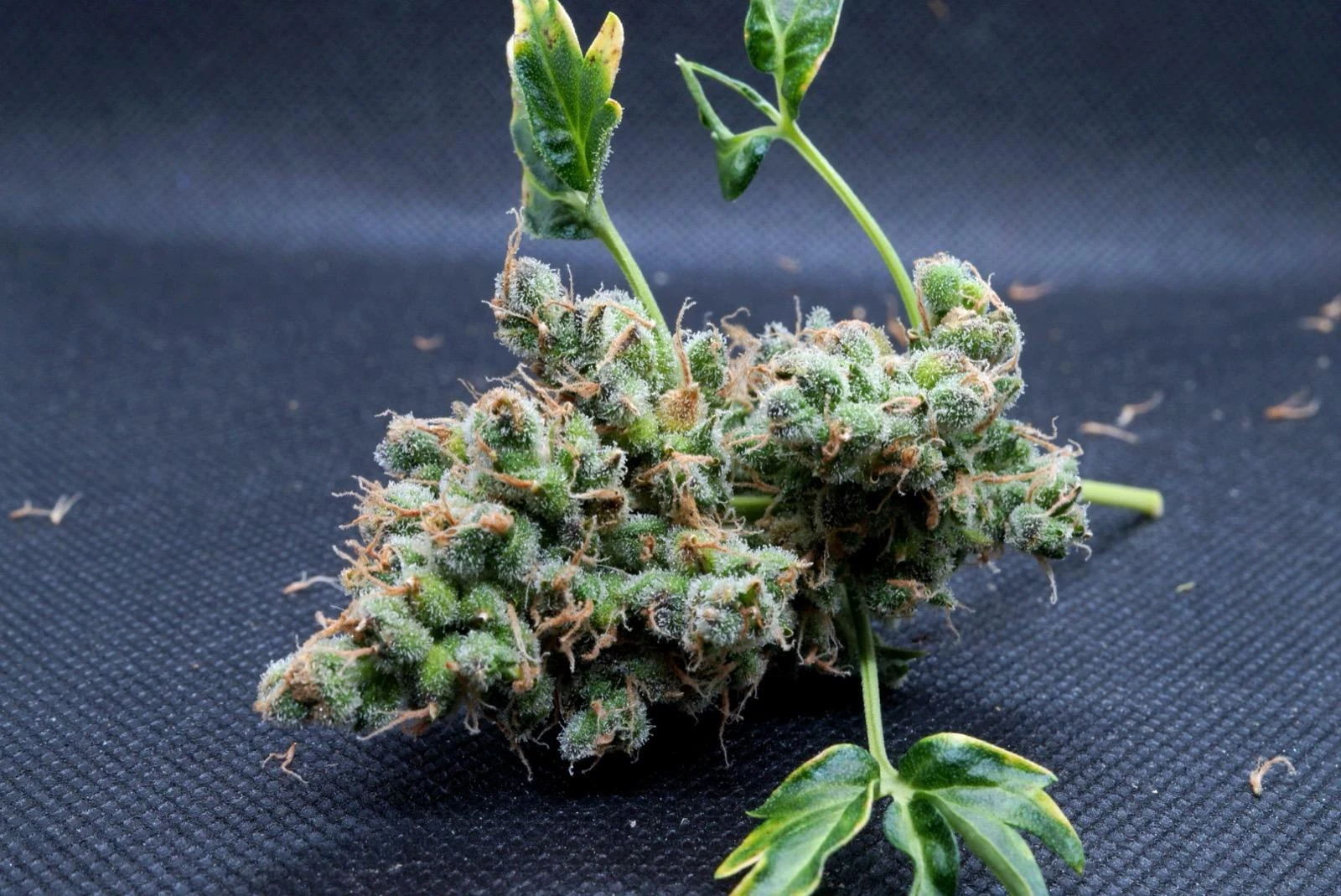
In mid-April, the cut tops were photographed against a dark background. Calyxes had swollen along the full length of the flower clusters. Most pistils were orange, with white ones remaining on only some tops. The cut shoots retained their ABC leaves, and seeds were already visible in the flowers.
Seeds in a flower cluster, mid-April 2026.A flower cluster and ABC leaves, mid-April 2026.
The F6 seeds from this run became the regular and feminized versions of Bastard Ryder, both available from Doctor’s Choice. This completed the work on the line.
Explore regular seedsBrowse the regular seed collection.