P, F1, F2, S1 and Fast: How to Read Breeding Generations
The stage label tells you which plants are growing now and which seeds a breeder is making. Here is how to read that label—and the other terms that appear beside it.
Reading a stage label
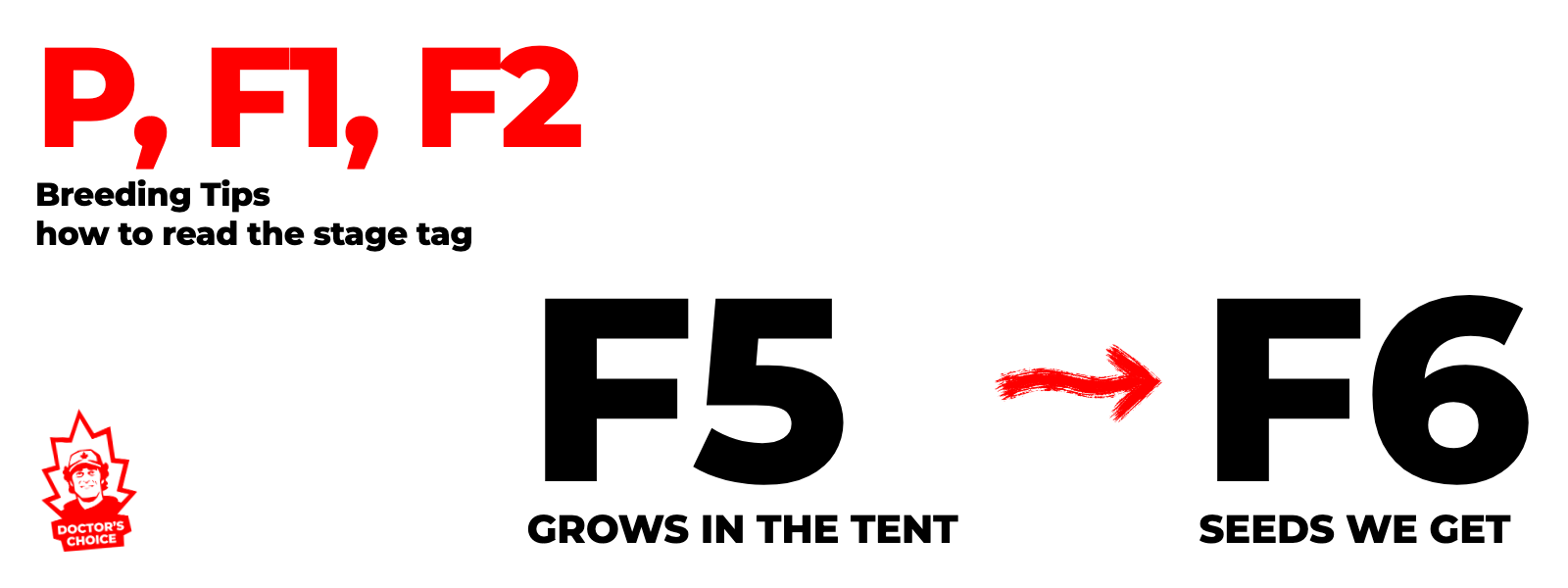
In the Breeding Room, the stage appears above each line’s journal. The left side of the arrow names the plants in the current run; the right side names the seeds produced from them. A seed and the plant grown from it have the same generation label. If F1 plants are crossed with F1 plants from the same line, their seeds are F2.
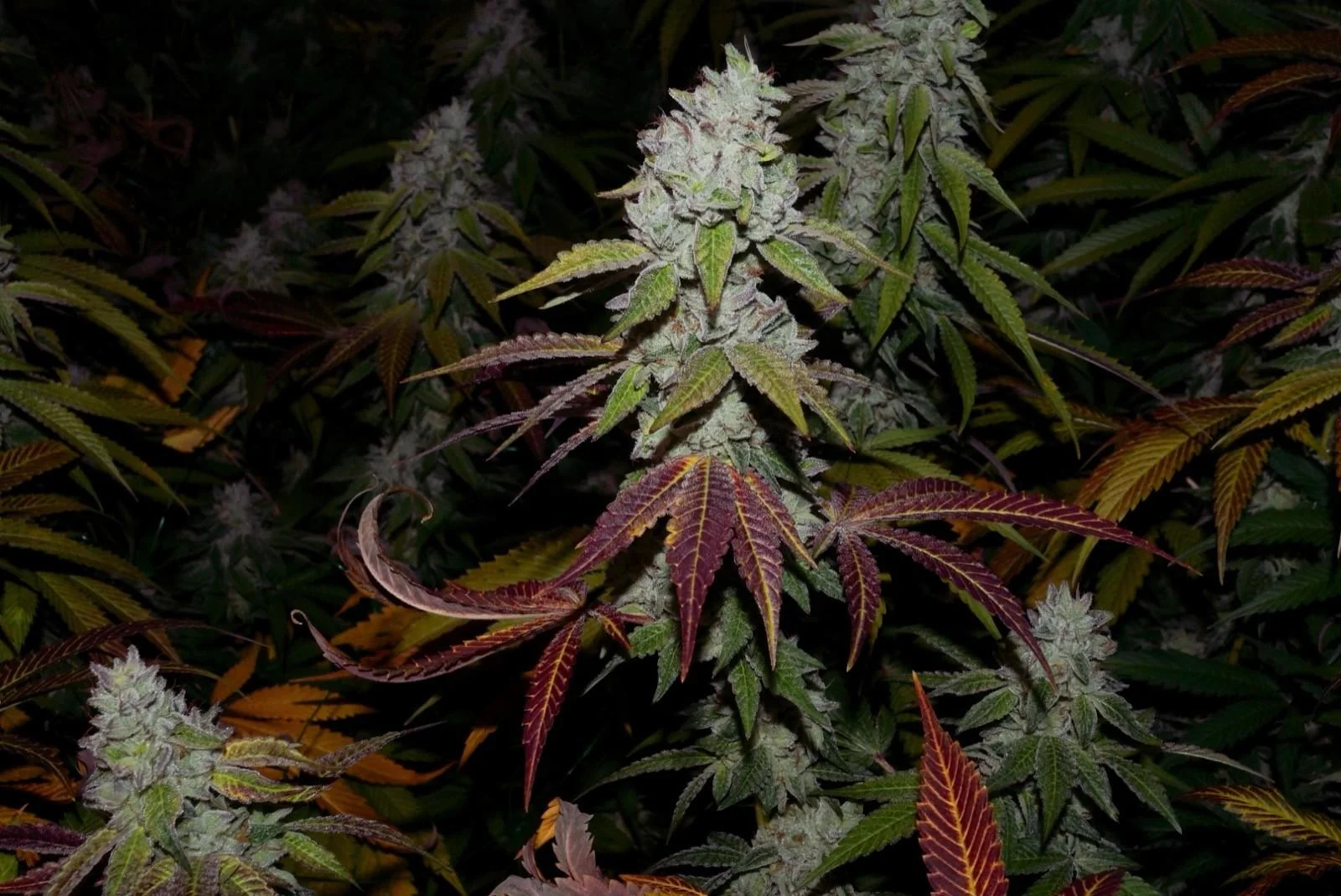
Black Mamba #42 Auto is at P → F1: its parent plants produced first-generation seeds, collected in mid-July 2026. Freaky Ryder has moved through F5 → F6: F5 plants were grown and F6 seeds were collected. Its first F1 plants were grown by mutantfarmer in autumn 2022.
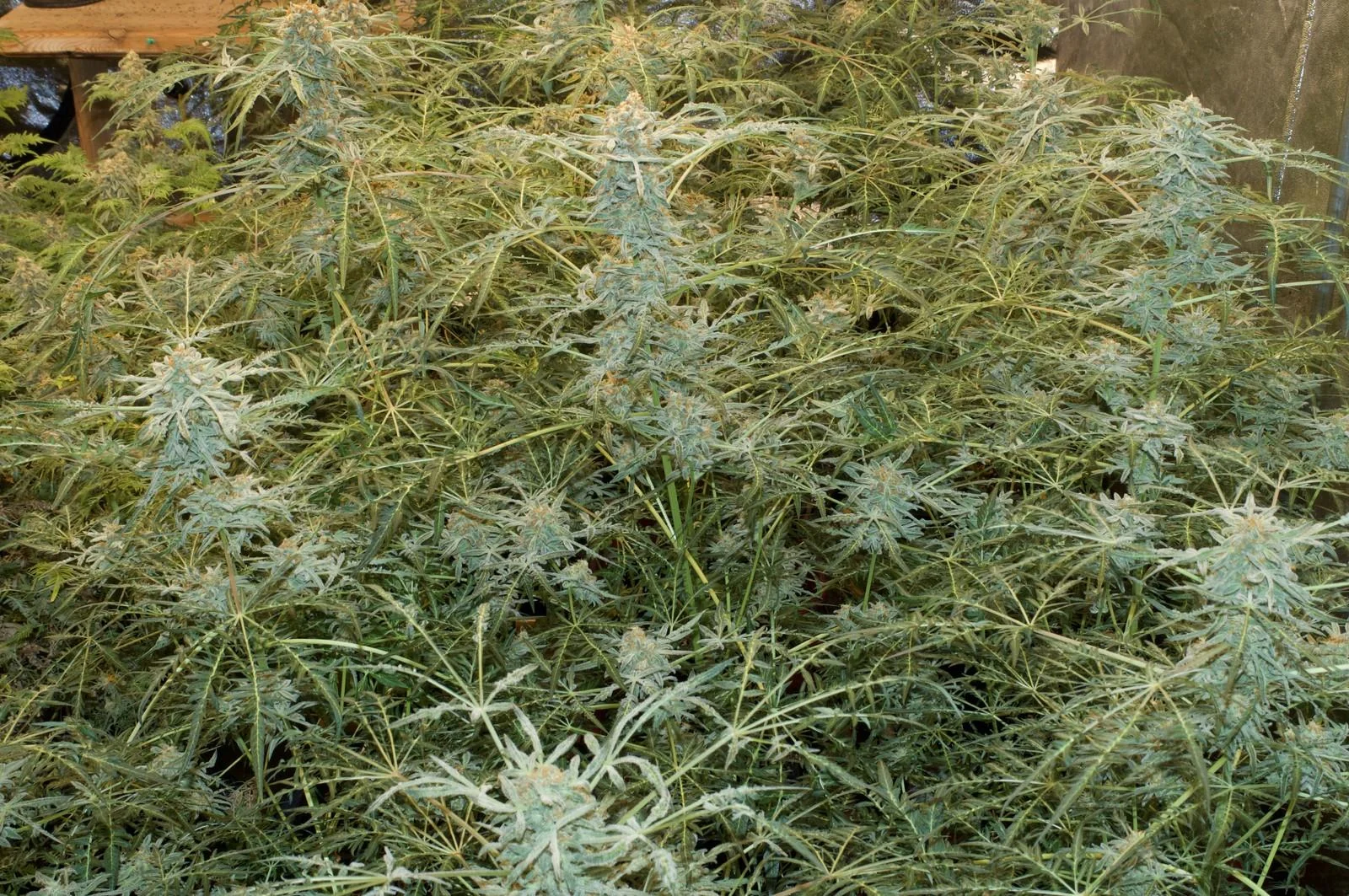
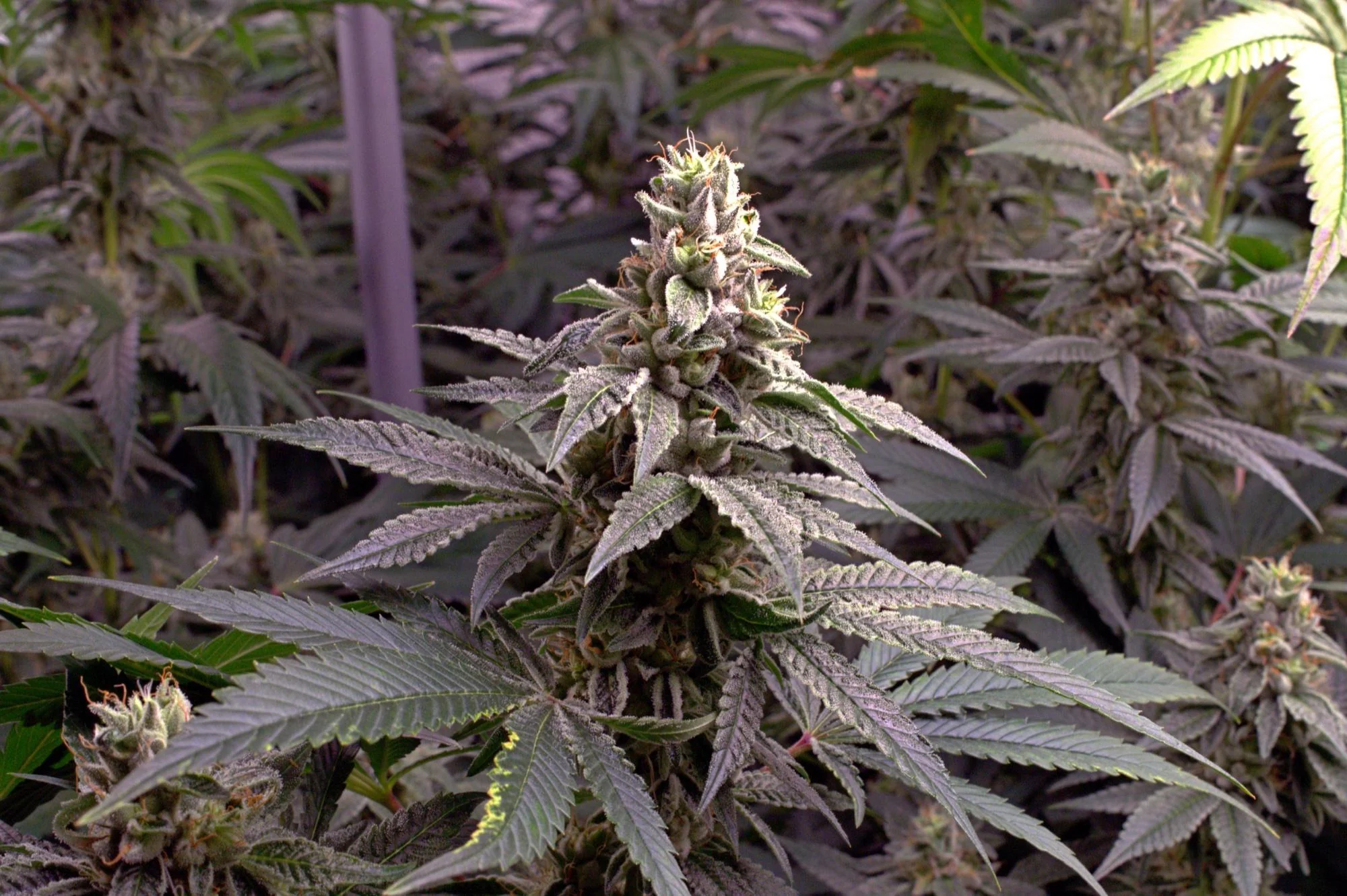
F5 plants grow in the tent; their seeds are F6.F5 Freaky Ryder plants flowering in late March 2026. They produced F6 seeds.
P stands for parental. These are the parents of the cross from which the new line’s generation count begins. For Velluto, a six-month selection narrowed eleven Vanilla Velvet plants to one mother. For Black Mamba #42 Auto, two mothers stood out among twenty plants; Lowryder supplied the pollen for both. Each cross is at P → F1.
A P parent may itself come from a later generation of another line. The Fastberry Bastard mothers came from a selection of Blueberry Bastard F4 plants from 7East Genetics. The new Fastberry Bastard cross still starts at P → F1: a new pair of parents starts a new F count.
Blueberry Bastard F4 plants during selection for Fastberry Bastard, late November 2025.
F1: the first generation
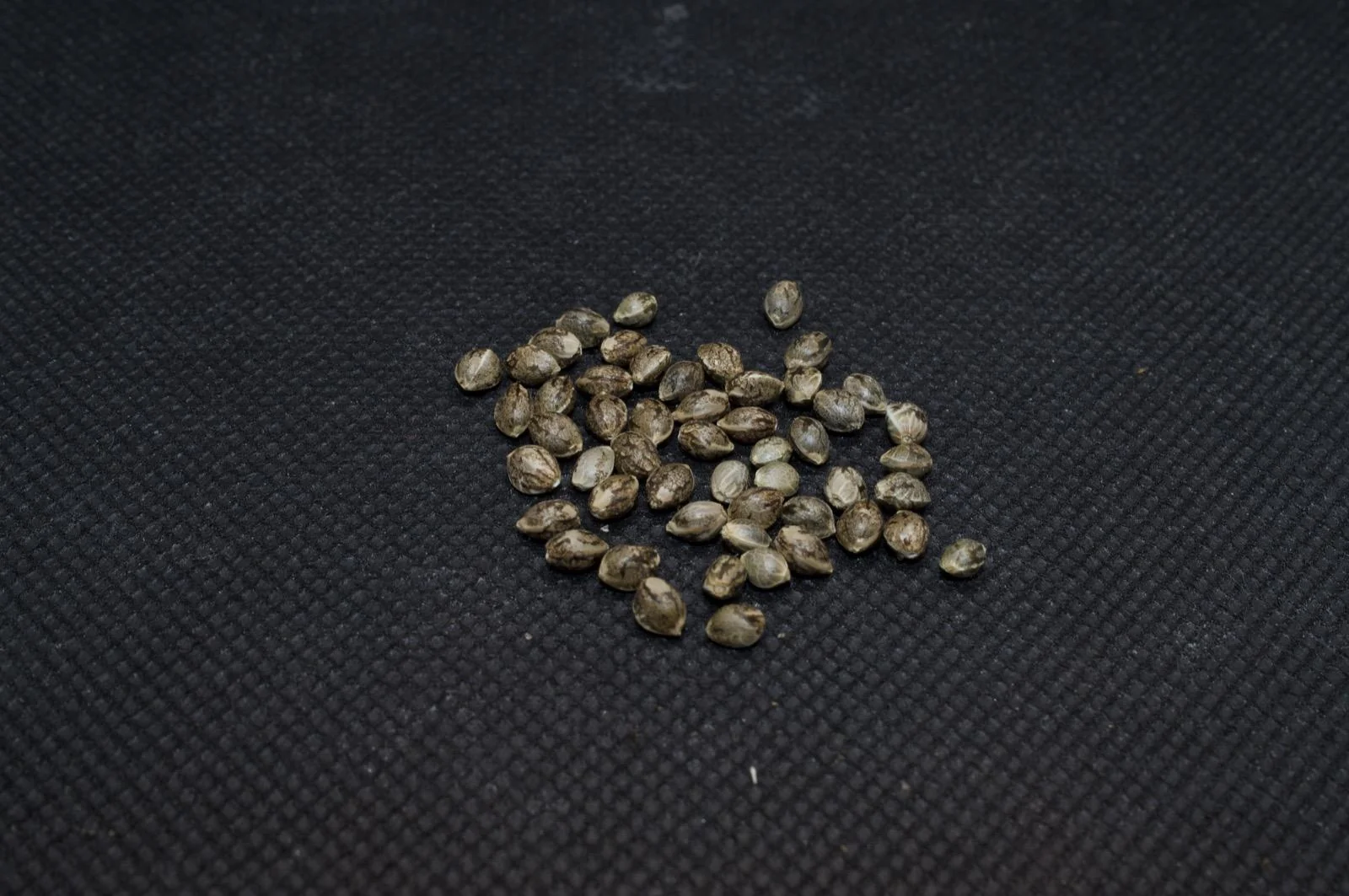
F comes from filial, meaning offspring. The number counts generations from the P cross. F1 describes both the seeds from that first cross and the plants grown from those seeds. The Black Mamba #42 × Lowryder seeds collected in July are F1 seeds.
Black Mamba #42 × Lowryder F1 seeds, mid-July 2026.
In a diploid plant, a gene generally has two copies, one inherited from each parent. Different versions of a gene are called alleles. A plant with two matching alleles at a gene is homozygous there; with two different alleles it is heterozygous.
If both parents are homozygous for different alleles at one gene, every F1 plant receives the same pair at that gene. But cannabis parents can be heterozygous at many genes and pass different alleles to different offspring. That is why F1 plants from a breeding cross need not look identical.
Although the genetics were strong and the plants looked very similar, the desired traits were still spread across the eleven Vanilla Velvet plants. One stood out for having the best combination. The two Black Mamba #42 mothers may also pass on different traits, so their F1 seeds remain in separate batches for independent grows and comparison.
Autoflowering in F1 and F2
For the simple recessive model used to plan these crosses, a plant flowers without a light-cycle change when it inherits an autoflowering allele from both parents. An autoflowering Lowryder parent carries two copies. If the photoperiod parent carries no autoflowering allele, every F1 inherits one autoflowering and one photoperiod allele, and remains photoperiod-dependent.
Cross two such F1 plants and each parent passes either allele to roughly half its offspring. At this one locus, F2 genotypes have an expected 1:2:1 split:
¼Two photoperiod alleles
½One of each; photoperiod-dependent carriers
¼Two autoflowering alleles; autoflowering plants
One in four is an expectation, not a promise for a particular tray of seedlings. The observed share can differ, especially in small groups. This model also assumes that the photoperiod parent has no autoflowering allele; flowering time can involve other genetic effects. The search for autoflowering plants will continue in the F2 generations of both Black Mamba #42 × Lowryder and Vanilla Velvet × Lowryder.
When a second desired trait is also uncommon in F2, fewer plants will show both. That is why combining autoflowering with an unusual leaf form, as in Freaky Ryder, calls for larger selections.
F3, F4 and beyond
Each following generation comes from plants chosen in the previous one. Repeated selection can make a line more consistent for the particular traits being selected; the generation number alone does not guarantee uniformity.
mutantfarmer carried Freaky Ryder from F1 to F5 seeds. In F3 and F4, he selected for the Freakshow leaf, plant structure, and resistance to mold and pests. Work on the line has continued at the production site since 2026, bringing it to F6.
IBL
IBL means inbred line. Its plants have been crossed and selected within a line over many generations, with the aim of producing more predictable offspring for selected traits. The father line of Freaky Ryder is Lowryder IBL.
BX: backcross
BX means backcross: an offspring plant is crossed back to one of its parents or a plant from that parent’s line. Scientific writing often uses BC. The number after BX counts the backcrosses.
In the original F1, each parent contributes half the ancestry. After one backcross to a parent, the expected average share from that parent is three quarters; further backcrosses raise it. Breeders use the method to recover much of one parent’s genetic background while bringing in a trait from the other. Actual plants still vary and must be selected.
Landraces and generation labels
F counting starts from a defined P cross. A landrace is a locally maintained population shaped by many generations in one region, without a single named pair of parents from which to begin that count. Tulga Parvati begins with Rasol, a landrace from the Parvati Valley.
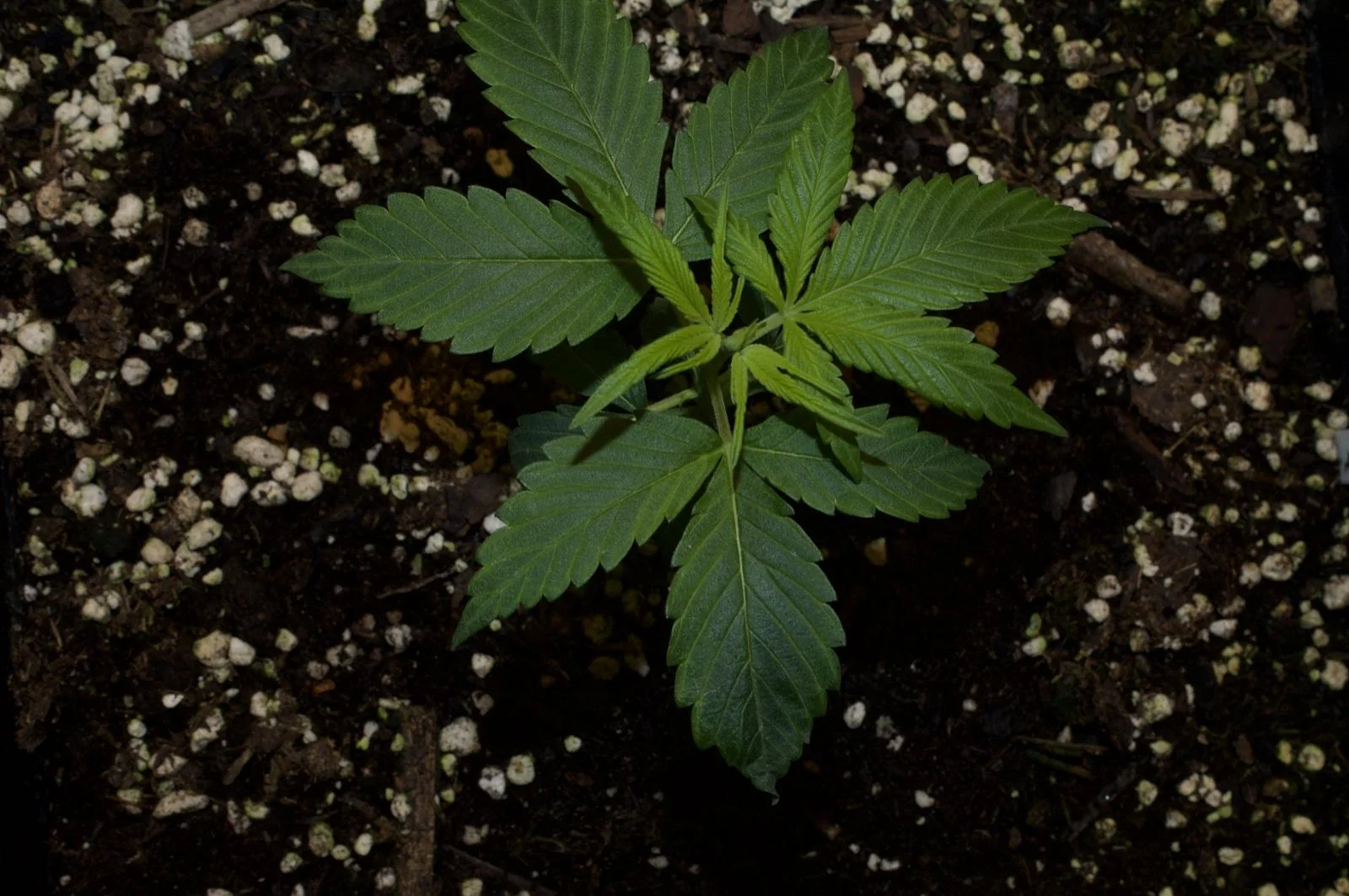
Rasol seedlings, mid-March 2026.
Selection narrowed thirty Rasol plants to one male and three females. The current stage is Rasol → Rasol × Rasol: Rasol plants are growing, and their crosses produce the next Rasol seed generation. The following stage calls for a cross between selected Rasol × Rasol plants and Lowryder. Those selected plants and Lowryder will be P parents for Tulga Parvati; the resulting seeds will be F1.
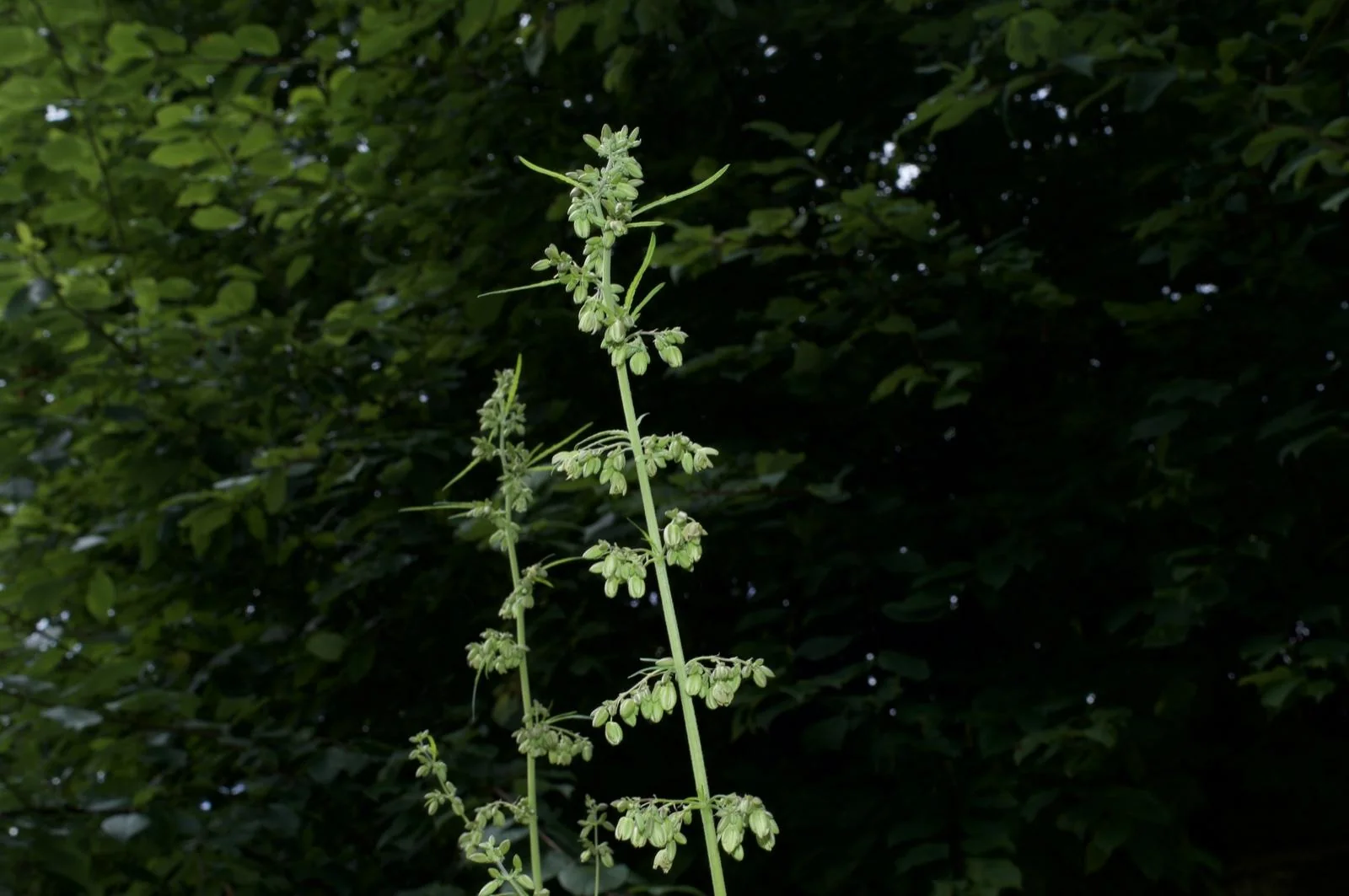
A flowering male Rasol plant grown from regular seeds, mid-June 2026.
Regular and feminized seeds
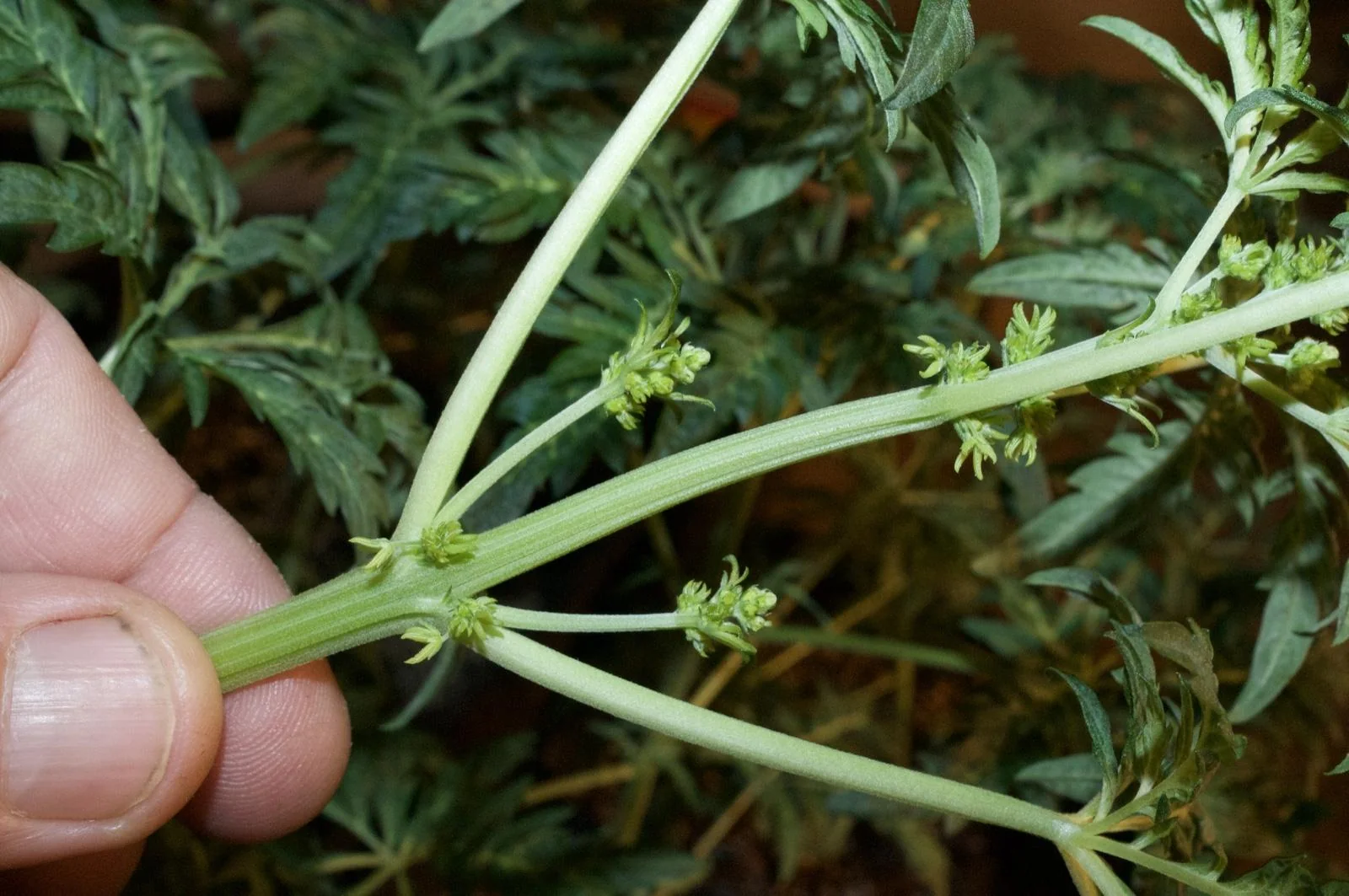
Regular seeds can produce male and female plants. Pollen from selected males can fertilize females to make the next generation. Feminized seeds are made using female parents: one female plant is reversed to produce pollen-bearing flowers, and its pollen is used on a female plant. The resulting seeds are intended to produce female plants.
During Freaky Ryder feminization, reversed plants produced less pollen than usual and it was less fertile, so the run needed more pollen donors.
Collecting pollen for the feminized Freaky Ryder F6 batch, early July 2026.
S1 and S2: selfing
S1 seeds come from a plant fertilized by its own pollen. A female plant can be reversed, then its pollen applied to its own flowers or to a clone of the same plant. That differs from an ordinary feminized cross between two distinct female parents. Like other feminized seed batches, S1 is intended to produce female plants.
S1 plants can still differ from one another. Both copies of a gene come from the same parent, but its two alleles may differ. A homozygous parent passes the same pair at that gene; a heterozygous parent can produce a 1:2:1 split at that gene in S1, exposing recessive traits hidden in the parent. S1 can be made from a female plant maintained only as a clone.
S2 comes from selfing an S1 plant again. Each round of selfing is expected, on average, to halve the proportion of heterozygous loci, though selection and the starting plant matter.
Fast F1
Lowryder flowers without a change to the light cycle. Vanilla Velvet is photoperiod-dependent; indoors, flowering is induced by switching to 12/12. Their first-generation cross is Velluto Fast F1, with a faster-flowering photoperiod target in this first cycle and an autoflowering line as the longer-term goal.
Vanilla Velvet in flower, early August 2026.
Fast F1 describes a first-generation cross between a photoperiod line and an autoflowering line. If the photoperiod parent does not carry the autoflowering allele in the simple model above, the F1 plants each carry one copy and remain photoperiod-dependent, but can flower faster than the photoperiod parent. They may vary in other traits because the parents may be heterozygous.
Sweet Seeds introduced its F1 Fast Version range in 2013 and reported that its hybrids flowered around one to two weeks faster than the photoperiod parent.
Why keep making the F1 cross?
Only the first-generation cross between those particular parents gives every offspring one copy of the autoflowering allele under this model. Cross its F1 plants and the F2 will segregate: around one quarter are expected to autoflower, while the others remain photoperiod-dependent. The other traits can also spread out. To reproduce the same Fast F1 seed batch, the breeder crosses the chosen photoperiod and autoflowering parents again.
Regular and feminized Fast F1
For autoflowering inheritance, regular and feminized F1 batches from the same parental lines follow the same first-generation model. The regular batch may produce male plants, which can pollinate F1 females to make F2. A feminized F1 batch uses pollen from a reversed female in a parent line and is intended to produce female plants. To make the next generation from it, one F1 female can be reversed and used to pollinate another F1 plant. If the same F1 plant pollinates itself or its own clone, the seeds are S1, though the autoflowering locus can segregate in the same 1:2:1 pattern.
Velluto in practice
The selected Vanilla Velvet mother and Lowryder produced a regular F1 batch. In a parallel run, pollen from a reversed female Lowryder made a feminized F1 batch. Vanilla Velvet flowers in about eight to nine weeks after the 12/12 switch. For the first Velluto Fast F1 cycle, the target is six to eight weeks; the F1 grow will establish the actual timing. Follow the mother selection and both crosses in the Velluto journal.