
Your cart is currently empty!
Mutant Autoflower Breeding: Freakshow and Australian Bastard Cannabis
—
article in Breeding Tips
Where fern-leaf and ABC came from and why a mutant autoflower is so hard to breed.
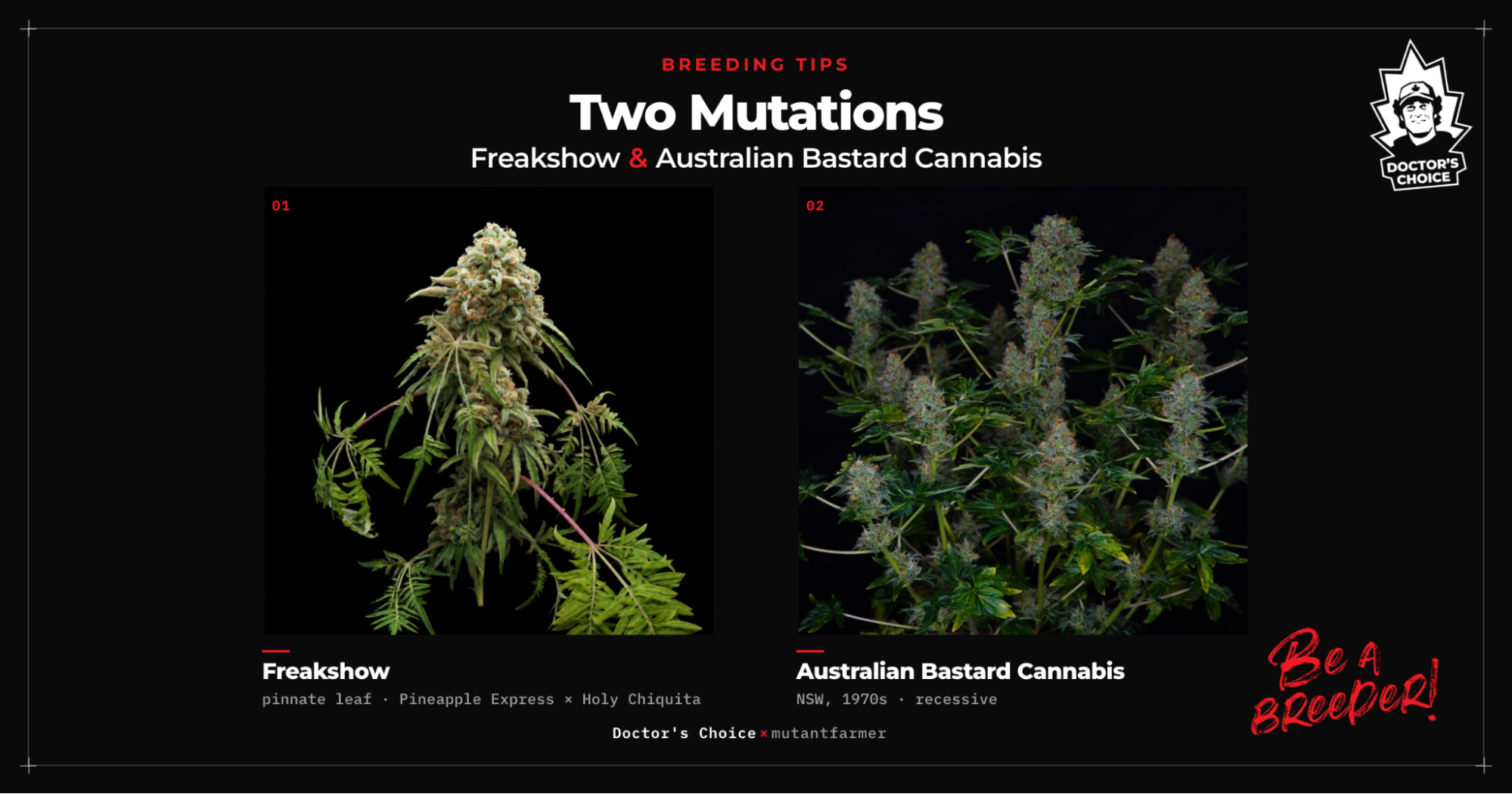
Almost all cannabis looks the same. The palmate leaf, the Christmas-tree silhouette you can pick out from across a field. That recognizability is a problem: what is easy to identify is easy to find. So one branch of breeding focuses not on yield or THC but on shape — with plants that don’t read as cannabis.
This piece is about two such mutations. They appeared in different parts of the world, decades apart: one in California, the other in the Australian bush. Both traits have now been stabilized in autoflowering lines using Lowryder — the strain that launched the autoflower category. Here is how that happened.
Freakshow: The Fern That Wasn’t
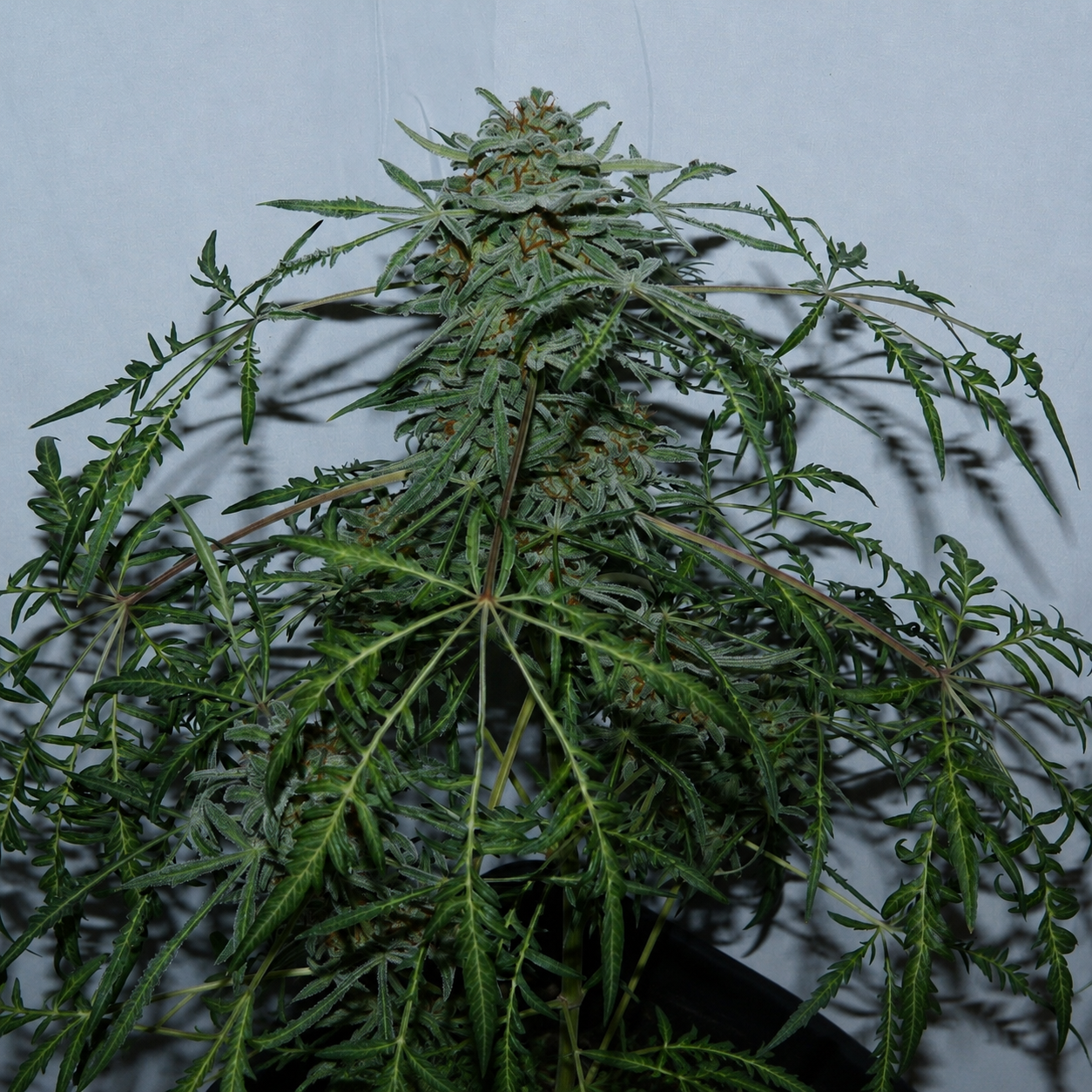
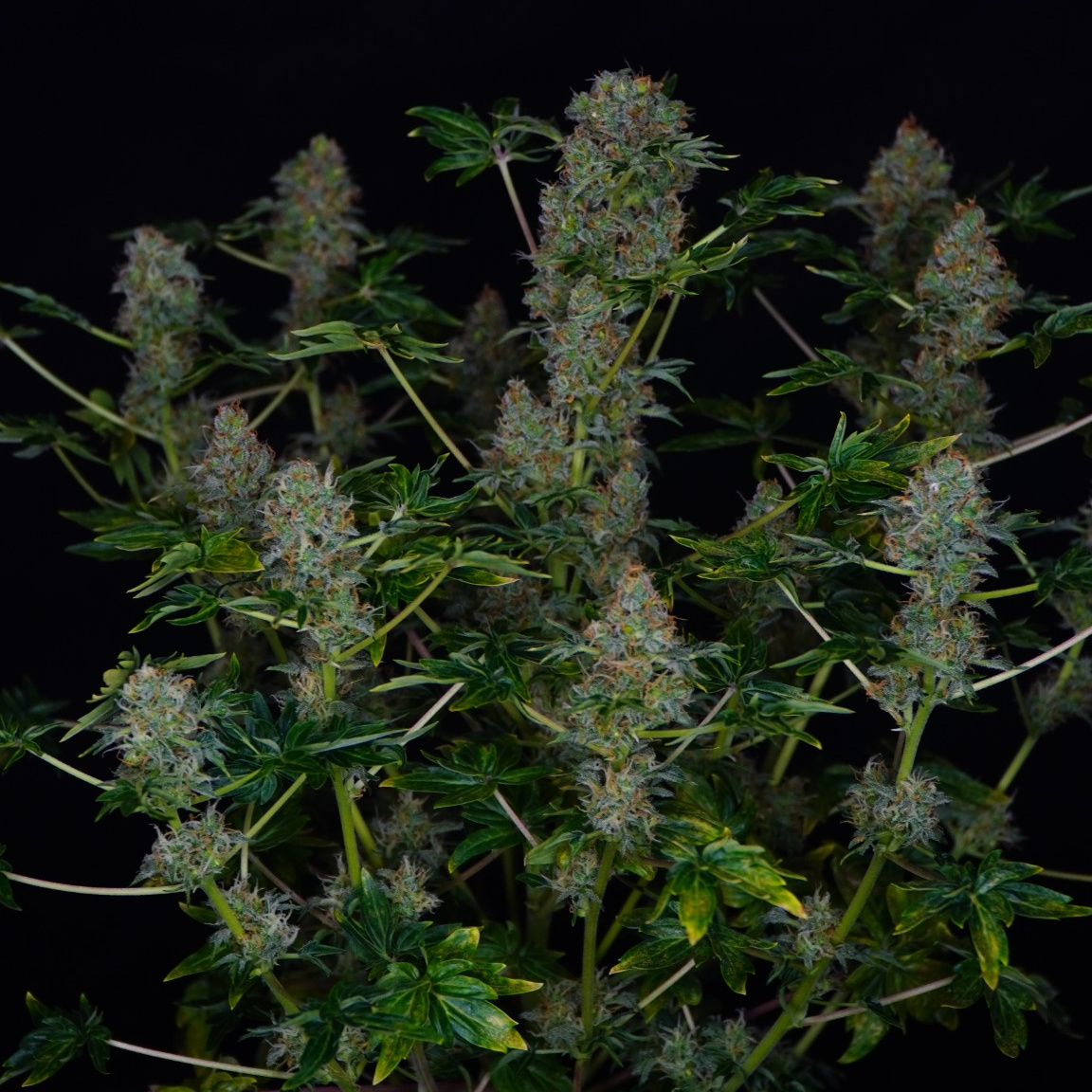
In typical cannabis, the leaf is simply palmate: the blade spreads its “fingers” from a single point, like a hand. On Freakshow, a scatter of small leaflets sits along the central vein of each “finger” instead. The leaf becomes pinnate, dissected, closer to a fern than to cannabis. Cannabis genetics, normal photosynthesis, normal flowering — only the leaf architecture changes. The mutation isn’t unique to cannabis: the shift from a simple to a pinnate leaf is documented in other plants too, including tomatoes.
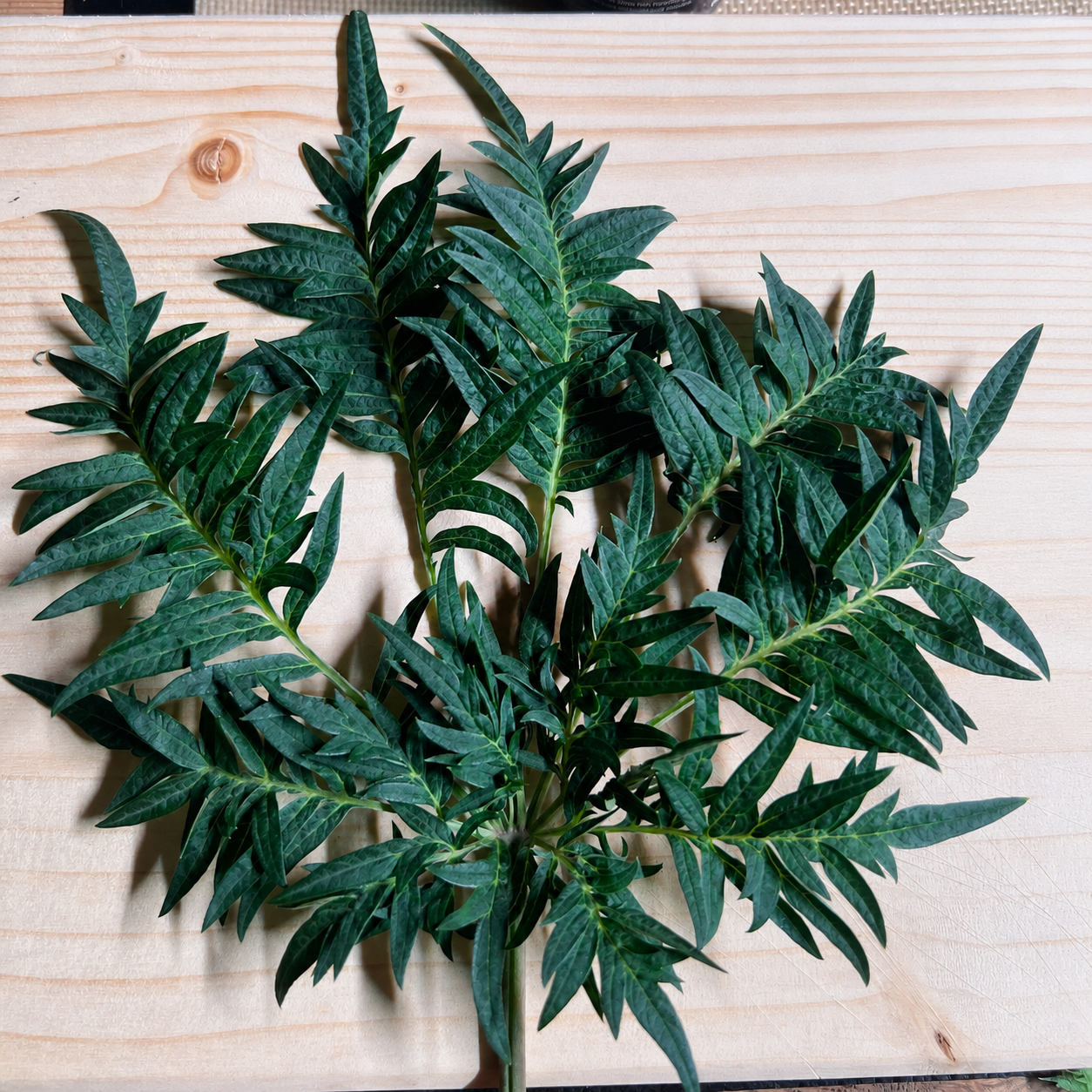
In our story, this trait was fixed by the breeder known as Shapeshifter of Hi-Elevation Genetics — a California breeder who caught a rare mutation while working on a terpene profile and then refined it for years through selection and backcrosses. Freakshow is a cross of Pineapple Express (mother) and Holy Chiquita (father). Holy Chiquita, also known as Holy Banana, was bred by Coastal Seed Co. in Santa Cruz and is itself Big Sur Holy Weed × Banana Kush. Once the line was stable enough, the Humboldt Seed Company handled the large-scale seed increase; its public debut was at the Emerald Cup in 2019.
What matters more than the lineage is how the trait behaves. In the stabilized Freakshow line, the pinnate leaf shows up in most plants — the key difference from ABC below, which is recessive and segregates. Freakshow is a lively sativa: around 18–20% THC, pinene-dominant, with a pine-and-citrus aroma. The practical point is twofold. First, stealth and decorative value: a bush that doesn’t look like cannabis. Second — and this is rare for mutants — it stays a working strain: it grows, produces terpenes and flowers like normal cannabis, not like a museum exhibit.
Australian Bastard Cannabis (ABC): The Bastard from Down Under
Australian Bastard Cannabis (ABC) is a mutation from the opposite pole of strangeness, and the opposite side of the planet. Its leaf is small, up to 5 cm, without the usual serration, smooth and glossy, more like the leaves of parsley, boxwood, or a succulent than a cannabis fan leaf. The plant is low and dense, growing like a shrub rather than a Christmas tree. It is Cannabis sativa: ABC crosses freely with ordinary cannabis and gives fertile offspring. How far it sits inside the species, though, has never been measured: there is no published genetic study of ABC, and the only public genome under that name (the Australian Bastard entry in the Kannapedia database) comes from a hybrid, not the original.
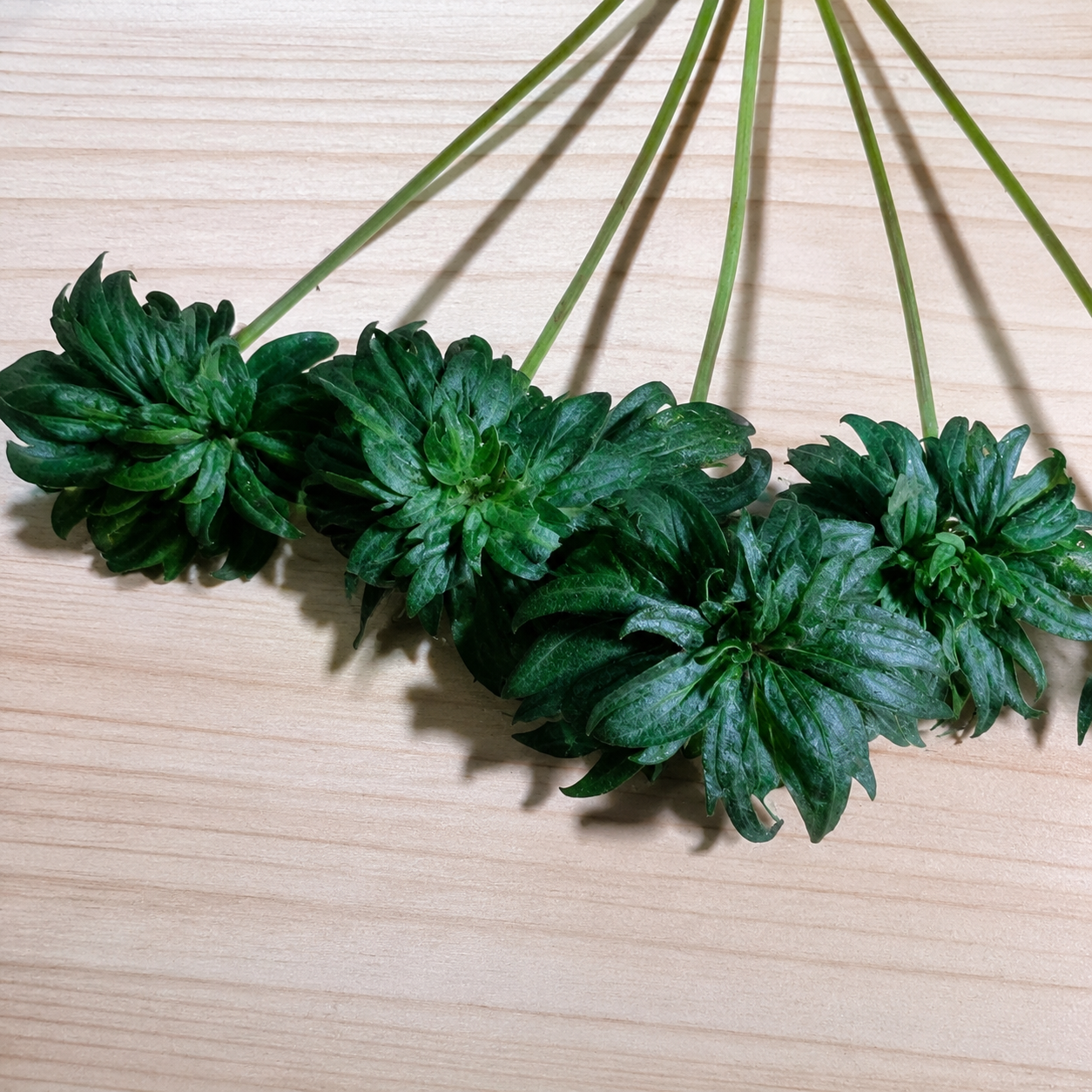
ABC’s history is half-myth. According to accounts within the cannabis community, the plant was found in the countryside of New South Wales, on Australia’s east coast in the 1970s or 1980s; locals called it Bindi Bud, or simply Mutant. The mutation became known worldwide in 1999–2000, when Cannabis Culture magazine ran two pieces on it and made the name “Australian Bastard Cannabis” stick. Among the rumors about its origin is a failed experiment with colchicine and polyploidy. Grower reports consistently describe the plant as highly cold-hardy, with bushes surviving under wet snow without frost damage while neighboring strains died.
For a breeder, ABC is a challenge, not a gift. The leaf trait is strongly recessive. Crossing pure ABC with a normal strain gives an F1 with normal leaves; the ABC leaf reappears in only a proportion of the F2 generation — around 25% in theory, 15–35% in practice because of modifier genes. On top of that, the original ABC was low in THC. The sum of these two problems is why almost no commercial ABC strains have appeared over the decades: it is hard to retain the leaf trait and raise the quality at the same time.
To put these mutations in context: fern-leaf and ABC are not the only leaf mutations. There is duckfoot (webbed foliage), variegation (two-tone leaf), and whorled phyllotaxis — three or more leaves from a single node instead of the usual pair. On a simple scale of practicality: stabilized Freakshow shows its leaf almost every time and stays a working strain; ABC is recessive and persists mainly as a genetic curiosity; and the others fall somewhere in between.
Why Breeding a Mutant Autoflower Is So Difficult
On top of the leaf mutation comes another trait, without which a modern strain can’t be built — autoflowering. And this is our home turf.
Lowryder, the strain that started the entire autoflower category, was bred by Sasha Przytyk, known as Joint Doctor, who is also the founder of Doctor’s Choice. In the late 1990s, working in a basement in the Canadian prairies, he crossed a “Mexican ruderalis” with Northern Lights #2 and William’s Wonder. Over generations of selection, a recessive trait surfaced: flowering by age, independent of the light cycle. That was the first commercial autoflower. Today autoflowers account for most of the seed market in Europe, and every autoflower on the shelf traces its lineage back to Lowryder. Hence our tagline: Home of Lowryder.
The keyword above is recessive. Autoflowering is recessive, ABC is recessive, and to a large extent so is fern-leaf. Crossing an autoflower with a photoperiod strain gives an F1 that flowers in response to the photoperiod, not by age; autoflowering returns only in the F2 and beyond.
Hence the arithmetic of the task. To produce a mutant autoflower, you have to combine two recessive traits in a single plant: the leaf mutation and the autoflowering trait. The plant must be homozygous for both. In a segregating population, such plants are a small fraction. In practice that means not “cross it and you’re done” but “sow hundreds of seeds and keep a handful.”
Building the Mutant Autoflower Lines
This was taken on by the independent breeder mutantfarmer — a participant in our Be a Breeder program. Work on the strains has been underway since 2022, and the whole process — selections, crosses, harvests — was documented openly by the author on Instagram and on the ICMag and DZAGI forums. The logic was the same for both mutations: take a stable mutant mother and put her onto the Lowryder autoflower platform.
On the Freakshow side, the maternal line was derived from Freakshow genetics supplied by 7East Genetics. On the ABC side, the maternal line was Drunken Bastard F3 from 7East Genetics — one of the few fully stabilized ABC lines in which all plants express the ABC phenotype. Drunken Bastard has exactly one drawback: it has a very long flowering period and won’t finish in a short northern summer. A cross with Lowryder solves both at once — it introduces the autoflowering trait and sharply shortens the cycle.
Then comes the real cost of a mutant autoflower. To identify and select the plants carrying both autoflowering and the mutation from the segregating populations, mass sowing was required: 350+ seeds per line. The selection rate was exactly what you’d expect from double recessivity: autoflowering Bastards came out at under 5%, autoflowering Freaks at under 2%. From that handful, the best plants were selected and both lines taken to F5 — to the point where leaf shape, plant structure, aroma and timing are predictable within an acceptable range. The Bastard line was run in two parallel branches so as not to lose material through the selection bottleneck.
In the next article, we’ll find out how both mutations ended up on our Lowryder platform in the Doctor’s Choice x mutantfarmer lineup.