How Autoflowering Is Inherited: Why Autos Appear in F2
Cross an autoflowering Lowryder with a photoperiod plant that carries no autoflowering allele, and the F1 plants remain photoperiod-dependent. In F2, around one in four is expected to autoflower. Here is how that inheritance works, with examples from Velluto and Freaky Ryder.
The Velluto cross
In late July 2026, we sowed 42 regular Velluto Fast F1 seeds. The plants grown from them will produce F2 seeds. Their father is the autoflowering Lowryder; their mother is the photoperiod-dependent Vanilla Velvet.
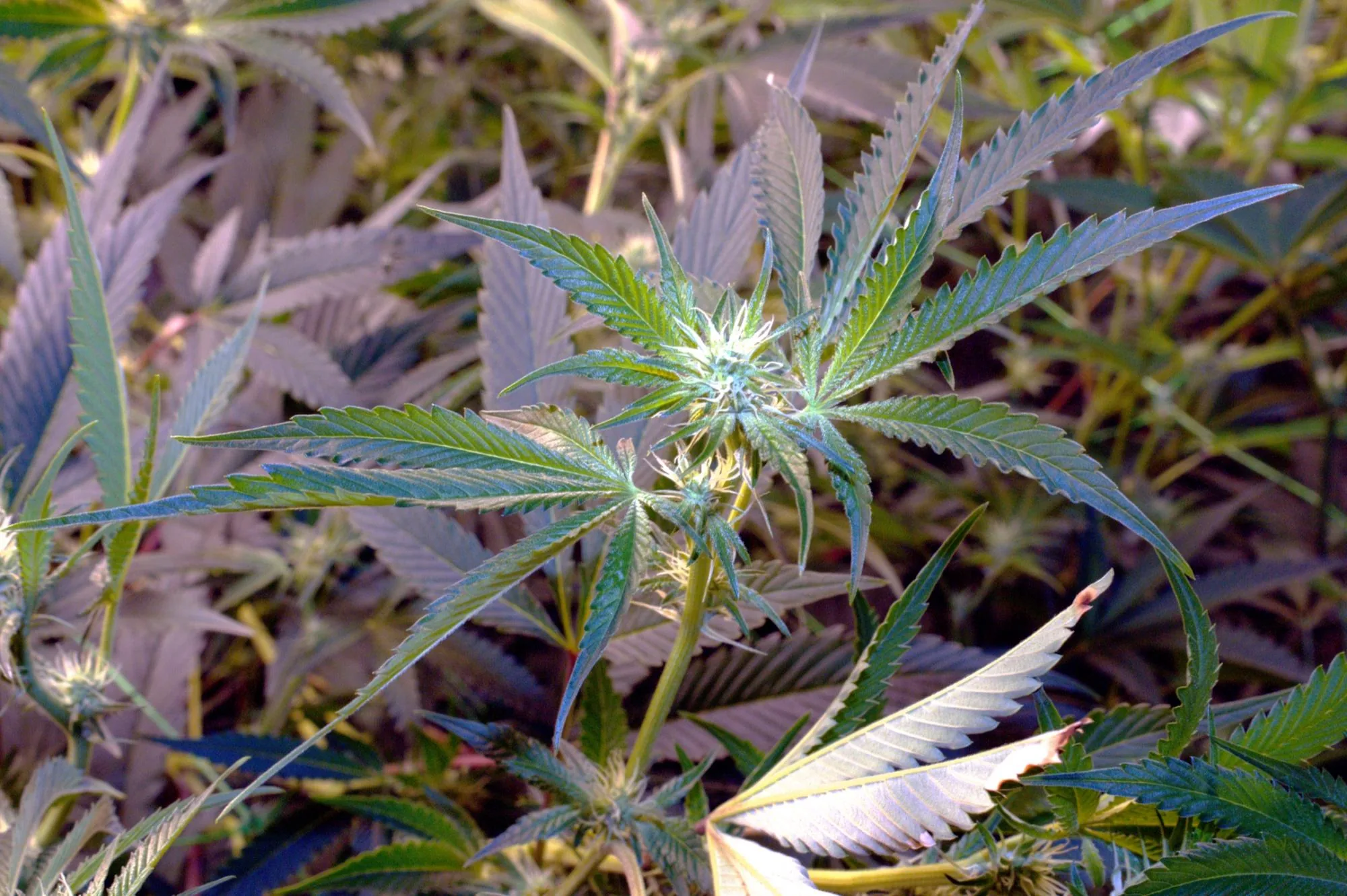
When the parents are AA × aa, the F1 plants are carriers. Their F2 offspring have an expected autoflowering share of one in four.Vanilla Velvet at the start of flowering.
In these crosses, autoflowering is described using a simple recessive model at one locus: a particular position on a chromosome. In 2022, Toth and colleagues mapped a locus on chromosome 1 and named it Autoflower1. Their study in Frontiers in Plant Science developed DNA markers that identified the tested cultivars marketed as autoflowering.
A plant has two copies of this region, one inherited from its mother and one from its father. Different versions are called alleles. Here, a represents the autoflowering allele and A the photoperiod allele.
Autoflowering Lowryder has two autoflowering copies: aa. A photoperiod mother without the autoflowering allele is AA. The explanation below follows this model; flowering responses across cannabis can involve other genetic effects.
F1: every plant is a carrier
The AA mother passes A to every F1 offspring, while the aa father passes a. Every F1 plant is therefore Aa: it remains photoperiod-dependent and passes the autoflowering allele to roughly half its offspring.
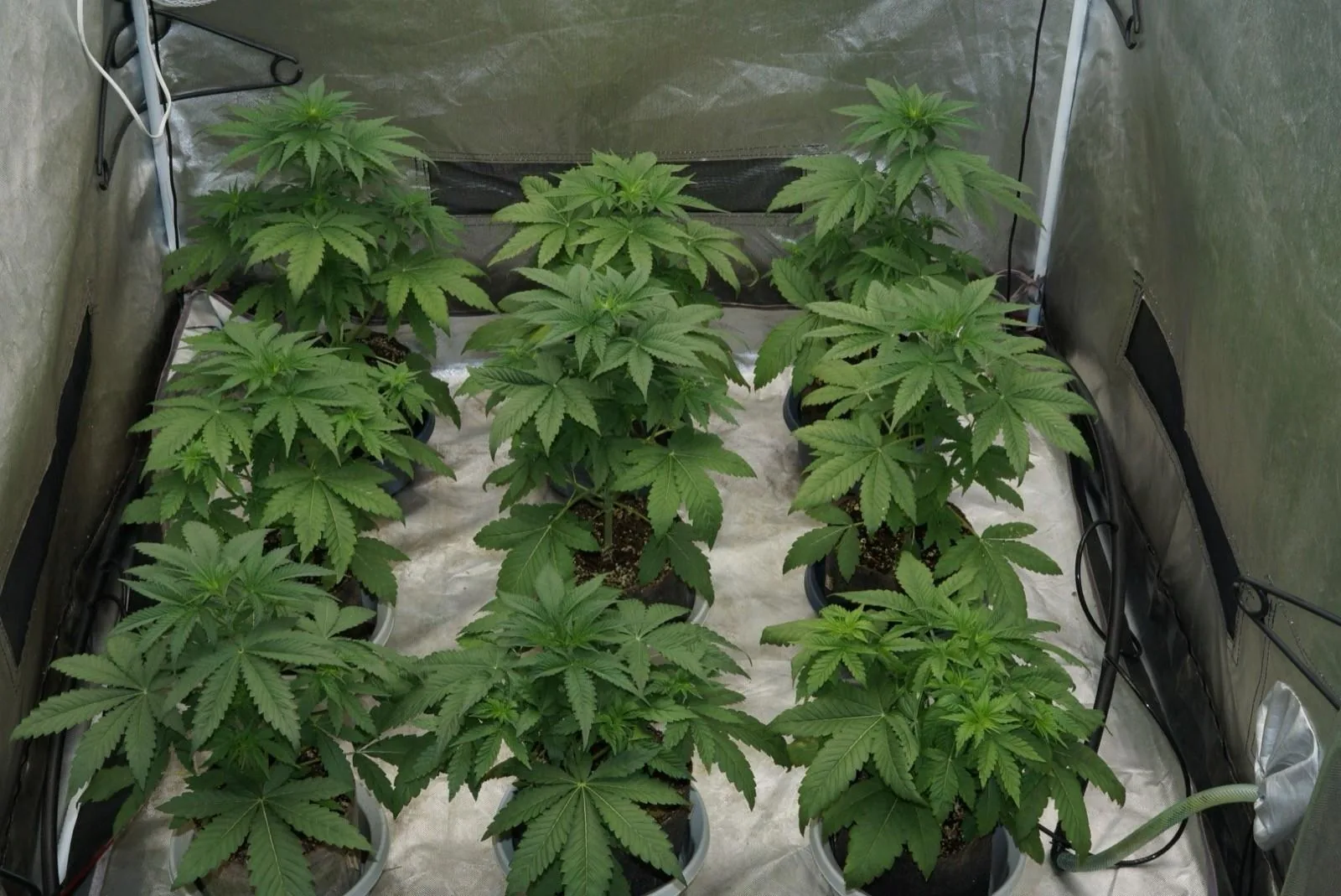
Velluto Fast F1 plants in the tent, mid-August 2026.
Some photoperiod plants are themselves carriers, Aa. If the mother is a carrier, a cross with aa Lowryder is expected to produce roughly half aa offspring, which can autoflower in F1.
F2 comes from crossing F1 plants with one another. Each Aa parent has an equal chance of passing A or a. The expected F2 genotype ratio is 1 AA : 2 Aa : 1 aa.
AA
Autoflowering copies
0
Flowering
Photoperiod-dependent
Expected share in F2
¼
Aa
Autoflowering copies
1
Flowering
Photoperiod-dependent carrier
Expected share in F2
½
aa
Autoflowering copies
2
Flowering
Autoflowering
Expected share in F2
¼
One in four is an expectation across a large number of plants. The share in an individual sowing can differ. Toth and colleagues grew two segregating populations under a long day of 16 hours of light and 8 hours of darkness: an F2 population and a population from one cultivar’s seed batch. In one, 28 of 88 plants flowered; in the other, 24 of 88. Neither result differed significantly from the one-in-four expectation.
Autoflowering F2 plants are identified in the same way during selection: they begin flowering under long days while the other plants remain in vegetative growth. Selection for the other desired traits then continues within that autoflowering group.
F3 and beyond
When selected autoflowering F2 plants are crossed with one another, both parents are aa. Under this model, all their F3 offspring inherit two copies of the autoflowering allele.
Other traits can still segregate in F3, including height, plant structure and the time from seed to harvest. Selection continues through F3, F4 and later generations to make those traits more consistent.
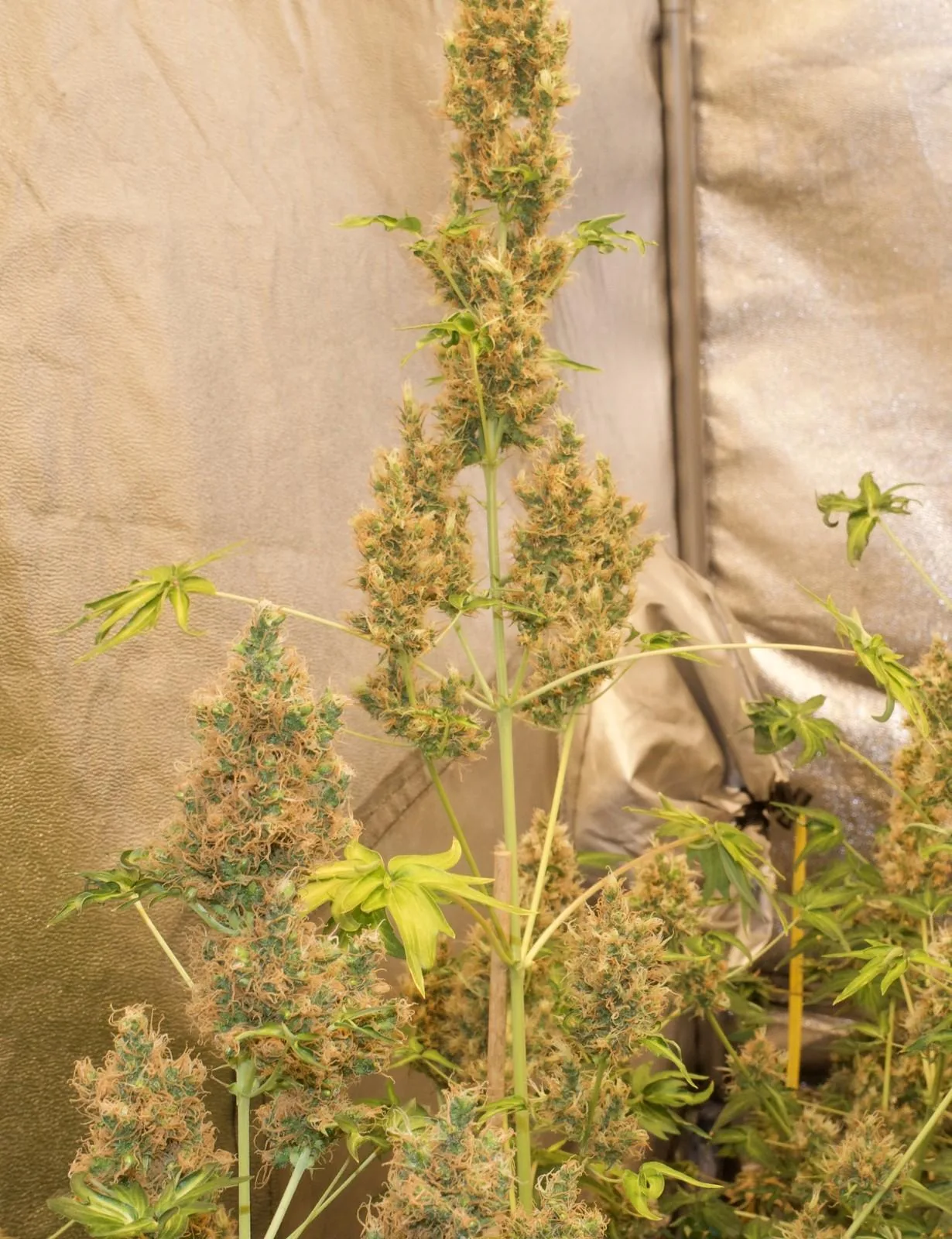
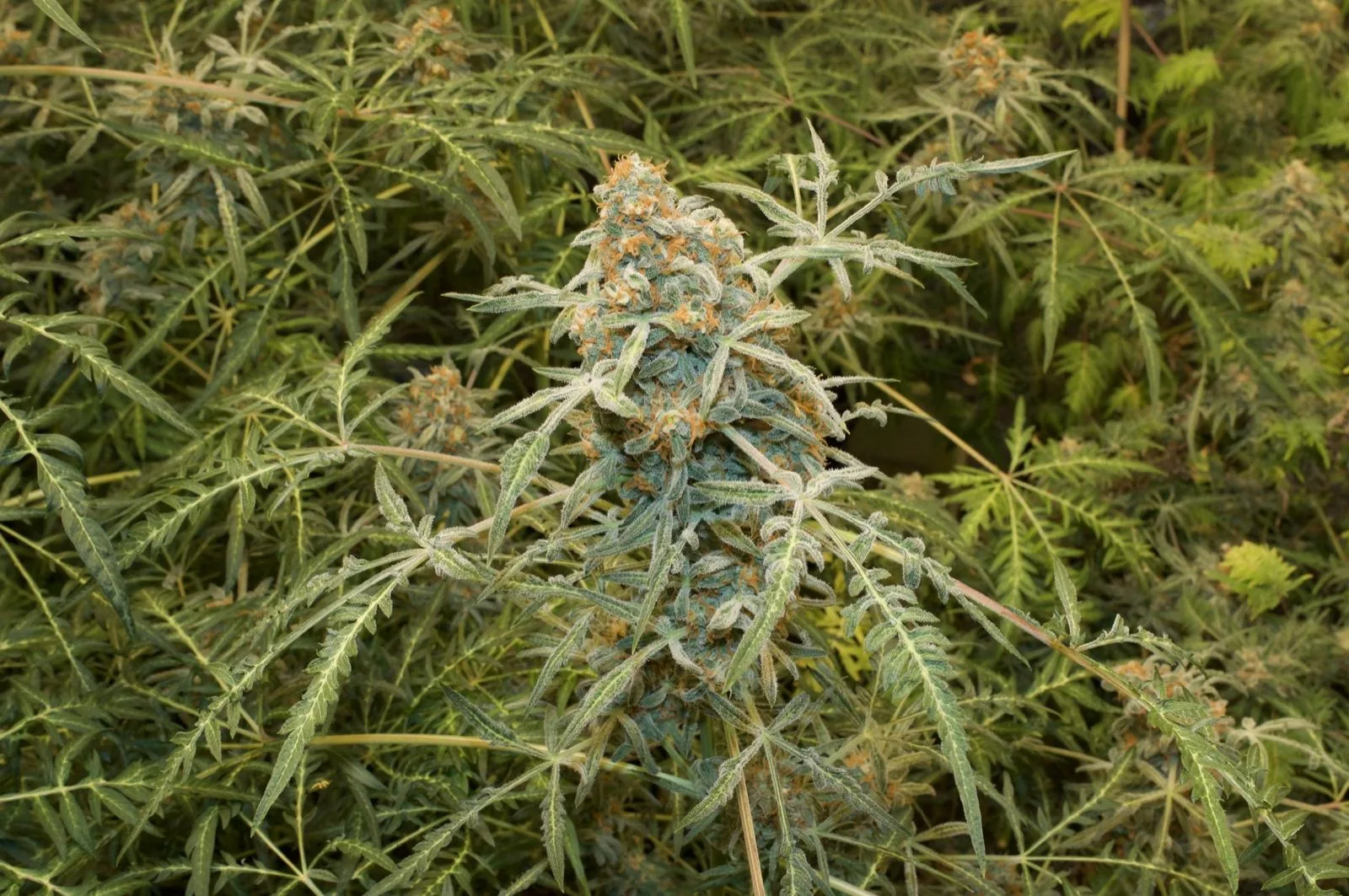
Bastard Ryder, Drunken Bastard × Lowryder: the flowering top of an F5 plant, late March 2026.
Two traits at once: Freaky Ryder
Freaky Ryder is mutantfarmer’s autoflowering line from Freakshow F9 by 7East Genetics × Lowryder IBL. The goal was to bring Lowryder’s autoflowering and Freakshow’s fern-like leaf together in one plant.
An F5 Freaky Ryder plant in flower during the first run at our production site, late March 2026.
The Freakshow leaf is considered largely recessive and usually appears from the second generation. Yet most Freaky Ryder F1 plants already differed from an ordinary leaf in their number of leaflets, and almost all the males showed pronounced changes in leaf structure. mutantfarmer looked for plants combining autoflowering and the Freakshow leaf in F2.
In September 2023, he sowed more than 350 F2 seeds. By early October, he had found six plants with both traits: three females and three males.
He chose the two best females and pollinated them with two different males, collecting F3 seeds from those females. In F3 and F4, selection focused on the Freakshow leaf, plant structure and flower structure.
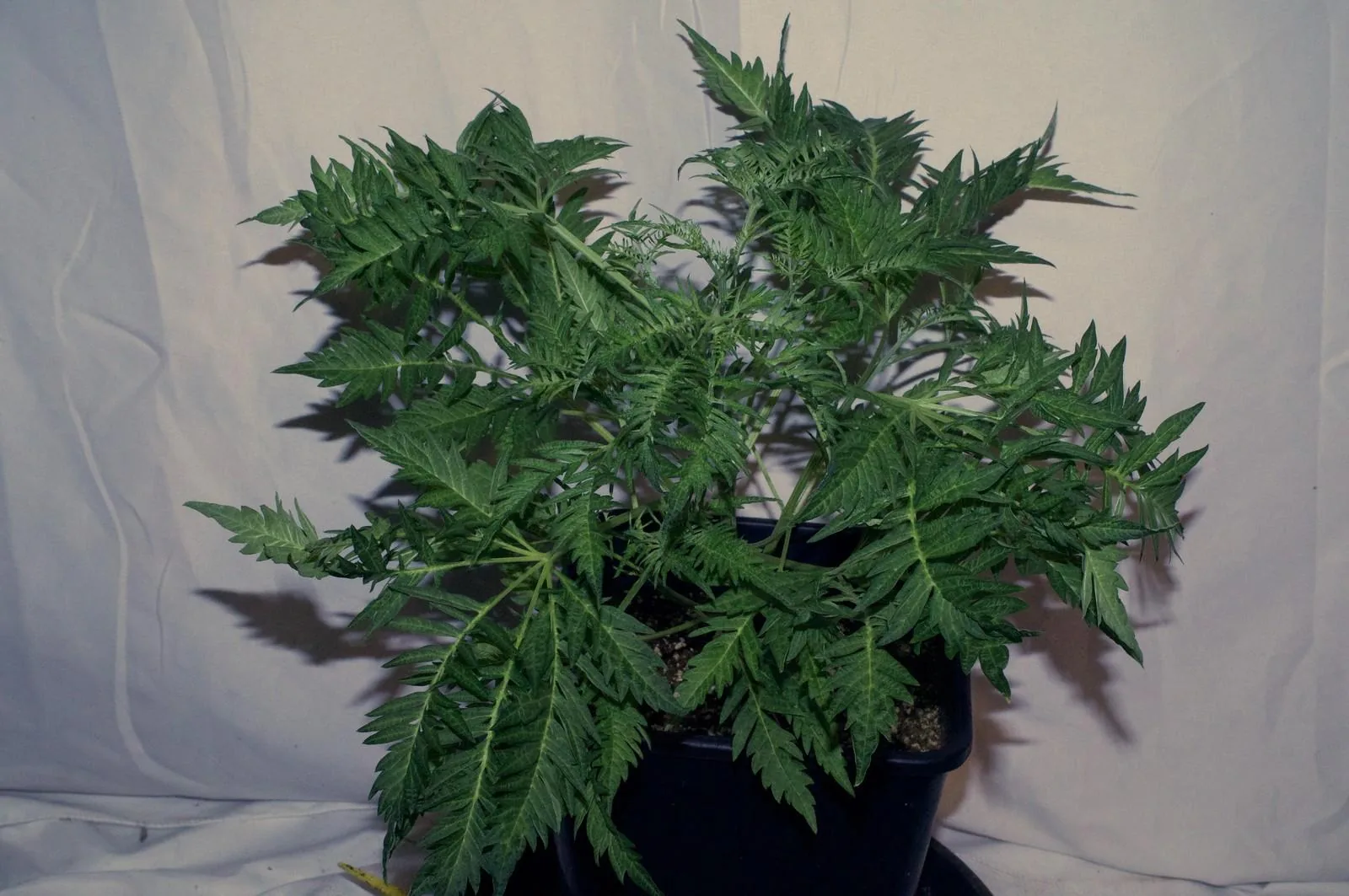
The Freakshow leaf on an F6 Freaky Ryder plant from the test of our regular seeds, early June 2026.