
Your cart is currently empty!
The History of the Freakshow Cannabis Mutation
—
article in Breeding Tips
“After forty years, normal gets a little monotonous.”
Shapeshifter, creator of Freakshow
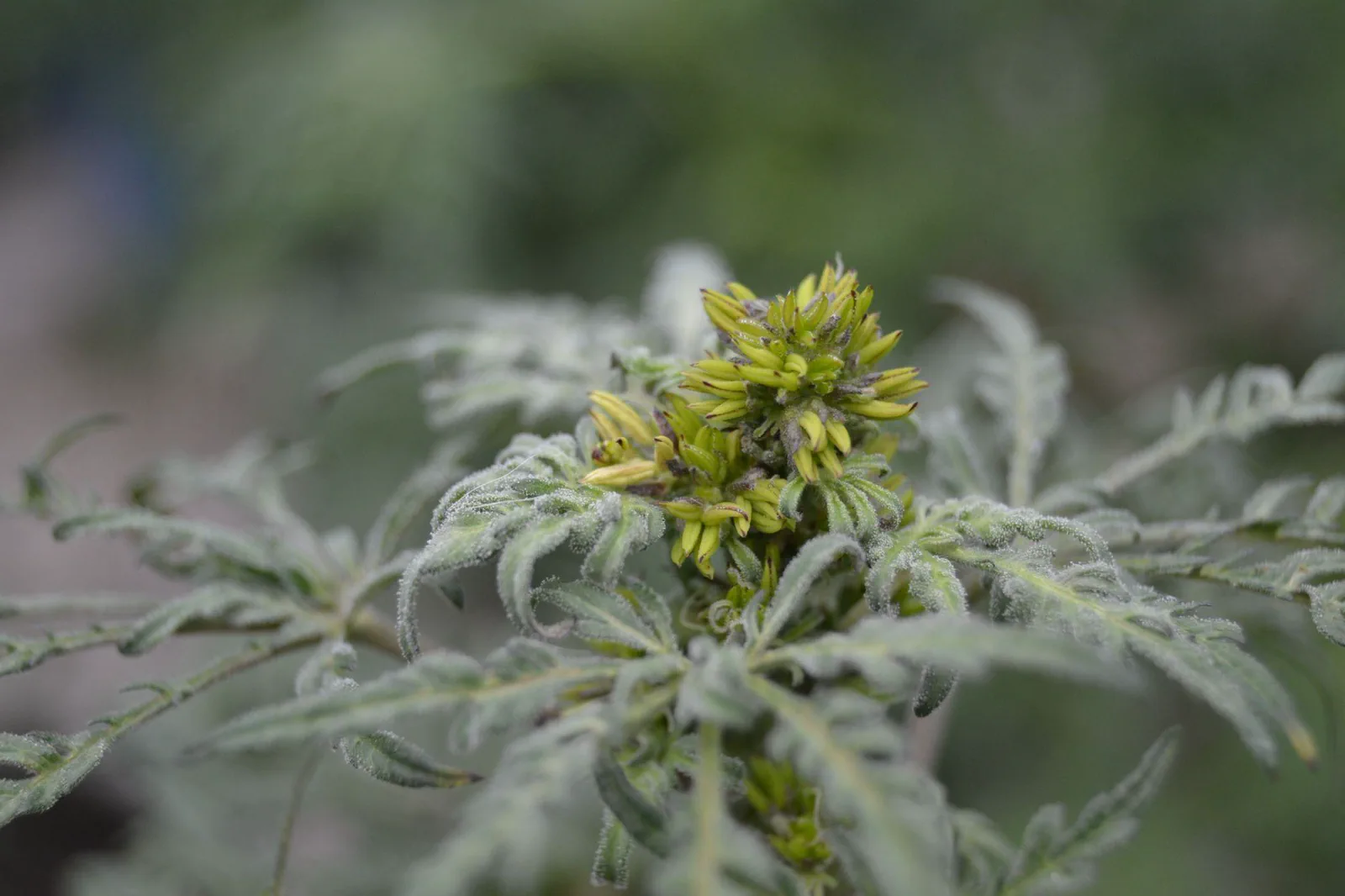
A typical cannabis leaf is palmate: the leaflets fan out from a single point. The Freakshow cannabis mutation gives the leaf a different structure. Its leaflets are narrow, deeply serrated, and arranged along a central axis, while the leaf as a whole looks more like a fern than cannabis. Hence the name of the mutation: fern-leaf, a pinnate leaf shaped like a fern frond.
The practical consequence is simple, and it also explains why this line became popular worldwide: to a casual observer at a distance, the plant is not recognizable as cannabis. Neither the outline nor the leaf reads as a familiar marker.
The Man Who Spent Forty Years Collecting Freaks
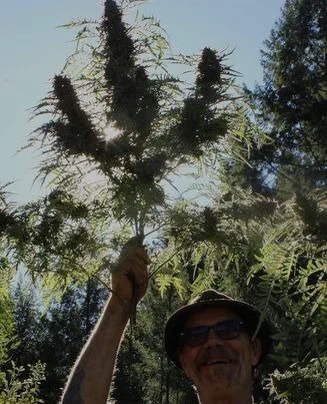
Behind Freakshow is a California breeder known as Shapeshifter of Hi-Elevation Genetics. He lives off-grid in rural California, near Yosemite National Park. A self-taught breeder, he also repairs motorcycles, sews his own clothes, and practices year-round permaculture. He has worked with cannabis since the 1970s, back when seeds spilled out of imported “bricks” and growing hundreds of seedlings to select from was simply how it was done.
He was always drawn to the rare and the abnormal. While the market moved toward broad-leaf Afghan lines and their hybrids, he kept narrow-leaf sativas, in which anomalies turn up noticeably more often. Dwarf forms, webbed leaves, fasciation, plants with twenty-one leaflets, double serrations, and buds growing on leaf stems have all passed through his hands. At the time, none of it interested anyone, and such plants were culled in favor of the predictable. He kept them.
The entire Freakshow project was run at about 4,000 feet, roughly 1,200 meters, under intense UV and with no shade. The breeder himself acknowledges that the environment may have contributed to the appearance of the initial anomalies, but believes genetics and selection were the main factors in developing the line.
How Freakshow Came About
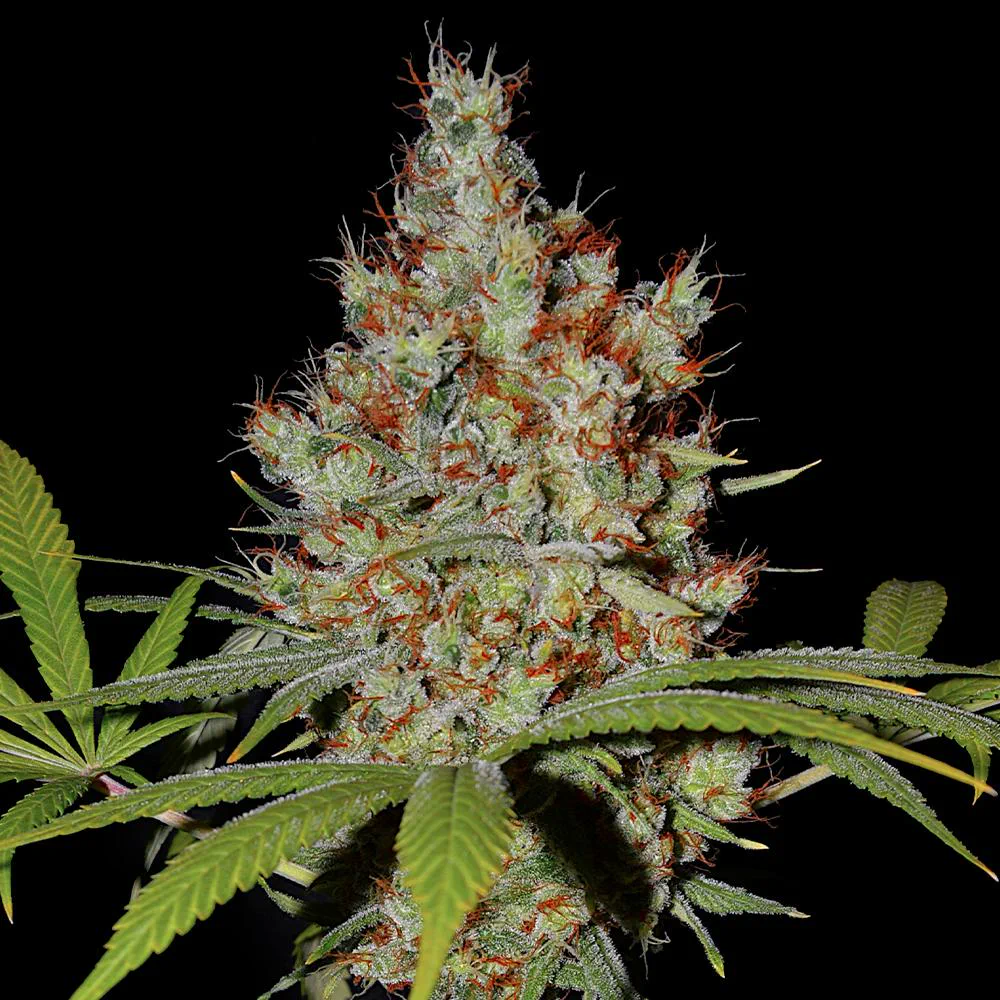
The original cross was made between a Pineapple Express female and a Holy Chiquita male, also known as Holy Banana. The working name of the cross was Holy Express. Pineapple Express came from a G-13 Labs line that, according to the breeder, no longer exists. Holy Chiquita was bred by Coastal Seed Co. of Santa Cruz: a cross of Big Sur Holy Weed and Banana Kush. The male was not chosen at random: it had narrow leaflets, red stems, more leaflets and deeper serrations than any other candidate, a sweet, fruity terpene profile, and high trichome density. And yes, male plants produce trichomes too.
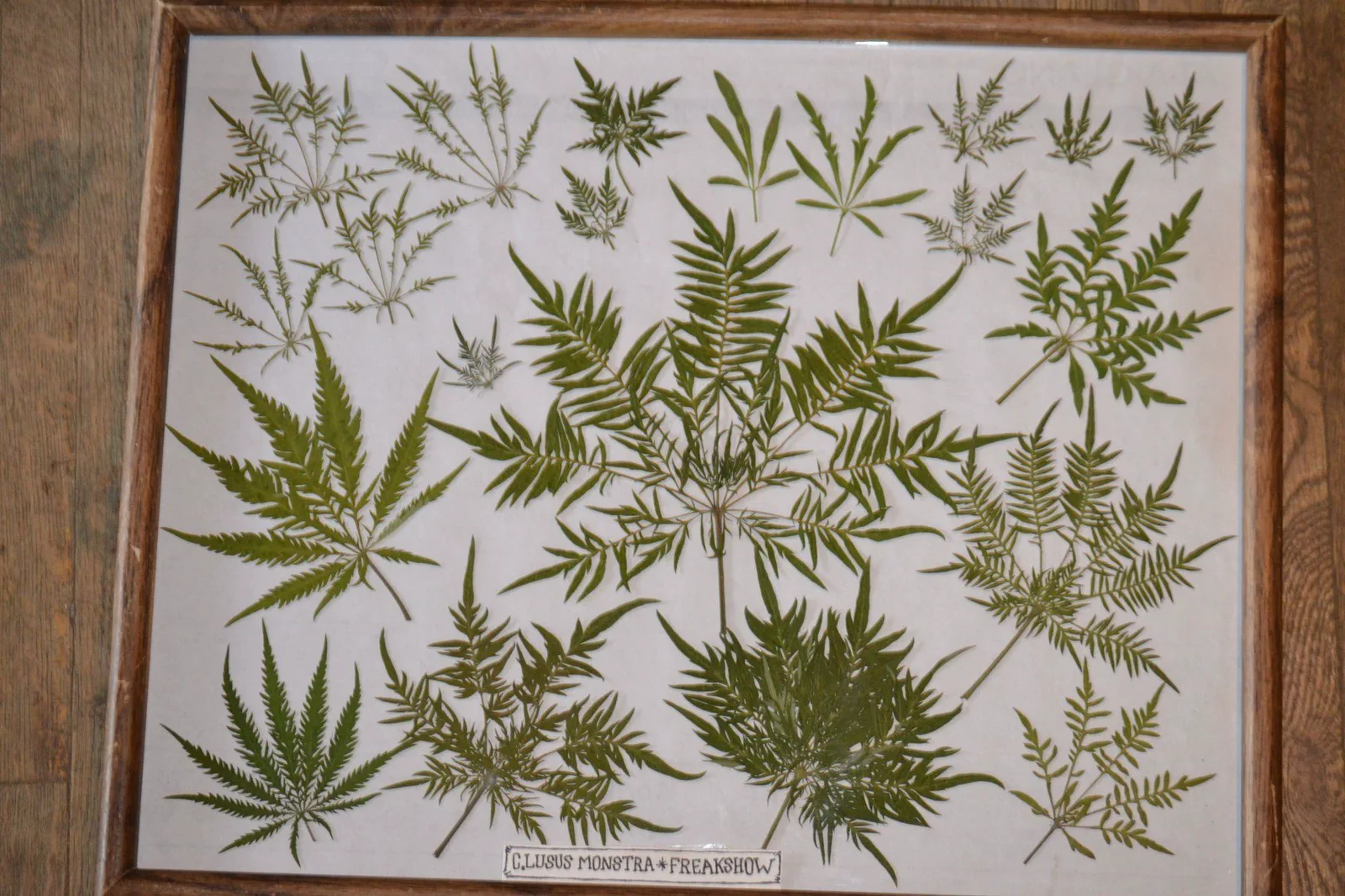
One detail is usually reported inaccurately: the mutation did not appear in the F1 but in the second generation of the cross. The F1 generation was uniform. In the F2, a new leaf type with very deep serrations appeared, and the breeder named it the “alligator tooth” leaf. That is Freakshow type 1. The same line also produced a second abnormal phenotype, with an absurd number of extra leaflets. The two plants expressing those phenotypes were crossed.
What happened next is what Shapeshifter himself calls magic. Hundreds of seeds from the next generation were screened for deformities, and that is where the name Freakshow came from: some of the plants could not be described any other way. He asked his son to post the photographs online with a single question: “Did anyone have anything similar?” No one who replied did.
Then, out of a batch of about 300 plants, one turned out to be far stranger than anything that had come before. That plant was a Freakshow type 2, the fern-leaf recognized worldwide today. Type 1 led to the discovery of type 2.
What “Stabilized” Actually Means Here
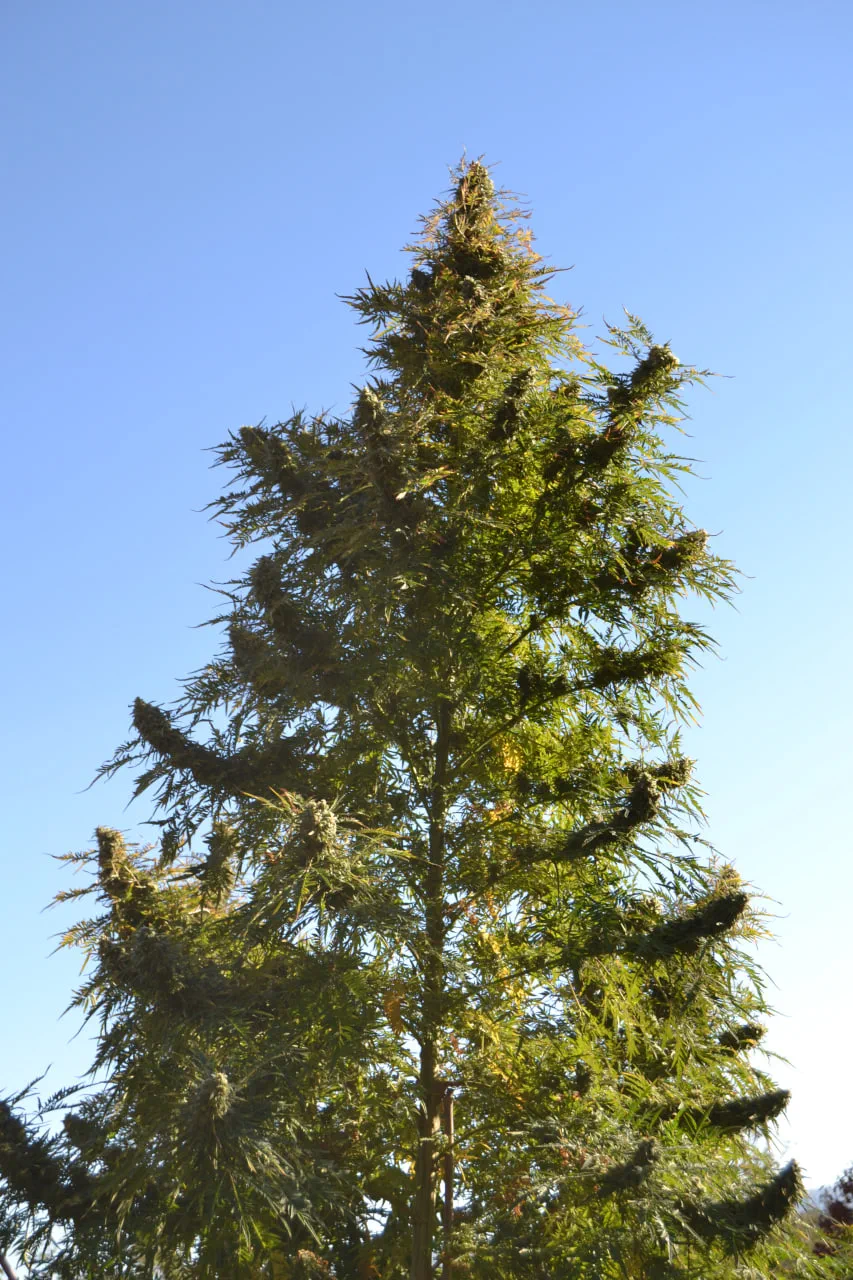
By the fourth generation, the line bred true for leaf shape: every seed that germinated produced a plant expressing the fern-leaf phenotype, and no exceptions have been reported. In that same generation, a separate branch was backcrossed to the original Pineapple Express to preserve its terpene profile, flower structure, and flower density. The fern-leaf phenotype was lost in the process, as the genetics predicted: the backcross produced a female with almost ordinary leaves, with serrations only slightly deeper than usual. That branch remained a side project and was never incorporated into the main line.
Shapeshifter himself carried the line to F3 and handed it over to Nat and Ben at Humboldt Seed Company. They produced F4 and advanced the line through F5, then produced F6 and F7, known as the Supafreaks. From F7 and F8 onward, and for the feminized version, the two sides agreed to work on it together. Alongside that, Shapeshifter keeps several pure Freakshow lines of his own at F5–F6 and stores every ancestor in a seed library, so that a backcross to any point in the line remains possible. This is insurance against a genetic bottleneck: over time, a single narrow line can lose vigor.
The selection criteria were ranked in this order: terpene profile first—especially the sesquiterpenes responsible for flavor and smoke quality—followed by trichome density, THC level, calyx-to-leaf ratio, flower structure and size, flowering time, and resistance to pests and powdery mildew. The leaf was the price of entry, not the only goal.
In 2019, Freakshow was released by Humboldt Seed Company and spread worldwide. Mutant-genetics enthusiasts took the line further: 7East Genetics advanced their reproduction of the line through F9, and that is the version that became the mother line for our own work.
What Is Still Unknown About the Freakshow Mutation
The genetic mechanism has not been described. Shapeshifter has proposed that the regulatory functions of the KNOX1 and FLO/LFY genes are suppressed, and he himself calls it a guess. As of 2026, no published study has identified the responsible gene or genes.
The breeder states that no chemicals or genetic modification were involved. The method is the same as the one Darwin described in 1868. Grow hundreds of seedlings, cull hard, cross what survives, repeat.
Where Doctor’s Choice Comes In
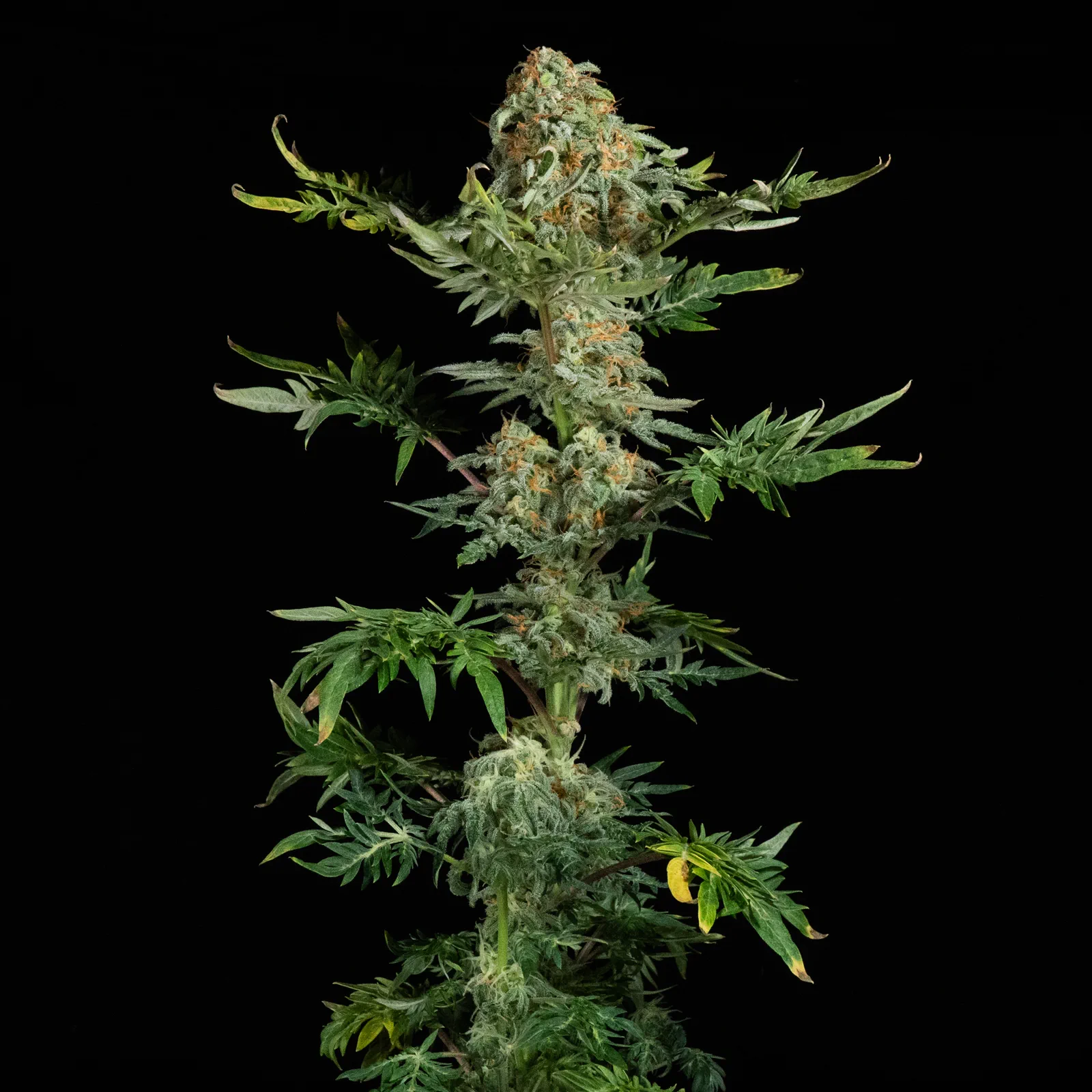
The mother line for our work is Freakshow F9 from 7East Genetics. mutantfarmer crossed it with the Lowryder autoflowering line from Doctor’s Choice. Three years of selection turned that cross into a whole Freaky family: the autoflowering Freaky Ryder, stabilized through the F5 generation by mutantfarmer, and two fast-flowering photoperiod lines, the limited-edition Freaky Fast F1 BX and Freaky Dankenstein, in which both parents contribute the fern-leaf trait.
These lines are the joint work of three parties: Doctor’s Choice, bringing the Lowryder heritage and the Be a Breeder program; mutantfarmer, bringing his focus on mutant genetics; and Seedsman, opening the family to a wide audience through feminized seeds. The regular-seed versions are listed in the Doctor’s Choice catalog for breeders and pheno hunters. The feminized versions are released exclusively through Seedsman for growers who want an all-female run without sexing plants.
The first feminized product in the family is Freaky Ryder Auto Fem, and it is now being released. A feminized version of Freaky Dankenstein is being prepared next; its fast-flowering regular-seed version is already in the Doctor’s Choice catalog.